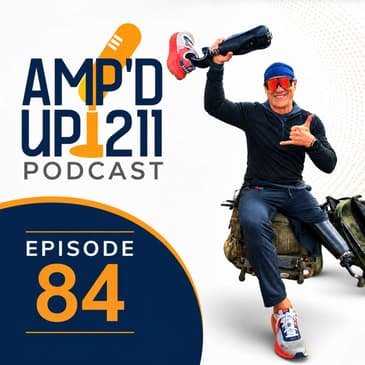
Every once in a while I have the opportunity to sit across from someone whose story reminds me why I started this podcast in the first place. Dr. David Hausmann is one of those people. Before his life changed forever, David spent more than a decade helping people heal as a chiropractor and functional medicine practitioner. Then a rare flesh eating bacterial infection took him from physician to patient, leaving him fighting for his life, facing amputation, and questioning everything he thought he knew about strength, healing, and identity.
What resonated with me throughout this conversation was David's honesty. We didn't spend our time talking about simply overcoming adversity. Instead, we explored the parts of recovery that most people never see. We talked about the emotional weight of losing the life you knew, the challenge of rebuilding your identity, and the courage it takes to embrace a future that looks nothing like the one you had planned. This is a conversation about resilience in its truest form and the work that begins long after the surgeries are over.
Today, David has transformed his experience into a mission to improve prosthetic care and advocate for others navigating life after limb loss. His perspective reaches far beyond the amputee community because, at its core, this episode is about rebuilding after life has completely changed direction. I hope you'll listen with an open mind and hear the lessons that apply to all of us.
Thank you for joining me on The AMP'D UP211 Podcast, where we continue to bring the human side of limb loss to audiences around the world. My goal has always been to tell stories that challenge perceptions, create understanding, and remind us that resilience is not about what we've lost but what we're willing to build next. If you enjoyed this episode, please subscribe, leave a review, and share it with someone who could benefit from David's remarkable journey.
[00:00:00] On this episode of AMP The AMP'D UP211 Podcast, I'm joined by Dr. David Hausmann, a chiropractor, functional medicine practitioner, athlete, and now amputee advocate whose life changed in an instant. After contracting a rare flesh-eating bacterial infection, Dave died three times, lost his leg, and found himself facing a battle far greater than physical recovery.
[00:00:22] This is not just a story about survival, it's a conversation about identity, resilience, and what happens when the life you've built is stripped away and you're forced to rebuild from the ground up. I'm Rick Bonkowski and this is the AMPD UP211 Podcast.
[00:00:44] Hey everyone, this is the AMPD UP211 Podcast. My name is Rick Bontkowski and we have a very special guest today, Dr. David Hausmann. How are you, sir? Doing well, how are you? I'm doing very, very well and I appreciate you being here today and of course reaching out to me with your incredible story. I was compelled from the moment I read your first email.
[00:01:06] And you know, there's something really special about people like yourself who go through such a huge life change and see their mission in terms of awareness, in terms of education. And of course, coming from the medical community, this is something that was probably part of the spectrum of what you did, you know, just in your professional life.
[00:01:32] But to take tragedy, to take, you know, what is very much a struggle and see it as a new purpose, something that can, you know, cultivate some really amazing things in the community.
[00:01:46] I applaud you and from what I've read and from what I've seen because you are, you know, kind of making the rounds now. I've caught a few things online. Really authentic stuff. I mean, beautiful, articulate, you know, just really to the betterment of this particular community, limb loss, limb difference.
[00:02:12] But there's so much more, you know, I think that you have to offer because of the world that you operated in before what happened to you.
[00:02:23] And the first thing I want to start with, I think I want you to, not necessarily in clinical terms, but in everyday terms, describe to me what this flesh-eating bacteria was.
[00:02:44] Like, how does it happen? Like, how does it happen? What are the circumstances? In your words, you know, like, what on earth happened? And we can talk more about, you know, the before and afters and all that stuff, but just starting kicking it off, walk us through, you know, what occurred to you. Yeah, yeah, thank you.
[00:03:36] Bacteria. Bacteria. It was three and a half hours that it hit from my left ankle all the way up to the knee. And it liquefied all the flesh, all the muscle under the skin. The flushing bacteria releases like toxins, causes gas gangrene, these air bubbles and air pockets. And so basically the damage, it happened so fast that damage was done before they even figured out what it was.
[00:04:05] And by the time they figured out what it was, it was an immediate take this guy to, you know, immediate debridement surgery. And then I coded at the end of the surgery, which is crazy. So from my experience, it happened so fast. And then on top of that, I didn't, I don't remember any of it. Because of the event, you know, coding, heart stopped.
[00:04:31] There's the whole DMT, like brain chemical, like end of life journey. Yeah. It happens. And part of that experience is the brain wipes really traumatic short-term memory, which is kind of a gift, kind of a blessing. Because like if I were to go to the pearly gates, I wouldn't have gone with this traumatic experience. It would have been whatever the most recent pleasant experience was. And this is, you're describing almost like the first death of three? Three?
[00:05:01] Yeah. Yeah. And so talking about, you know, what the body does in that state, right? Because you're dying, you know, you've died. And, you know, what the human body, what process it goes through, you know, when that occurs. And what was symptomatic about what was happening on your leg? Like, what did it feel like? Do you recall?
[00:05:30] Like, what's happening to me? So from my experience, leading up to this event occurring and coming out of nowhere, I had a really bad sinus infection that I ended up taking a round of antibiotics for. And for me, rewind, you know, at this point in time, this was September of last year. I was 38, hadn't turned 39, birthday in a couple months.
[00:05:59] The healthiest I'd ever been in my entire life, peak physical condition, you know, 6'3", 230 pounds, 9% body fat, just chisel-treaded. But I hadn't taken a prescription medication since the age of 17. So my entire adult life, functional medicine, chiropractic, teaching thousands of patients how to reclaim, get back to being healthy, but then build and sustain health in their own lives.
[00:06:28] So, you know, living it myself. And then I take this antibiotic and it just destroys my gut. And my only symptom, basically feeling super tired, brain fog, like not really understanding what's going on. And then I'm driving home from my clinic. It's about a 30-minute drive. Halfway on the ride back, I swear I was falling asleep at the wheel. So for me, the experience was tiredness.
[00:06:57] But what actually was happening is I was losing consciousness. So beneath the surface, there was all kinds of blood levels that were all at a range. So from my experience, I'm falling asleep. But what was actually happening is I was like passing out. Yeah. Wife comes to pick me up after I parked their car. And then from her story, it's she takes me to the ER for losing consciousness.
[00:07:24] And then 15 minutes after I'm back in the room, I just start screaming out of nowhere. My ankle, my ankle, like just screaming in pain. And this is burning, stabbing. What is it? Stabbing, sharp pain, super pulsing. It would come and then disappear. She said I'd be talking regular sentences, trying to explain, you know, my health history. To the doctor, totally, totally aware. And then I don't know where screaming. She said I was screaming. It's a 16 out of 10.
[00:07:56] And they started doing IV painkillers. And we're talking powerful stuff. Morphine allotted. She said none of it would touch it. So they decided to sedate me. And out of sedation, I'm waking up screaming in pain. Wow. So. Yeah, you're feeling as if your leg is being launched into a chipper shredder. It's. Yeah.
[00:08:25] I mean, it's crazy because at the time nobody knew. And even some of the doctors were starting to think this guy's a malingerer. In the medical world, that's like, oh, he's faking it. Like he's mixed up in the head up there. He's got a little screw loose. Yeah. When in fact it was legitimate. And the problem is from the outside, you couldn't tell anything. The x-ray that they did. So. Didn't show any issues. So at what point. Yeah. And that's.
[00:08:55] To me, that's just to imagine that would be so baffling. And at what point in this process. First of all, is it determined that you're going to have to go through an amputation? But also when. When. When is that revealed to you? Is it post-op? Is it pre-op? When is that? So. Three and a half hours after checking in, they have me down in the. The IC. Intermediary ICU.
[00:09:25] They're waiting for more lab results and stuff back. Still at this point have no idea what it is. A doctor. That had checked out of her shift. Decided to swing back through. And check on one of her patients. That was in the bay next to us. That doctor overheard the other doctors. In their little panel. Kind of discussing. Perplexity of no idea what's going on with this guy. So she peeks in and asks if she can check it out. She comes and looks. By that point in time.
[00:09:54] I understand there was a little bit of discoloration. Excuse me. A little bit of what looked like bruising. She immediately diagnosed it. She's like. This guy's got flesh eating bacteria. Get him back to the OR immediately. So. They sent me back to the OR. The. The procedure is insane too. Because it's like. Cut as fast as possible. Remove necrotic tissue. Cut. Until you get fresh blood. Like literally cut as fast as possible. Remove tissue until you get to fresh blood. And don't stop.
[00:10:24] Because they have to get in front of it. Because it's so aggressive so fast. So they do that. I'm back in surgery. They get it all off my leg. And then I code. So because I coded. They couldn't continue what they were planning on doing. Which. They did an abdominal CT right before. And found there was some on my large intestine as well. So their plan was to get it out of the leg. Abdominal laparonectomy is a 16 inch incision. Get it off his colon. Patch the guy up.
[00:10:53] Hopefully he survives. But because I coded. After they're done with my leg. They couldn't continue. So they're telling my family to prepare. Because survival rate. You know with just those things stacked alone. I think is. Three percent. Yeah. Something like that. And then miraculously. I end up. Stabilizing. By about 1 a.m. That night. So about five hours later. So they bring me back. They do the abdominal. They get it off the colon.
[00:11:23] Confirm it's nowhere else in the abdomen. Then I code a second time. This time they do the needle in the heart. Because the paddles. Paddles ain't going to work with. Got fully open like that. And at that point in time. That's where every doctor. Everybody was convinced. This guy's not going to make it. Because when I coded that second time. You know abdomen all open up. Just finished the leg. I went into a septic shock. Multi-organ failure. Liver and kidneys started shutting down. They had put me on. You know ventilator.
[00:11:53] Continuous dialysis machine. And I was in critical condition. I wasn't even stable. So. From there. I believe it was. 19, 20 days. Of basically. Dudes on life support. Coma state. And then I wake up finally. So. About 20, 21 days after checking into the ER. I wake up. Yeah it's incredible. And when I wake up.
[00:12:24] That's my recollection. That's my experience. So. Rewind. Call my wife. Pick me up. I'm tired. I don't know what's going on. I was really passing out. Park my car. Lay my head back on the seat. Ah. She's coming to get me. Dark. Weird. Vivid. All kinds of. End of life. DMT. White tunnel. Dark room. Journey type stuff. Crazy dreams. Right? And next thing I know. From my experience. I wake up. Problem is. It's 21 days.
[00:12:53] 22 days that have passed. My body cannibalized 53 pounds of weight. To survive. And. I'm laying in a bed. Tube in my throat. Machines. Wires all over the place. So weak. I can't even lift my own arms. Yeah. I look. Around. Nobody had the gusto to tell me. What actually was going on. Like. Oh yeah. You had a little affection. That kind of. Cut some. A little bit of muscle off your leg.
[00:13:22] I'm sorry. I don't. You're saying it should be. You're saying it should be okay. I don't mean to do it. It's just like. What? With a wound back. Wrapped around my leg. Because nobody could actually just like. Tell me. What was going on. Yeah. Also. I was so delirious. And met it up. I. I was so confused. So for four days. I laid there and wondered. What was going on. How bad was my leg. And then finally. They come to change the wound back. I looked down. That was the first time I saw it.
[00:13:50] So my whole leg was still there. Nobody made the decision to amputate it. Next. Plastic surgeon. Consultation. They come in. They basically present me with two options. You have. You know this road. 13 plus reconstructive surgeries. Cut your. You know. Latissimus dorsi off. Skin graft all the way down your thigh. You get pig ligament in here. And all this stuff. But you'll never be able to lift your foot.
[00:14:20] So I would have had a permanent foot drop. And. Probably pain meds for the rest of my life. And then disfiguring the rest of my body to try and save it. Or they're like. Hey you can just. You know. You can cut it off and start fresh. Of course. Like what? What do you mean? And in that moment. I remember looking down. Never forget that. Realizing. I can't carry. What used to be me.
[00:14:48] I just have to make the decision to cut this. And lean fully in and trust. So I did. I told him to take it. And with some of that decision. Which is incredibly. Difficult to. To make. Knowing who you were. As a person. Knowing. Knowing. You know. How you described yourself. Because I want to rewind for a second. And. Get into.
[00:15:20] How you would describe yourself. Before this event. Now. Let me tether that a bit. How would you describe yourself before that event? But. Remove. Your resume. Remove your credentials. Just talk about. Dave. As a man. Right. Right. And. For. Highly professional people. Like yourself. Well accomplished people. Obviously someone. You know.
[00:15:50] That was. Very much. In a thriving. Professional space. Let's detach from that. And say. Okay. You made that decision. But if we were to rewind. And you were to talk about. Who you were. As a man. Before this event. How would you describe yourself? Uh. I would have. Described myself as. Physically strong. Really capable. Um. If. I'm rough around the edges.
[00:16:19] When it comes to. Showing vulnerability. Asking for help. Any. Um. Anything along those lines. It didn't matter. Because I could always rely on the fact. That I could push through. I could physically overpower. I could rely on my stamina. And energy. That. You know. This. This body that I work so hard for. That's. Where I place the value. Right. And it was a huge part of.
[00:16:49] My identity. And given. The identity of. So given like your physical prowess. Let's call it. And. Your dedication. To your temple. Was some of that. In the. The decision making. Of. Yeah. This is. You're going to take this from me. But was there any part of you. Was there any voice that said. And you'll overcome. If I'm being totally honest. The voice. Inside was.
[00:17:19] That. Now I'm going to be less than. Really. Yeah. So there was a voice saying. Yeah. This is. This is going to take you down a peg. Yep. Yeah. And how did that make you feel. It was difficult. Because. You know. The painful. Part of it. Was the. Emotional. Emotional. Load. This decision. That if I. If I cut this off. And I amputate moving forward. Like.
[00:17:49] I'm. I'm never going to. People. People that love me. People that are. Rely on me. People that. Expect things from me. Are never going to look at me. The same way. I think it's because. So much of my identity. Leading up to this. Was. Placed in. You know. The physical. Browless. As you said. Yeah.
[00:18:20] But then. You know. When there's nowhere else to go. And you're laying in a hospital bed. And there's nobody around. To talk to you. And you look at. You know. The window. At 3 a.m. In. Hospital. And you see the reflection back. You start to. Realize you can't run. From. The reality of. The small. Still. Truth voice. And that truth voice was.
[00:18:50] You're already enough. Yeah. You are capable. You can do this. Your. Leg. If it's gone. Doesn't make you any less. Of who you've been. Yeah. And. You know. So much of what you're doing. You're saying. Is incredibly powerful. And very much. Resonates. For myself. Really? There's. Yeah. There's always that question of. Who am I now? Yeah. Like what.
[00:19:20] I mean. What's. Who is this person? And. That can come. At different points. In the process. It can come. When you're making that decision. It can come. When. You sort of catch yourself in the mirror. For the first time. And there's something. There's something missing. Right. But so much. Of this journey. For so many people. I speak to. It's the piece.
[00:19:50] About. Becoming. Yeah. Looking. Looking at yourself. In the now. Realizing that. That is now baseline. And. Everything I build. Beyond this point. That is. My becoming. That is. My identity. That is. And. I don't like to overuse. The whole like. New normal. Because here's the thing. And this is how I feel Dave. There's nothing about it. That's normal. Okay. No.
[00:20:20] It's just not normal. To be missing a part of your anatomy. I'm sorry. You know. We can sit down with a therapist. And we can examine it. Yeah. To me. It's not normal. So there is no. New normal. It's just. Learning how. To accept. The now. Because. Right. Limbs don't grow back. At least not yet. And. Yeah. I always refer to the idea of.
[00:20:50] Day one. Right. So what's. What's day one. And this is a theme. That we. We tend to cover a bit. And I always say. Well. You know. Day one is not. The moment you found out. That. You were going to have an amputation. It's. It's. It's not. The day. Of the amputation. Because I see people on socials. And they're celebrating their. Ampiversary. And things like that. Yeah. So. And that's fine. If that works for you.
[00:21:19] For me. The day one. Was the moment. That I said to myself. This is not coming back. Yeah. This is a moment of acceptance. And everything I do. From this point forward. Is going to shape. Who I am. And what I. What I am going to become. As a person now. Is going to shape. It's a coping mechanism. For sure. But.
[00:21:49] I think when you feel things deeply. And you come from. You know. A successful. Professional life. And. And you have put in the time. And you have put in the time. On your body. And you are prideful. About those things. And they become part of. You know. Your energy. As a human being. And people know you for that. They are like. Yeah. This guy. He is top of his game. He is in great shape. And he is.
[00:22:24] You know. When something comes in. That in our head. Goes. Yeah. You are not that anymore. Right. You are something else. And then. We go. Okay. But. Who is in charge of figuring that out for me? Yeah. And for me. My day one was. Realizing. Well. It is me. That. That is who is in charge. Of figuring that out. And. Yeah. Nobody else is going to do it for you. Right. No.
[00:22:54] And it is interesting. Listening to you describe that. Because the whole day one. I could claim as. When I looked down. And they took the wound back off. And I realized. Hey. There is not really much of a leg left there. To save. Right. Yeah. So inside. Internally. I knew to myself. Like. I am. Probably better off cutting that thing off. Yeah. But in reality. That was not the moment. Because I laid. In that hospital. Bed. And wrestled. With the back and forth decision. And the pros and cons.
[00:23:24] And fought. What I knew. To be true. And the best decision. Probably for another six or seven days. Before I finally. Was able to. Get it out. And say it out loud. And I would say. That is when day one began. Like you said. When I accepted. That it's gone. And I am moving forward. With this decision. And I would think for you. Transitioning from. I mean. Let's face it. You're. You know. Your past life. Let's call it.
[00:23:54] I mean. You were the expert in the room. That was the role that you played. In everyday life. I mean. You know. Being in a medical profession. Being someone who's respected in that way. And then going from. Expert in the room. Now I'm the patient. So now I'm kind of like. On the other side. Of that equation. Yeah. Yeah. And what adjustments do you feel you had to make. To exist in that space.
[00:24:24] Well I mean. I fought it tooth and nail. Because. If anybody knew me before. The day before. Didn't ask for help. Didn't show emotion. Did everything himself. Push through. Driver. Build. Move fast. Right. So talk about a reality. Shift. You have to have. You know. Nurses rolling you over. To put a. A bedpan under. Just so you can go to the bathroom. Because you can't even get out of the bed to go. Yeah.
[00:24:53] It was a forced. Recalibration. And that new reality. Was a struggle. Because it did create the internal. Identity crisis. Yeah. And there was something. Part of the identity before. Is being able to. Make up. For areas. Where I knew. I. Really need to work on that part of myself. But it's okay. I don't have to worry about it right now. Because I can just. Rely on the physical. I can push through. I can dominate. Right. I can thrive.
[00:25:23] Yeah. Exactly. So. Yeah. There was a note that I had written down. Where you said. There is a version of this story. That fits neatly into inspiration. And this isn't that version. What part of the story. Do you think people usually miss? Quite simply. The part of the story that people miss. Is the internal conflict. And the mental battle and war. That takes place. What they see instead.
[00:25:54] Is the highlight reels. Right. And I'm guilty of it. I think I have one up on my page. That shows a. You know. Stepwise progression. Because that's what the world. Celebrates. Because it's the easiest for them to grab onto. And understand. You see this person that loses a leg. And then they keep pushing. And taking the next step. And taking the next step. And then in a one minute clip. They see. Kind of like the outside. Right.
[00:26:23] The physical. Of what took place. But. Every single one of those steps. My God. You talk about like. Rebalance. Learning how to rewalk. That's all cool. But every time you take a step. Trusting something you can't feel. Right. Like. What. Yeah. But then. Also knowing that. Every step that I take. In theory is going to make that next step. Just a little bit easier.
[00:26:55] It's. It's like. The universe meets you at the depth of your surrender. Not at the height of your struggle. Oh that's so true. Right. Oh absolutely. Now that's so true. It's. Just. Just. Fully trusting. That's half of it. But then. Acting on it. And then having to act on it again. And then again. And then again. That. Mental strength required. To just keep doing the act. Is what people don't understand.
[00:27:24] People don't see. That. I just wish. I just wish. It could be communicated in a way where the outside world understands. Ends. No I think. I think you're so right. Because. The emotional. Journey. Is vast. And. Yes. The tides are very high. And. There have been moments. You know myself. Where I feel like a ship lost at sea.
[00:27:54] And. There is no lighthouse. I don't know my brother. Yeah. Yeah. I feel like I'm up Schitt's Creek. So. It's. It's like. Wow. When. When are these. Emotions. Going to go away. Because. When you talk about the physical. Right. Because there's PT. And. There's prep sockets. And fittings. And. Learning. You know. The secret sauce. And. And.
[00:28:24] And how to get the. The recipe right. For you. And your limb. And. How you want to function. You know. The thing I wanted to ask you too. How. How far are you. Post-op. As an amputee. Basically. October 1st. 2025. Is when they cut. Okay. Yeah. As of date of. Today. What is that? Seven and a half months. Yeah. Seven and a half months. And. The first thing I notice. Is you're. You're standing for the interview. So. So explain to me.
[00:28:54] How you feel right now. Um. It's kind of interesting. Because. Typically. Standing. Is considered a power pose. Right? Well. For sure. Well. Whenever I see an amputee. Who's like. No. I prefer to stand. I think. Well. Okay. Good for you. Uh. Yeah. I don't think it's a pride thing. I think it's just. Again. Fully owning. And being comfortable with. The reality. Of. Who I am. Where I am.
[00:29:24] I mean. Let's just do a sidebar. Like. What's challenging you. Physically. Right now. Being. You know. Seven. Eight months. Yeah. Uh. I would still say. It's. It's fear. Of. Trying the next thing. Yeah. Unknowns. Yeah. The unknowns. Um. It's interesting. It's interesting. Because it's like. I know I can do stuff.
[00:29:53] And I know I need to do it. But then. It's the resistance. That you feel. Kind of like. You know. The. The war of art book. You always feel the resistance. And you know. You need to push through it. I'm like. I'd say that's probably the. The biggest challenge right now. It's the dance of knowing. Dude. Like. I just got a. A blade set up. Right. Yeah. And a free swing knee. So I'm a. Left. Knee disarticulate. So I still have full femur. Great. All fine and dandy. But like.
[00:30:23] I. I haven't done a lot of time on that blade. I like. And I want to though. But I haven't. And it's because. What we do as humans. Like. We're all guilty of it. We fall back into what feels comfortable. What's easy. Yeah. And. I just want to. You know. And I'm not necessarily trying to. Coach you here. It's. For. For where you are. In the process. Um. You're doing extraordinarily well. And. I hope that your team.
[00:30:53] Is telling you that. Because. I. Do my fair share of interactions. With newer amputees. And. Dave. It takes a while. Before. There's even a mild level of confidence build. And people really start to feel like they're getting their sea legs. You know. And. Yeah. It's. It's a real process. And. For me personally. If someone were to say. Well. You know.
[00:31:23] When did you feel like. You were. Normal. And. And I know that's a loose term. Because. Everyone uses it differently. Yeah. But. I didn't really possess. A. What I would call. Confidence. To do and try. New things. Or things that I. Didn't think. I could do. Until I was at least two years. Um. In. Two years. Yeah. Two years was. It was.
[00:31:53] Kind of a milestone. Sort of a breakthrough moment. Where I. Where. I. I finally started to have. And we've all been there. When we're. When we have. You know. Two legs. When you finally have that. Like skipping your step. And. Where you always forget. Exactly. Because. Yeah. There's that. There's that period of time. Where. Every. Single. Micro move. Is planned. Every. Single. Every. Single. Uh.
[00:32:23] Terrain choice. Every. Single. Curb. Every. Single. Uh. It. It. It could be a change. From carpeting. To tile. Everything. Is planned out. And. The. The. The funny thing. That I recognize too. Nowadays. Because I. I don't have as many of those moments. Is. I was so. Conscious. And obsessed. I was always scanning. Scanning the room.
[00:32:52] Scanning the room. Scanning the room. What's coming? What's coming? You say that. It's like. Like I. Thinking about it. That is exactly. You know. Yeah. That is. My same MO. Yeah. And I don't even realize I'm doing it. But. Oh yeah. I mean. Yeah. And. And people would say to me. Like you're always looking down. And I'm like. Well. I have to know what's coming at me. Right. Because. When you're. You know. Baby bird. New amputee. A pebble.
[00:33:21] Could literally send you to the ground. I mean. One. Slight. You know. And. I'm going down. One tiny mistake. Exactly. So. You know. Obviously. I. I. I. Kudos. In terms of where you're at in this moment. Feeling that way. In. In my opinion. You know. Incredibly. Normal. To. To be at that. You know. Hesitation phase.
[00:33:52] And. Yeah. I. I remember. Specifically. The first time I. I. I love. Bike riding. You know. Cycling. And. Oh. I remember the first time. I got back. On a bike. Since my. That felt great. Oh man. Since my amputation. And. Yeah. So. You can imagine. So I. I. You know. I've got the bike. Leaning. Against my car. Okay.
[00:34:22] Because. Okay. The big. The big. Hump. Bingo. The big hump. For me. Was mount. And dismount. I wasn't so much nervous. About. Pedaling. Because I had sat on a stationary bike in the gym. And I'm like. Okay. I've got this down. Right. But. Right. But a stationary bike doesn't require a whole lot of balance. Oh. It's not the same thing, sir. And getting on a stationary bike. Is really safe. Because. It doesn't wobble. It doesn't do anything.
[00:34:52] It's a stationary figure. Right. So I've got the bike. You know. The handlebars leaned up against the car. And. You know. I'm clumsy. Clumsy. You know. You know. Getting on. You know. I'm mounting. You know. This bicycle. And. Literally. I. I. I. I shit you not. My hands are shaking. Like. You're. You're stabilized. Even though I'm stabilized. Exactly. That's.
[00:35:22] My hands are shaking. And I look at my hands. And I'm thinking. What is wrong with me? Like. What's happening right now? I've. I've done. You know. Huge tours. You know. Long. Long distances. And I'm literally. My hands are shaking. And it. And it. And it was that push through. Right. Where you go. Yeah. So. So. Just. Just go. Just go. Right. You know. Pedal starts.
[00:35:52] It starts. You know. It falls flat on your face. Fortunately. No. Okay. You're like. Yeah. And then you crashed into a wall. So. So it was. You know. You know. Pedals start. You know. Their first revolution. And. Yeah. You know. Wind. You know. You can feel that familiar sensation of. You know. Wind against your skin. And I'm telling you. Like. Everything. Made sense. In the universe. In that moment.
[00:36:23] So that was. The moment you were describing about the two years out. Yeah. Where it finally was. Yeah. That's awesome. Yeah. Absolutely. Where. Where I thought. I. I have to get back. To the business. Of life. Right. I have to get back. To doing. And not just observing anymore. I've done the work. I'm ready. And. You're right. I could have fell. I could have just.
[00:36:52] Completely toppled over. And. And there had been moments. Where I missed a pedal. It spun around. Slammed my. You know. My good shin. That's still there. Oh yeah. And. And. And. And gave me a nice laceration. On my shin. And. You know. Things like that happened. And. I had those really like. Oops. Kind of moments. But. It's. It really is. Overcoming those fears. And. Just.
[00:37:23] Just. You. You gotta try. Yeah. Listening to you. Talk about that. Now. The more that I think about it. I would say. I'm not sure if you're familiar with. Adaptive Training Foundation. In. Dallas. Texas. No. No. Tell me about it. So it's primarily. Military vet. Based program. But it's for adaptive athletes. And. It's this. Just like massive. You know. CrossFit style gym. And.
[00:37:52] They have programs. Where they'll. They'll basically. Sponsor. A certain number of. Adaptive athletes. Or aspiring adaptive athletes. And have them come in. And go through. A five day boot camp. For their full program. I think it's. Eight weeks. Where you like. Live there. In the dorm. And. And all that kind of stuff. So I applied to it. Because I'm a civilian. I didn't think I was going to get in. I didn't. Have time to go do. A full eight week program. But I applied for their.
[00:38:22] Five week. Hyper camp. And. Got accepted. And that was about. So much. Two months ago. And I would say. That's probably the best decision. That I made. Because I forced myself into. A small. Community. Where there was. Structured support. And I knew I wasn't alone. But it was. It was a. Place where I knew. I was going to be pushed out of my comfort zone. And boy was I. I would say. That camp.
[00:38:52] At one point. In the middle of it. I was so scared of falling. I mean. They're doing lateral drills. They're doing. You know. Foot shuffle work. Pushing. You know. The tank. With. All of the. 45 pound plates on it. Like. They're doing. They're doing everything there. And. It was the moment where. I basically got called out by the trainer. He's like. What are you scared of falling? Just do it. If you fall. You're going to get up anyway. And I remember. Just like. Pushing myself to exhaustion.
[00:39:22] And it was the first time that I fell. And it was like. I was so scared of falling. Which is silly. Because like. What's the worst that could happen? Right. Especially if my prosthetic is on. Yeah. It's not like I'm falling on my stump. Right. Yeah. And I remember falling. And then getting back up. And everybody's clapping. Because it's like. You're celebrating. Overcoming the limiting belief. The breakthrough. Yeah. And I would say. When I stood back up.
[00:39:51] I think that was. The moment. Like your bike moment. Where it's like. I didn't do anything crazy or special. I wasn't. I'm a master certified scuba diver. Like. I didn't go scuba diving. Right. Yeah. I didn't. I didn't do. Double under jump ropes again. It was just. Falling. And being like. Cool. I'm good. And get back up. Yeah. But I remember getting back up. It was just a point of exhaustion. And I was standing. And I. Basically. It's like.
[00:40:21] The runner's high. You can't feel either of your legs. Yeah. And I remember standing. And being like. Oh wait. Oh. I. I have a prosthetic on. But it felt like. Old me again. Where it was just. Normals. Normal legs. And I think. What you're describing. Over time. And with the dedication. And the discipline. That's already part of your. You know. Circuitry. In the essence of who you are. I.
[00:40:50] I think that. Those moments. Start to multiply. They start to accelerate. Yeah. And the. Stack up. Bingo. And as you keep. Putting yourself. Into those. Uncomfortable. Spaces. That's when. Your baseline. Keeps moving up. And up. And up. And suddenly. You have a day. Because I always used to gauge it by. How often.
[00:41:20] Am I aware. Of my prosthesis. How often. Is it. Sort of chiming in. In my. In my. In my head. Going. Hey. I'm down here. Just so you know. I'm still down here. Hey. When you turn that corner. I'm down here. You know that right. And at what point. Does it become. Man. I just. Had a day. I didn't. I actually didn't think about my leg once today.
[00:41:51] Where you forget about it. You forget about it. And. Yeah. And. That's been happening more and more. For me. It's an interesting phenomenon. When you really think about it. And that's awesome. To hear. Given. Where you're at. In the timeline. Because. I'm telling you. There are. There are amputees. That. You know. Will say. You know. I'm three years in. And I still.
[00:42:21] Can't don a prosthesis. Longer than like a couple. Couple hours. And I'm. I'm done. You know. Yeah. I mean. Hopefully that isn't just because of. Like. The mindset. Hopefully it's. Other thing. Like unavailable resources. Bad fitting socket. But. If it is mindset. And it breaks my heart to hear that. Yeah. And. And to be honest. When. When I've.
[00:42:51] You know. Run my own little. You know. Well. Let me diagnose that with you. It usually is a combination. Of everything you just described. So. Yeah. It might be access. To the right equipment. Comorbidity. Age. Yes. It might be comorbidities. It might be. And it might be tough love. Where you say. This is a mindset issue. Yeah. And. Yeah. You're creating. A block.
[00:43:20] For yourself. And. There's nothing that breaks my heart more. Is when I talk to someone. And they're like. Well yeah. I've been an amputee for 20 years. And. You know. I have a prosthesis. But I don't wear it. And I'm like. Well. Yeah. Where is the prosthesis? Well. It's been. Been in my closet. For about 12 years. Oh jeez. I know. I couldn't. I know. Yeah. It breaks me apart. I know. It does for me too. And. I see that. As almost like. Emergent. Where I go. Okay.
[00:43:50] We got to talk about this one. And. Yeah. I want to see people thriving. I want to see them moving. And. If you're not ready. You know. To wear your leg. What can we do? What interventions can be performed in this moment. To get you moving mobile. At least get you to a point. Where you're feeling your body again. And that might be chair aerobics.
[00:44:19] That might just be like. You need to get on a program. Where you're just moving again. And we're not even going to talk about the prosthesis right now. Okay. Let's just table that. And. We're going to talk about. What can be done. To get you into just. A more active. Mindset. Where this becomes part of your day. Yeah. Because I. You know. I mean. I spent. Because I was in. Wound care.
[00:44:48] As a new amputee. Poor fitting socket. Pressure wound. Okay. Pressure wound. And then went into. Wound care. So I. I struggled. Even to don. A prep. I. I. I wasn't even like. Ready. For like. My first real. Prosthesis. And then once I was ready. I can only tolerate. An adjustable. Because my fluid shift. Was. Was like. Crazy. Spectrum. Right. It would.
[00:45:18] It would just swing. All over the place. And. I mean. It took. You know. A good. Gosh. I want to say. It took. Five years. Before. I could. Done. A. A rigid. Socket. All day. And. Not be bothered by it. Where I could. Put it on in the morning. There could be. Maybe. Possibly.
[00:45:47] A very. Very minor. You know. A sock change. Or something. Just due to like. Perspiration. Or. You know. Just maybe. Like a ripple. In the fit. Or something. But. For the most part. I was good to go. For an entire day. And. For. For me. And probably. Five years. Yeah. Yeah. Wow. Yeah. So. So. A lot of my early amputee life. Was.
[00:46:16] A martin bionic socket. Which I was constantly. Adjusting. So. Always having. Yeah. I was. I was that guy. That was always clicking. Right. So. I would sit in the chair. And it'd be like. Click. Click. Click. And then I'd get back up. Click. Click. Click. Click. I think I just got out. The constantly adjusting phase. So. Yeah. You're moving fast. And that's. Well. I give. A lot of credit to. My leg dealer. Right. So my. My prosthetic clinician.
[00:46:46] I call him a leg dealer. He's. Incredible guy. Because. I don't. I don't know if it's just because. I'm. I'm involved with. You know. Other founders. And we're building a. Healthcare access company. For amputees. Right. Or. Just because he kind of relates to me. Psychology wise. Like. Yeah. You know. Drivers. Business builders. Type mentality. But he's. Done everything he can. To.
[00:47:15] Cut around insurance. Insurance issues. Or insurance holdbacks. And. Like. Get me loaner equipment. And just. Give me every connection. And available resource. To. Excel as fast as possible. So. Seems to be working. If it wasn't him. I probably would be. You know. Another four months. Five months behind. Where I am currently. Yeah. So what would you say. Is on the bucket list right now? Okay. So bucket list for.
[00:47:45] What do I want to go do? Well. I mean. When you think about. All the things that you were engaging. Physically. You know. As. It just as a person. You know. I always thought to myself. Well. Obviously. I. I. I got to get back to work. I have to earn a living. Right. And then. Followed by. Well. All the things that I love. Which tend to revolve around some level. Of physical activity.
[00:48:15] Mm-hmm. I. I have to adapt. I have to. I have to manage the workarounds. Because. If someone says I'm going to get back on a bike. If someone says. You know. I'm going to get back in the gym. If someone says. I. You know. I want to run a 5k. You know. Whatever that is. That. You're looking to revisit. Or reclaim. It's not necessarily. That you're trying to get. That part of you back. No. As it is.
[00:48:45] Learning how to do what you love. In a different way. Yeah. You know. I can still do it. It's just going to look different. Or it might take longer. Okay. I understand your. Your question. There's a couple of different things. Things. I mean. My first. Mindset wise. When I go into it. I'm like. There's things that I didn't do before. That I always wanted to do. Right. So like. What better way.
[00:49:15] To do them. Now. Since I never did it before. And I have nothing to compare it to. Than to just sign up. For opportunities. To do it. So there's. There's one. So I'm currently looking for. All kinds of. Different things. To sign up for. For. I've hiked in. Clendon Mountains before. I've always enjoyed hiking. So I signed up for. A 14,000 foot. Colorado. Adaptive. Athlete. Mountain hike. When is that happening? By the way. July. July 13th.
[00:49:45] Through. The 17th. Oh my God. So. That's next. On my talk yet. That's ambitious. I love scuba diving. Right. So. I. Currently. Trying to figure out. You know. Where to go. What. What. What group of. You know. Adaptive athletes. If there are. Any out there. That you know. We talk about it after. But I'd be looking to do. Scuba diving next. And then there's. What is it challenge?
[00:50:14] The athlete foundation. CAF. Has a running clinic. That I'm going to go do in. August. In Dallas, Texas. So those are. Like the next things. I was thinking about doing. Amp camp. In Tenerife. Good old Ben. Ben level. Yeah. Ben. So. I might sign up for that. Wow. So I'm not sure yet. But I would say the answer to the question is. I don't really know. What I'm going to love. Pouring into.
[00:50:44] Until I try stuff. And I'd say that's where I'm at right now. Is the. The try stuff phase. How does your family feel about. What I perceive. As a very ambitious. Kind of bucket list. At this point. They don't argue. Are they like. Are they like. Honey. For try. Where is it at? Oh. One other thing I love. Always loved it before. EDM music. Okay. So. Melodic bass.
[00:51:14] If you're familiar with artists. Like. Illenium. I mean. I know what EDM is. But I'm not necessarily. Tapped into that world. So you're going to have to explain it to me. Yeah. I know what it is. Yeah. So. Since all this has happened. I haven't gone to any concert. Which breaks my heart. Because I come alive. With the music. And. In that environment. So I booked. To go to the sphere. In Vegas. Two weeks from now. July 3rd. I'm going to go.
[00:51:43] To his concert. But. Again. Test the waters. It's like. Assigned seating. And stand. Section. Or not the. Standing section. It's the assigned seating. Balcony part. So like. I'll be in the environment. I'll be able to test it out. I'll be able to enjoy myself. But like. Not throw myself. In the deep end. Water with the sharks. Right. Yeah. Yeah. You want to. You won't be in the mosh pit. So. I. I think that. The way you're.
[00:52:13] You're approaching this. Is. Is just. And I. I tend to hesitate. When I use the word. Inspiring. Because it's kind of like. A bad word. In the amputee community. It's really extraordinary. To me. That you. At such an early phase. Of this journey. You're. You're really embracing it. And you're really seeking opportunities. To weigh and evaluate.
[00:52:41] Where your place is going to be. In all of this. And you're willing to try. Which is such a huge. Step forward. Because the unwillingness to try. Is a more common theme. Like. I can't. Do that anymore. I don't know how I would do that. I don't know how I would get access. I don't know. How to get in the building. I don't know if it's going to be. Lots of stairs. Do they have an elevator? Like.
[00:53:11] How much walking. Am I going to have to do. From the car. To my seat. All of the roadblocks. That I hear. People create. In these situations. Right. And you seem to be. Somewhat adventurous. In that. I need to put myself. Out there. Yeah. I need to put myself. Out there. And I think. I would say. It's a. It's. It's a philosophy thing. That never really.
[00:53:41] Fully clicked for me. Until after all this happened. You know. The age old mantra. People always say. Well everything happens. For a reason. You know. And I'm. Of that. Yeah. I can't. But when this happened. I got hit with the. Deadliest. Most aggressive. Rareest form of flesh eating. Bacteria in the world. There's other bacteria. That turn into flesh eating bacteria. Plustridium septicum. The absolute rarest. Most aggressive one. Huh. Why. How. Right.
[00:54:11] So. Everything happens for a reason. I'm laying in a hospital bed. Trying to figure out. Well why. Yeah. Why did this happen? Why me? Why now? Which. Creates inaction. Right. Because I'm so stuck on the why. That I can't just figure out. What's the next step to take. To move forward. So. I have a saying now. And I don't know if I. I don't think I made this up. I'm sure. Other people have said it. At other points in time. But.
[00:54:41] Instead of everything happens for a reason. It's. Everything happens exactly the way that it should. When it should. Right. And so for me. To trust. That. Everything's going to happen. The way that it should. When it should. Now it frees me. To just be able to take the next step. And trust that. Regardless of what happens. I have everything I need. Because of who I am.
[00:55:11] To be able to figure it out. Yeah. Because I'm not alone. Right. So. And then in that. Philosophy. I trust. That there is. Support. Creator. Right. I'm not alone. But I don't need to know the why right now. So to your point of like. Being scared. To take the next step. Or put myself in the situation. To try it.
[00:55:40] I set zero expectation going into it. Other than I'm going to put myself in the environment. To try it. And everything that should happen. Will happen. When it needs to happen. Yeah. Because I'll figure it out while I'm there. Right. What's the worst that could happen? I already died three times. To cheat. Right. I mean. If we're playing the odds. I mean. I do. I'm one of the reasons. The bad stuff that happened to me. Where. The next three generations.
[00:56:10] Of my entire family lineage. They're good. They got all good luck coming to them. Yeah. No. For sure. Yeah. Yeah. Yeah. You fell on the sword for everyone. You know. I got that out of the way for everybody. We're all good. No one needs to worry now. But yeah. Yeah. I appreciate that authenticity. And how offering you are about what this journey has meant for you. And your enthusiasm about the future.
[00:56:39] And so many people in this community need to hear this story. Because where you are in the process. And how you're approaching it. As generally what's considered a very new amputee. Is pretty extraordinary. And I'm glad that this is something that people are going to be able to draw energy from. And light. And see as a beacon.
[00:57:08] In their own lives. And all I can say is. I will certainly be following your journey. And what happens next. And what my hope ultimately is. Is that we're going to sit down again in the future. And we're going to sort of examine. You know. Okay. Where are we now? And that's such a great. I hope for it. Yeah. That's a great like case study.
[00:57:38] You know. Because. You're sort of setting the stage. For a lot of really. Just incredible development. And. It's. To me. It's all about that energy. And those are the things that. That I tend to feed off of. When I talk to people. Because I always look at it this way. I tend to simplify and break people into two groups.
[00:58:08] And I always say. You know what? There's batteries. And there's vacuums. Some people. I've heard that one before. Yeah. Some people are batteries. And when we interact. We feel energized. Right? We feel like. Man. The world is full of possibility. And unfortunately. Some people. They are vacuums. And.
[00:58:37] I talked to this person. For 10 minutes. And I am exhausted. Yeah. I. I just want to crawl. Into a cave. And just be like. I. I just can't do it. And. You sir. Are definitely. A battery. Very much so. Thank you. I appreciate that. Yeah. And. You are as well. Oh. I appreciate that too. So. That's going to wrap it up for us. I appreciate you taking the time today.
[00:59:06] Um. Dr. David Hausman. Uh. If someone wants to. Reach out to you. For. Yeah. Any kind of guidance. Any kind of. Tips and tricks. Any kind of resources. I know. That you're also. Um. Starting to move into. Some initiatives. About. Accessibility. And prosthetics. And things of that nature. Um. What's the. What's the best way. To reach out to you. Yeah.
[00:59:36] Uh. Well. Easiest way. Is going to be my handle. On Instagram. It's. The. Adapted. Doc. All one word. Um. Or. You can go to. Ampuhealth. Dot com. That's the company that. Me. Another amputee. And. Uh. Another founder here in. Nashville. Tennessee. Are on mission to build. That's. Uh. Prosthetic. Uh. Socket. And component.
[01:00:05] Access system. That does not require. Insurance. Um. So either of those. Would be. You know. Best approach. But probably the easiest. Just Instagram. At the adapted doc. Awesome. Thank you. Dr. Dave. I appreciate you being here. Fantastic episode. My name is Rick Bonkowski. This is the amped up to 11 podcast. And I want to wish everyone. Health and happiness. And we'll see you next time. Thank you. Thank you.