What happens after survival?
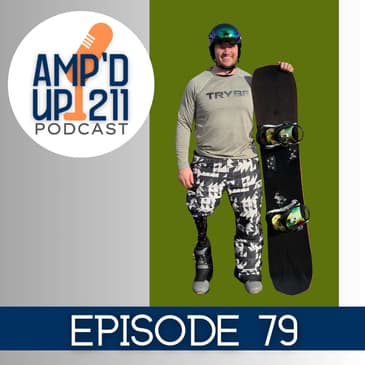
On this episode of The AMP’D UP211 Podcast, I sit down once again with Josh Reed for a powerful in-studio conversation about what life really looks like after trauma. Last time, we talked about the accident, the amputation, and the fight to survive. This time, we go deeper into purpose, faith, growth, and the mindset it takes to rebuild your life mentally, physically, and spiritually.
Josh opens up about the struggles, the breakthroughs, and how his journey is now leading him into public speaking, where he hopes to encourage others facing adversity to keep pushing forward and never give up on themselves.
The AMP’D UP211 Podcast is all about real conversations from the limb loss community, stories of resilience, recovery, growth, and refusing to be defined by what we’ve lost.
[00:00:00] Welcome to a special in-studio episode of the AMP'D UP211 Podcast. We're visiting with Josh Reed, a right above the knee amputee and a survivor of a motorcycle accident in 2019. Today we're getting into journey and transformation and how a life changing event can create new and extraordinary opportunities. Josh is now on the public speaking circuit and changing lives through his message of leadership and growing through adversity. Josh is truly a symbol of resilience for the community and the community.
[00:00:30] And his story continues to serve people from all walks of life. Let's get into it. Let's get amped up.
[00:00:44] Hey everyone, welcome to the AMPD UP211 Podcast. I'm Rick Bontkowski and today is a very, very special day because not only is Josh Reed here, but this is the very first time that we are taping from the studio with our guests. So please welcome Josh. Josh, how are you?
[00:01:07] I'm doing well. Thanks for having me here again, speaking with you last time I think was a year and a half ago or so. And yeah, I'm glad I get to be the first in the studio.
[00:01:17] Yeah, this is really interesting because it's sort of sensory overload for me right now. I'm usually sitting at a table. I'm looking at a screen. Our guest is obviously somewhere else and everything's in headphones. And I have sort of this kind of rhythm, this sort of cadence that I'm used to. And right now it is none of that.
[00:01:42] I mean, there's nothing that feels at all familiar about this. So with that being said, I'm asking our audience to please be patient with me today. If I seem a little out of sorts, it's because I am sort of driving a car right now.
[00:01:58] I guess I'd compare it to have you ever rented a car and thought, oh my gosh, how am I going to drive this car for the next few days? Because it's completely different than what I'm used to. But thank you for being here. Remind the audience where you are from. I am originally from the Midwest, from Michigan, Chicago for a little bit, but I have been in Los Angeles for about seven years now.
[00:02:23] Los Angeles. That's interesting. I want to talk about that a little bit more. However, I want to remind our audience first a little bit about your story. Pretty incredible event that occurred in your life, going through a motorcycle accident, obviously losing your right leg above the knee. I do recall a lot of those details and remind us how long you've been an amputee.
[00:02:51] So it was in November of 2019. So we're at about that six and a half year mark. Six and a half years. So given six and a half years, personally, I'm at eight years now. So kudos to us that we made it this far. We're both pretty much knocking on that 10 year mark, right? We're getting there. And what would you say is the thing that surprised you most?
[00:03:18] I mean, given that you've been an amputee a long time now, what is, let's say the three things that have surprised you most about being an amputee and what the last six and a half years have felt like? There's the community and seeing other amputees coming from a background in physical therapy, a lot of nursing home.
[00:03:44] It was a lot of low level amputees who were diabetic related, who didn't really get out of bed, very low activity. And to realize that there's some really cool athletic amputees out there as well. And kind of wherever my journey is there, there's always progress that I can make and I'm not stuck in bed. And there's a really good community. So that's one.
[00:04:11] Two is that like the pain, the fear, those those negative things that feel so heavy in the beginning, they really faded away. Um, we've talked about in, in the last time we talked feeling connected and waking up and just putting your leg on as part of the day. And at the time I was like, yeah, that'd be cool if that ever happened. But, but really that's kind of where I'm at now. So that's good progress.
[00:04:43] Three. I don't, I don't know. I, I feel like I just operate day to day. Like it's not, it's, it's a non-issue and it's always just, well, what am I not doing in life that I could be doing better? But I think we all go through that. I, you know, I, I, I always think of life and its changes in terms of these bridges that get formed. And then we, we make these very conscious, deliberate decisions to cross them.
[00:05:10] And all those support systems are kind of what build those, but it's really up to us to make that decision to say, yeah, I'm crossing over now. And talking about the word normal, that's the word I think that I hear a lot from the community. When people reach out to me, they'll, they'll just simply say, when am I going to feel normal again?
[00:05:36] And the thing I try to remind, especially newer amputees is it's going to be a new normal. It's never going to be the old normal because so much of this journey is about what we become. We can't go back. I mean, you know, when did you figure out this wasn't going to grow back? Right. I mean, I still, I still wake up some mornings and be like, ah, still gone. Maybe tomorrow. Yeah.
[00:06:03] I kind of lift my leg up and go, nah, it's not coming. The toes aren't coming in yet. I'm hoping they will. So that new normal is something that does arrive at some point. Shorter, longer. Shorter, whatever that is. Someone once asked me, well, how long did it take before you felt like you had that new normal? And for me, it was two years.
[00:06:30] That was when I sort of said, yeah, I'm developing a routine now. Yeah. I, I'm operating, I guess what I perceive as a person again. And I always measure it by how many moments, how many seconds some days do I forget about this? It fades away. And then it just becomes what's the task at hand? Yeah.
[00:06:58] I'm working, I'm creating, I'm writing, whatever I'm doing. There's that pleasure of, I forgot about this. It sort of went away. Unless I didn't charge it overnight, which you don't have to worry about charging your leg. So if I don't charge it, I think about it. If it's a little bit painful, I think about it. Or if I didn't put it on, the alignment's kind of weird. The reminders, right? Yeah. The little nudge.
[00:07:23] But unless something is there to say, like, and remind me that I'm wearing this thing. Yeah. I don't really think about it much anymore, which is such a relief mentally and emotionally getting to that point. But yeah, it was about two years for me too. Yeah. And, you know, being six and a half years yourself, the thing I'm always wondering is because, because we all have various pain levels, various episodes of whether it be
[00:07:53] phantom pain, just poor fit, you're just uncomfortable, you're having a bad day, sitting here wearing your prosthesis. What do you, how would you describe when you start to feel uncomfortable and what circumstances tend to make you feel that way where you're like, okay, I'm either having a bad day or I'm just uncomfortable today? Sometimes it's the phantom pain.
[00:08:23] Um, my pain is relatively low. I'm pretty lucky about that. Right now my ankle is itching. Uh, only so much you can do about that though. Uh, but really if I'm, if I'm sitting at my desk or in a chair, I'm good for a few hours if I need to. Um, I'm pretty antsy. So I like to get up and move around, which helps a lot. Car seats are kind of rough because it pushes, it pushes the hip. It pushes everything in. Yeah.
[00:08:51] But really, I think even if it was two real legs, I would probably be almost just as uncomfortable. I think that's a good comparison because very often I think, yeah, this really isn't an issue of my leg. Like I would be comfortable sitting here even if I had my leg. So I try not to let that get into my head too much. Where, um, I always think of really, really fit kind of active amputees like yourself as
[00:09:20] wouldn't you experience a lot of muscular pain anyway, because you're an active guy and whether you're wearing a prosthesis or not. Yeah. There may be a concentration of soreness, tenderness that comes with your residual limb or your stump, but you would have that in another form. I'm sure, depending on the muscle groups that you're using, how do you tend to approach your workout programs?
[00:09:48] Because for anyone that follows you, like on Instagram, they're going to see a pretty active guy, a guy who's using a lot of range of moment movement, um, a lot of, uh, range of motion movement. You're, you're running, you're moving a lot of weight around, you know, I move a lot of weight. Running is questionable, but I saw, I did see a video clip of you.
[00:10:15] Um, I'm learning to run and I'm learning to run. That's great. And I appreciate you being, you know, transparent and vulnerable. I thought to myself, he's learning how to run. Yeah. Like I could see the, the cadence of it and the sort of hopping motion and anyone I've spoken to, cause you know, we, we interview Paralympic athletes and I'll, I'll say, how does that start? You know, where, where does that seed get planted?
[00:10:45] And they'll say, it's really awkward at first. So awkward. Yeah. Yeah. Because as, as children, you know, the way we grow up running, it's a very fluid kind of thing. It's almost instinctive when you're, when you're growing up, you know, um, and you're an active kid, you just take off. You don't even think about it. You don't. And you bounce off the ground a lot better than you do when you get older.
[00:11:12] And I'll talk to, you know, um, people with two legs, you know, marathoners, people like that. And they'll talk about the runner's high where I don't even really even know what my body's doing anymore because I'm just going right. There's autopilot, so to speak. And I would assume for someone like yourself above the knee, um, it's a very, very sort of
[00:11:37] deliberate kind of, okay, I'm tracking everything that my body's doing right now. And I'm really focused on what not falling. Right. Yeah. So, uh, tell me a little bit about your approach to workouts, your approach to recovery. What would you say to someone who is wanting to get into that space and start exploring their
[00:12:04] body in this new form? So with the weightlifting, I have competed in powerlifting. I've been in gyms for half my life. I enjoy moving weight. Getting back into the gym after losing my leg was hard because I wasn't sure what the limits were going to be or how I would do certain movements.
[00:12:31] I had broken my ulna on my right arm, crushed my left hand on top of that. So I really was, I was weak getting back into the gym. And so much of it was like emotionally. I'm comfortable being in the gym, but I'm comfortable being strong in a gym. And so now I don't really know what's going on. I'm walking around like a newbie figuring out how I can use a piece of equipment. If I can use that at all, the weight is really low. So the balance is awkward.
[00:13:00] At the time, when I first started going back, I was in a wheelchair. So I'd wheel up to a machine, then hop over. And it was just scary. But at the same time, nobody there was looking at me and being like, look at that guy with one leg in a wheelchair that's all scarred up and beat up, learning to operate this machine and think negative of me. Yeah. So the fear, all the negative was really just in my head.
[00:13:28] Since learning to lift again, I get called an inspiration like we all do because I'm alive with one leg. But really people come up to me and, you know, they'll make comments like, oh, that was cool. That was whatever comment they make about the lift. But there's really no negative. I'm able to help people with their lifts when I see something because of my background.
[00:13:56] And so that's really become a non-issue in that setting because that's where I felt most comfortable. When you switch over to running, I have done marathons in the past. I have done triathlons. I've done a lot of running in my life. Learning to run again has been very hard for me. Part of it is just because I've put on weight, I've put on size. Part of it is just it's a completely different knee than what I'm using now.
[00:14:22] And so when you switch to a running knee, you don't suddenly become a runner or a running blade. You don't suddenly learn how to just alter your gait and to land that next step. So understanding what the limits is, how do I engage my hamstrings, my glutes to lock out that knee as I'm pulling through? What is the amount of rebound I'm going to get from the running blade? What's the alignment like? Is it going to whip?
[00:14:50] And if you're a non-amputee listening to this, it does not make sense. But if you're an amputee, especially in above the knee, dealing with whip is horrible. It throws everything off. Learning to, wondering if you're... When you say whip, define that. So like if your leg is internally or externally rotated, for me, it's mostly when it's internally rotated as I'm swinging through, it's kind of doing this circumducting motion from the knee down. And it's a lot of it's just because how am I engaging my stride?
[00:15:20] And then is the knee actually in the right alignment or is the socket on a little bit weird? So dealing with that is difficult, but trusting the equipment is so hard. There's the whole body mechanics and making sure I'm alternating limbs and how to drive through, but just trusting the knee, trusting your foot. It doesn't really matter what the sport is. That is so hard because I also do snowboarding. Yeah.
[00:15:50] And a shout out to Mike Schultz who made the BioDap leg and Paralympics just recently ended and he's retired from that. So what he has contributed to the amputee world is huge with the BioDap leg. Learning how to trust that knee has been so hard because it's not a locked knee. It's got shocks in it. You get rebound. You have to learn those adjustments and the alignment with that as well. And that has been so tricky.
[00:16:19] And I use it fairly well. And I'll use it like I'll do squats with like a Smith machine or I'll do deadlifts or I'll do box jumps. I use it for the snowboarding. It's a really tricky leg that I'm only beginning to unlock four years after having it. Wow. So it's been a lot of work and it's been a lot of persistence and analyzing my movements.
[00:16:45] I keep a small journal where when I make adjustments, I kind of keep track. That way I can see what works, what doesn't work. I talk to other amputees just to figure out what's going on so I can really unlock the potential of the equipment that I have. And is this the leg that you would use in a gym setting or is it different? This is my daily driver. I use it for the gym for pretty much everything unless I'm doing like heavy, low body things.
[00:17:14] This is my second C leg because the first kind of got a little too beat up. Okay. Because I definitely push my stuff. Sure. Sure. So the question I want to ask you is, is there any particular, you know, movements with weight, any particular lifts that you do that you find are the most challenging for you in terms of what kind of pressure it's putting on your limb in the socket?
[00:17:46] In terms of my limb in the socket, this is my fifth, sixth socket. It's, I've done lanyard, skin fit. This is a double walled socket. My prosthetist and I have worked quite a bit to make this work for me to give me the range of motion and the stability where I need it. But a lot of the stability I got rid of because I train for extra stability in the gym. So I, way I can have more range of motion.
[00:18:16] And so when I am lifting really heavy, there is pressure going through my, through my stump, but I don't really get pain in the stump. I get a, I get like a good muscle pump, which affects my, the way I fit. But, but I am also, I don't really have to worry about like skin breakdown.
[00:18:39] Um, it'll get a little bit red and bruised if I'm lifting really heavy that day, which doesn't really cause any issues. The, the, that redness kind of fades away, uh, within a healthy, safe times. And do you have to sort of like, um, shift around different parts of your body based on some of that soreness and recovery time? Like, do you sort of break that out in terms of your workouts?
[00:19:05] Uh, I, I have a pretty good training schedule where I only do legs like really heavy once a week. So I have plenty of time in between. And if I know I'm going to be on my feet a lot the next day or coming up, I'll shift my schedule around. If it's snowboarding season, it's okay. When am I going to be on the mountain and how much? And I'll shift my heavy days with that. But I feel like we've all done that.
[00:19:30] If you train into gym, you, you're dealing with that kind of soreness and that, you know, it's, it's a DOMS, which is like delayed onset muscle soreness. Because we've, if you're an athlete, you've dealt with that in the past. Yeah. So I feel like it's really no different. So it's just a discipline and it just sort of, it sort of transfers whether you're limb difference or not. Yeah. You have to be really, um, careful and conscious about, okay, what, what am I doing?
[00:19:59] Am I allowing myself to heal? And if I push myself, how do I dial that back to make it work for me? Whatever that is. Yeah. Cause you know, anybody who trains legs looks like they rode a horse the next day and I'm no different. So yeah, no, I get it. Given your activity level now and you're, you're having, let's say a great week, you you've hit a milestone, let's say like, ah, I didn't think I was going to be able to do that. And I did that today.
[00:20:28] And you're, you know, you're, you're really having one of those moments. All amputees have those moments where you think, yeah, I feel really good about where I'm at right now. In those moments. Do you ever think about the accident? Does any of that ever come back into your consciousness? Not at those moments.
[00:20:53] But like last night I was, uh, laying in bed, talking to my wife and she was like, well, what are you grateful for today? Yeah. Which is good. You know, it's a good discipline. It's a good exercise to do. And I was like, you know, my leg fit really good this morning. It felt really good yesterday. Like, especially in the morning, I just felt so connected and like things were moving. It was great. Yeah. Don't really think about the accident. I had a great lift. Don't think about the accident.
[00:21:19] I drive by where I had my accident probably once a week or so every other week, maybe depending what I'm doing. And, uh, I'll take that entrance ramp. Um, and I always like look at the spot where I, where my motorcycle hit. And then I look at the spot where I came to a, like where I stopped. And, you know, I look at, I'm like, boom and stop.
[00:21:45] But I play it in my head, but I don't have like, I'm not mourning anymore. I'm not looking at it and I don't feel pain. It's like driving by a house of somebody, you know, every time you drive by it, you kind of look in the door and in the window or, you know, you know what I mean? Like, you're like, Hey, I know that person. Well, it's almost nostalgic. Yeah. And so when I drive by this, it's like, Oh, that's where my life changed. Check. Yeah.
[00:22:13] And it's, it's not a happy moment, but it's not, it's not one that I feel sad about anymore. You know, I think what you're talking about is the idea of recognition because it's not necessarily a celebration and it's not necessarily a, Oh, kind of moment, but it's, that's where it happened. Yeah. I recognize that. And how do we take trauma?
[00:22:38] Because that's, I mean, having that type of accident, very traumatic event and very life changing. And to have worked through all those feelings to be able to take all of that and sort of set it on a shelf and say, Yeah, that's part of me, but it's not all of me. Right. Right. And really the accomplishment is kind of like a trophy that you got in like high school.
[00:23:06] I was, I was going to say like, yeah, it's that, it's just that symbol. It's that, it's that plaque. It's that award. It's that trophy that you sort of set there and you say, I overcame that. Yeah. That was part of my story right there. And the more time goes by, the more dust it collects. Exactly. And I'm, I'm so thankful for how far I've come and for the people who have poured into it.
[00:23:35] Even before I lost my leg, just building who I am. I'm very thankful for, for, for where I'm at today. And the rest is all just part of a story. Like, is anyone close to you? Like parents, let's say extended families. Anyone ever remind you of that? Do they look at you and say, Josh, I, like, I can't even believe like where you are now. I came to visit you at the hospital. I get that.
[00:24:02] Especially if I haven't seen somebody in a long time. Three years ago where I was at is way different than now. Yeah. Three years before that I was struggling. I mean, it was, it was ugly. Totally. So if I, if I haven't seen you for a while, I'll get that comment. Yeah. Which is, which is great. Like I kind of laugh it off. It's the new version. Yeah. Yeah.
[00:24:31] I'm at like version 3.2 or something by now. Who knows? I really like this version of you, Josh. This, this is a good one. You're smiling and you're, wow. And I'll have friends, you know, lifelong childhood friends that were with me, you know, through, through everything I had gone through. And they'll say to me things like, how long has it been? And I find them asking me that question more than once.
[00:25:02] Almost as if they don't believe it. Like how long has it been? Yeah. It's been, it's been that many years. Wow, man. Just wow. Wow. Yeah. And I think this has been kind of a journey for them. They came along with me. Yeah. They were on the same bus. And I think that's when things really get elevated when you realize, and I, I've talked
[00:25:30] to different amputees about this in support groups. When we start to realize the weight that's created in this experience, whether it be going through trauma, losing a part of yourself and the weight that others take on. Because it's just in many ways, just as hard for them to go through it. Yeah.
[00:25:59] We talk about our stories, but we forget we're part of their story as well. Big time. Yeah. Big time. And, and knowing that there's sort of this interesting kind of dynamic that occurs where while we're carrying that weight in real time, some days they're carrying more. Other days we're carrying more. And we're sort of helping each other through it.
[00:26:26] It's that we're, we're never alone concept because you and I both know those quiet moments when we sat in a room by ourselves, looking down, wondering what's next. Yeah. How am I going to make this work? Is there going to be a next? Is there going to be a next? Am I going to make it through this? Um, to what degree is my life going to change?
[00:26:54] And, and all the questions come fast and furious at times, but then you start to realize later in life through the journey and through that weight exchange between people that care about you. I was never really alone because I was in people's thoughts. Yeah. There's, I mean, I, that's why it's so hard to not be grateful for those people. Even the people who, I don't know, most of my friends right now, they're kind of mean to me
[00:27:23] and probably meaner than anybody else is because they feel no pity or sympathy or empathy or kindness to me having one leg. It's like, well, hurry up. We'll get up. We'll stop. You know, there's zero excuse that I have. Yeah. And I'm so appreciative of those people. Yeah. Come on. What are you, a wimp? Let's go, man. Cause they don't, they don't view me as having one leg. I'm just Josh to them. I'm just the person that they've known for however long. Yeah. And like, I'll take my leg off. I'll complain about my leg.
[00:27:52] And my wife makes comments like, oh yeah, I forget that you only have one leg. Like, that's cool. I guess maybe. Yeah. I'll have a, I'll have a real active day with a friend and we're just going, right? We're just, we're just charging forward. And all of a sudden they'll stop and be like, are you all right? Yeah. And I'll, and we're like eight hours, right? We're doing like a cycling trip or something. And are you all right? You're asking me now? Yeah. Yeah. I'm fine.
[00:28:21] We're about 40 miles into this. You're asking me now. So it's, it's, it's, it's interesting because they do forget. And I, I think that that's a good thing, right? Because it creates that normalcy and Hey, we can still experience joy together. This isn't a funeral. This is life. We're thriving and we're being joyful and we're living in this space of gratitude.
[00:28:50] You know, I think about your, you know, everything you've been through. And of course I follow you through social media. And now I see everything that you've done through your personal journey, through all of your struggle, through, through all of this huge amount of adaptation. And now I see you in this different trajectory now.
[00:29:16] And I see you coming to this place of now it's time to start sharing some of this. Now it's really time to start focusing on where can I place everything I've learned, all of this energy. I want you to talk a little bit about how you've arrived at this place of public speaking and wanting to coach and wanting to help others.
[00:29:44] What does, what, what do you think led you to that sort of mindset and that thought of I'm going to do this? The situations and the experiences we go through gives you insight to different areas of life, right? Yeah. When you deal with long-term pain and I've never had to deal with like cancers or the infections like others. But there's that fear of the unknown.
[00:30:14] There's that, that fear of how am I going to get up tomorrow? And when you grow through that and you're learning, you gain such a good wisdom. And I had a pastor that talked about when he, when you're younger, you use other people's wisdom and other people's story to help direct you. And then as you go through the experiences, you get your own wisdom that then you can share.
[00:30:42] And even when I was in the hospital after this, like with this going on, I was like, ah, this is my wisdom. This is my story. This is something that, that I actually get to pour out. So even in the hospital, I was understanding that this is going to be used. I don't know when, I don't know how, I don't know what to, to what degree, but I know it will be.
[00:31:06] And you're talking about, it was about two years before you really started feeling integrated, like one with the leg and really starting to move past it. And it was similar for me. I spent a year, well, in the hospital, it was really changing the way I think and how I'm going to accept it. And then it was a year of really trying, but kind of failing and going down into depression. I can't even say failing. It was me pushing forward into a way I didn't know. Yeah. And doing the best I could.
[00:31:37] And then it just wasn't working. And about that one year mark is when I shifted directions and I started really pouring into the healing emotionally and mentally and really setting a vision for myself and really started to put actions to those thoughts. And it was about that two year mark where I was like, you know, I feel pretty good. Like I'm a little bit weaker than I used to be. I'm a little unsteady on my foot. But I've made good progress.
[00:32:06] I see good direction. And I'm on the right path. And so really after that two year mark, it was starting to build. Working with other amputees who are struggling with things that I've worked on and overcome. That's a big one. Whether it's with the prosthetic and the body, whether it's with the emotions, the stress, the depression. I've been through that.
[00:32:35] So let me help. And then it just has continued on. And now it's like I work a lot on growing through adversity because of this wisdom that we gain, because of the strength that we gain, because we've been through those choices of do I give up or do I grow? So I've gone through the adversity. We all go through our own version every day.
[00:33:02] And then I speak a lot on just the leadership, but really the internal side of leadership. It's a lot of, like I said, taking control of where you're at and where you're going to be. Seeking knowledge, seeking wisdom from other people. And then just the discipline. Am I going to wake up and put my leg on and get up and move? Or am I going to lay in bed all day because today hurts? Am I going to just wallow in self-pity or am I going to say, yeah, this happened. I have a life I have to live though.
[00:33:31] And it's that daily discipline, that daily decision, that daily getting up and just going. And once you combine all those things, it just starts pouring out. Whether it's in leadership to a group or leadership to your family and friends, or sometimes it's just leadership to you. So, like, there are several times where I'm just, I start making excuses to myself. And I'm like, just shut up right there, Josh. I don't want to hear it today. Like, you got to get up. You're better than this.
[00:34:01] And when you start pouring out to others, it also helps teach you more. It helps you heal more. And it's just been empowering. So, it's exciting going into this next step of my journey with the speaking, with the teaching, with the really helping others instead of just a one-on-one to a larger scale. Yeah.
[00:34:24] And I want to echo something that you said that really resonates with me because the physical part of this is usually the primary focus. We're post-op.
[00:34:37] And especially for yourself coming from, you know, a traumatic accident and being so beaten up, being so scarred and broken and physically having gone through, you know, incredible trauma to your body. All of that physical healing is such a big piece. And it tends to be the thing that we're focusing on.
[00:35:05] But once the healing starts to begin and our bodies start to repair, I think what becomes a much larger part of this process, and I hear this theme often with people, is the psychological end of it, the emotional end of it. How do we come to a settled place with all of it? And how do we rebuild from that and not be filled with resentment, not be filled with regret?
[00:35:35] We were talking, you know, earlier about understanding how to channel anger correctly because it's a real emotion. We all experience it. But there are ways to use it to our advantage. There are ways to harness these energies and all these chemicals that get released in our brains and say, okay, but am I serving myself well? Am I using this? Right?
[00:36:04] I always think of like actors when they say, yeah, use that. You're mad right now? Use it. And that's when the performances start to seem authentic. When it's, oh, that's a real person. I believe that's a real, that character they're playing, that's a real person when we know it's not. But somehow they traverse, right? And become that thing. And someone will say, that's a great actor. Well, why? Because I believe that they are that person. They're able to channel those energies.
[00:36:34] So I think of it very similar for people like us where you say, all these things happen. Yeah, they happened. What did you do with it? How did you use it? And that I really admire when someone can say, I'm taking that and I'm using it to serve.
[00:36:56] Because so much of the success that I've had in my own life, personally, professionally, was been when I felt like I could serve. When I felt that what I was doing was a form of service to others, to something that was bigger than myself.
[00:37:23] Shining a light on people like you and saying, hey, everyone, look over here. You need to listen to this. You need to know this. It's a form of service for me to say, I don't have all the answers. I wish I did, but I don't.
[00:37:44] And I'm on that continuing journey of wanting to gain knowledge, wisdom, even affirmation, whatever that is, from others. And feeling that connective kind of tissue within the community. Um, because I do think that it's really easy to sort of slip into a dark space in our community.
[00:38:13] And what would be the thing, knowing all that you know now, and it's been a, it's been a, it's been a wild ride. It's been a wild ride for six and a half years. You know, I'm calling you up, Josh, um, um, two weeks post-op. I have no idea how I'm going to get through this. Um, I can't, I can't believe I survived, but here I am. What do you say?
[00:38:46] Acknowledging that this sucks. Yeah. That's important. Don't, don't minimize. I mean, I have people now that are having a bad day and they're like, well, it's nothing compared to. It's like, don't, don't minimize what you're going through. What you're going through is real. Yeah. But also don't catastrophize. Like other people have been through this and they've recovered. You're, you're, you can do it. Yeah.
[00:39:11] And so finding that balance between the two is important, but just understanding where you're at. Um, and, and understanding that there's not easy days ahead, but it will get easier. And you won't believe me in the beginning and that's fine. And then you're going to be in a section of life right after you're like, you know, actually, I think I claimed it. I think I'm good now.
[00:39:39] Like, yeah, it's only been a few months, but I'm good. And I'm like, no, no, no, no, no. You're actually not. I'm glad you're feeling good right now, but it's going to get dark and heavy again because it's just part of the journey of, of, of healing. And that's okay. But really sitting with somebody and acknowledging like there, there's better days ahead. This actually happened, but this doesn't have to define you.
[00:40:05] And I think that's the biggest point, uh, biggest part of recovery, feeling part of our equipment, accepting what's happened is it's not a central part of who we are. Like I, I have talked before about me not having a leg is probably the least interesting thing about me. The story is kind of crazy and there's, there's some laughing, laughter and some crying and stuff associated with that.
[00:40:29] But this is so small with what I want to do in life and with what I have done in life. But the more we keep it, the central part, and when it just happens, it is central. You know, it's very tangible. It's very real. The pain is real. But over time we have to let it, let it move over like the trophy on the shelf. It just has to be a part of what we have done, part of what we've gone through.
[00:40:55] But the more you focus on it, the longer we keep it as the main focus, the harder it is to ever let go and to move on. I think you're right because it very much is the center of the universe at first. It's the thing that tends to directly affect every aspect of your life. Whether that's getting up in the morning, taking a shower, you know, trying to drive a car, just trying to walk.
[00:41:23] Something that we all take for granted. Because it's what we've done our entire lives and then suddenly that's stripped away. And it's time to rethink all of that and learn again. Because I always feel like, well, I want to do all the things that I used to do. And what am I willing to sacrifice to be able to do them?
[00:41:52] And what I find sort of in the final equation is always you just needed to get uncomfortable. You just needed to relearn it. It wasn't that you couldn't do it. It was just a question of, are you willing to start over? Yes. So yeah, you were really good at that, right? I was thinking like music because I'm a drummer. And yeah, I spent, you know, decades, most of my...
[00:42:20] I was five years old when I fell in love with the instrument. And I knew a one way of doing it. And then suddenly it was like, I can't do this anymore. And someone reminded me, well, you can. It's going to be really different. But are you that much in love with doing that and experience that much joy and have that much passion that you are willing to start over again? Yes.
[00:42:49] Wipe the slate clean. Start over. If that means 10,000 more hours before you even feel proficient again, are you willing to make the sacrifice? If not, let it go. Yeah, exactly. Who cares? Don't do it anymore. It's not your thing anymore. It's going to take a lot more work. It better be worth it. I was never good at basketball. I don't want to be good at basketball now, right? I'd love to be good at drumming, but I can barely do a paradiddle.
[00:43:18] So it's this whole thing about not just adaptation, because that can be very much a physical process. It's the mental game. How bad do you want to be good at the night before my amputation. And he said, do you have any questions? And he meant about the procedure.
[00:43:48] He wasn't asking me, like, do you have any... My son, do you have any life questions? He's like, do you have any questions? And I just unloaded. How am I going to drive? How am I going to walk? How am I going to be a musician? How am I going to... I was flooded. He goes, I don't know. And it really kind of punched me in the chin, right? Like I was going down to the canvas, like, ooh. Not what I was expecting.
[00:44:17] He goes, I don't know. But here's what I do know. You'll do it all if you want it bad enough. That's it. That's how it works. And that may seem cold and harsh to some, especially new amputees, because you're in pain on a lot of levels. But I think what you tend to learn, and I love the way you put it, you're going to feel this way now.
[00:44:46] And you're not going to believe me when I tell you it's going to get better. But there has to be just a small part of you that believes that, just a teeny tiny bit. Because that'll keep you in the game. And it'll create just enough forward movement that at some point, you're going to see this teeny tiny light down at the end of that dark, dark tunnel. And when you come out of the haunted forest, you're going to go, hey, I'm doing well.
[00:45:16] I'm getting there, right? And tell me about how you would want people to engage you in this new space. In terms of like who I am today with having one leg navigating society? Just as far as I like Josh, I like his message. How do I engage him? How do I get this teaching?
[00:45:46] How do I find this Yoda master? How does Josh want me to reach out to him? So I'm available on Instagram. I know you can probably put the link in there as well. It's JD Reed 87 because I'm not creative. You can find me on there. My email is Joshua at Joshua Reed speaks dot com.
[00:46:14] So you can email me that if it's if has to do with like speaking. I don't know if I'm nothing special. And that's the thing. Like what I have gone through. I'm not even the first person to have a motorcycle accident, believe it or not. You're not? It has been others. Wait a minute. But it is my story. It is my perspective. It is my growth. And it is something that I can do to help others.
[00:46:39] So whether it's through Instagram, whether it's through the email, you know, I'm always willing to help others. Our journeys are hard. And yeah, it doesn't have to define us, but that doesn't make it easy. And I'm always willing to help or at least like you said, point point someone in the direction to get help to have that conversation if I'm not able to do it.
[00:47:04] Yeah, no, I really feel strongly about that in terms of when I when I offer myself and say, hey, send me a message, write me an email. Well, I may not have the answer, but I've been an amputee long enough.
[00:47:23] I get this really cool experience of talking to people like Josh and others where I might be able to point you in the right direction, depending on what you're going through. We're all part of the same community. And I always feel lucky because I get to interview, you know, my superheroes. They actually exist. You don't have to go see a movie to meet them.
[00:47:49] And I feel very, very fortunate, very full of gratitude that I can get those messages out there and provide these resources. I mean, what do you what do you want to see like the next year look like? This next year I'm excited for. I have the speaking that is growing. It's why I'm able to be here talking to you because because I speak next week.
[00:48:17] And as that grows, it pushes me to develop myself. Um, what are my ideas on adversity and on leadership and on speaking in general and on pouring out to others? I'm getting better at all of those things. I'm learning and I'm getting experience, which is awesome. You're crafting. Yeah, it's it's it's the next part of that story. Wordsmithing. Yeah. It's hard, isn't it? It's tricky. I struggle with it. Yeah.
[00:48:45] And some people will say to me, especially at work, they're like, God, you're a great speaker. And I think I suck at this. Yeah, I'm terrible at this. I said, um, like 500 times. Yeah. Yeah. The first the first few minutes of this, I think I said, um, 50 times in every single one. I was like, um, I'm thinking I sound like I'm mentally defective, like there's something wrong with me. And I'll even mention to Brian, our producer.
[00:49:13] I'm some of this stuff is like unwatchable for me when I see the podcast, because I'm thinking you sound like an idiot. What are you doing? You don't sound like an idiot. You're okay. Yeah. What was that? Uh, Stuart Smalley. People like you. Yeah. Yeah. You're fine. You know? And gosh, darn it. Yeah. You need to do a daily affirmation. You need to look yourself in the mirror and tell yourself all these things. Yeah. Um, I struggle with that.
[00:49:43] And we were talking about imposter syndrome and I go through that a lot in various aspects of my life where I just, for some reason, lack, no matter what, what experience I have, no matter how well read I am, how well prepared I am. I still have this like sneaking suspicion in the back of my mind. I don't know what I'm doing.
[00:50:07] And I don't know where that insecurity comes from because I've been in therapy and I've never, I've never explored that. Like, where, where is that? Is that parents? Is that like a teacher you had? Is that some little traumatic event that made you feel less? I don't know where that comes from. Or is that the engine that keeps me pushing towards excellence?
[00:50:34] Is that the little reminder of, yeah, you're not good enough, so you need to work harder. Push it. They believe you're this way? Well, then be that way. Right. That's going to require some work. Right. Because, because people will comment to me, yeah, like you don't half-ass it. And I say, no, I, I, I will not walk into a meeting.
[00:50:56] Even, even a, a lower level, I'm not talking like power broker meeting, even something that's, let's say every day, kind of low level where I'm unprepared. I will never just like riff on something. Oh yeah, I know what I'm doing. No, there's notes. It's like, I'm ready. Like I even mentioned when we got here, I didn't prepare, um, an intro for this episode.
[00:51:23] Um, and I'm beating myself up because of it now, because we're doing another taping today. And I have all these notes for that, uh, that podcast, but I'm thinking what happened to me? Like, what did I do? I forgive you. I know you do. Cause you're a sweetheart, but I'm just saying it's, it's that pursuit, right? Yes. That'd be better. Yeah.
[00:51:47] And really the, uh, the thing as an amputee, but I think it was even before I was an amputee. If I'm trying something new, whether it's the speaking, whether it's a new sport, whether it's anything, I don't get mad at my performance. If I put an effort and I tried, what makes me mad is when I got scared and I didn't try. Yeah. And that's the stuff where it's just, I can't let it go until I get out there and either
[00:52:15] make up for it or, or in another sport or go back to that sport. And I don't care what it is. If, if I gave up because I got scared, that is my, that is my biggest pet peeve with myself. Yeah. I remember the first time getting back on a bicycle and my, my, uh, my hands were shaking.
[00:52:39] Like I was literally like, and even in my head thinking, why am I so scared? You know, the whole, the old saying, it's like riding a bike, you know, you just, you remember that hard. And, you know, now years later when, you know, I, I go tremendous distances on a bike.
[00:53:04] Like, I think, remember when the first time you got back on a bike as an amputee and your hands, your arms were literally, you almost like shook yourself, like right out of the saddle that you were so scared. And I examine that sometimes. And I realize maybe that's just part of the process. Yeah. Maybe that's just the reality of growth and being uncomfortable in order to grow.
[00:53:33] And I think so much of what we go through in, you know, limb loss and limb difference is boy, oh boy, it's uncomfortable. But if we commit and we focus, the outcomes are just extraordinary. Yes. Every time if you push through it, I don't care what it is. Even if it's like a woman I met last week, older woman, she's a double and below the, um,
[00:54:00] double above the knee amputee, it's been a little bit of time. She's more further than she should. Yeah. And it's like, get up at the kitchen sink and lean against that kitchen sink for support and do some like weight shifting there. Like as you prepare a meal, she was scared. But if she can do that. Yeah. Be proud of that. Oh yeah. Own that. Yeah. You stood up and it was scary and it wasn't comfortable. And you, you pushed yourself into the unknown despite being scared. Yeah.
[00:54:30] And regardless of where it's at, you should be proud of that. That's so true. No. And, and that's so wonderful that you can have an exchange like that and the energy that you get in, even in your own journey to be like, okay, this is when things get like really exciting when we're sort of sharing that and we're cheerleading for each other. And someone will say, I made it to the mailbox today. And I'm like, yes. Yeah. I get so excited.
[00:54:57] Like I'm working on hitting jumps over my snowboard. The last time I hit a jump, I got about that much air. And I used to hit big things with two legs, like back in my two legged days, big jumps. And now I'm getting this much air and I'm like, I did it. Yeah. And I am so proud of her for standing up at a sink. Yeah. Way more than I am for me for hitting. Absolutely. Absolutely. But I'm scared and I'm hitting it. So it's like, okay, give myself some credit. It's building, it's growing, but it's so relative to where we're at and what we're going through. For sure. No, it's, it's, it's wonderful.
[00:55:27] I'm glad that you're able to give that to the community now. I'm excited to keep watching and following and seeing how that all kind of develops and materializes. This is Josh Reed. Please look him up, check him out. He's doing some incredible things in our community. And I want to thank you for being in studio today. Awesome. Awesome. And, uh, yeah, it's just, it's wonderful work. And, um, I'm so excited for you and your family.
[00:55:57] Uh, everyone that's going to wrap it up for us today. I'm Rick Bontkowski. This is the Amped Up to 11 podcast. And I want to wish everyone health and happiness. And we'll see you next time.