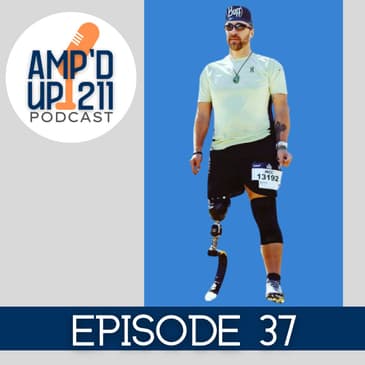
We are proud to present adaptive athlete and trail runner Zachary Friedley. Zach is a congenital amputee born missing his right leg above the knee. Zach has spent his life in the pursuit of understanding how to reach the true meaning of movement. This ultramarathoner not only pushes himself physically but also spiritually. Zach continues to inspire the entire amputee community through his video blogs, social media content, and special brand of wisdom. The AMP'D UP211 Video Podcast is hosted by Rick Bontkowski, a right-below-knee amputee.
Subscribe to the podcast!
The AMPdUp211 Youtube Channel
Recorded at Audiohive Podcasting
Hosted on Transistor.fm
[00:00:00] Now on the AMPD UP211 Podcast, Adaptive Athlete and Trailrunner, Zachary Friedley. Zach is a congenital MPT born missing his right leg above the knee. Zach has spent his life in the pursuit of understanding how to reach the true meaning of movement.
[00:00:18] This ultra-marathoner not only pushes himself physically but also spiritually. Zach continues to inspire the entire MPT community through his video blogs, social media content and special brand of wisdom. It is our pleasure to welcome Zachary Friedley. Zach, how you doing today, man? Good to see you. Thanks, man.
[00:00:50] Zachary, how are you doing today? Where are you in the world right now because I know you are always on the move for my friend? Yeah, right now I'm at home in Albion, California which is about three and a half
[00:01:01] or four hours north of San Francisco on the coast. Okay, okay. Yeah, and I was doing some show prep as we call it. The other day and I was reading some various articles about you and trying to kind of track your movements.
[00:01:22] Let's call it like a day in the life of Zachary Friedley. Yeah. I got to be honest, man. I was like dizzy. I was dizzy. Like, whoa, this is a lot going on here. It's guys all over the place. How do you do that?
[00:01:45] How do you feel about that? Are you prone to that something that you thrive on? Like, hey, I like to be moving. Obviously trail runner, you know? Yeah, I think I'm just living my dream honestly and I just like a pretty charged mostly every day.
[00:02:06] I mean, there are days like yesterday, I didn't do anything. I didn't have to run. I didn't have to open emails and I just recharged all day. So I do take my recovery and like my grounding and my downtime very seriously because
[00:02:19] without that, I can't do the other, which is super important. No, I appreciate you saying that because very often sometimes we get sort of one kind of perspective on people and we see these really, really active MBT's doing these amazing
[00:02:38] things and we think, I'm just sitting on my couch today, right? I did that yesterday. I didn't put on any pants, man. No pants, no movement today is my day. I didn't put my leg on. There you go.
[00:02:54] Maybe you kept my leg off until evening in my wife asked me to do some dishes and I put my leg on for the first time. Yeah. Well, my girlfriend Sarah always knows I'm being a little lazy when I'm using, oh,
[00:03:08] then I need to have to put my leg on excuse. Oh, yeah. Can you take care of that? My toolkit. Are you asking me to put my leg on? Absolutely. Yeah, it does work sometimes. You know, I'm certainly fascinated by you simply because you've dealt with limb loss
[00:03:31] your whole life and yeah, I'm a little, a little new to this, you know, moving into my seventh year here. And I'm always fascinated with the perspective of, you know, the, the lifeers, the guys that engals, been dealing with this situation, this adaptive situation, their entire lives.
[00:03:56] Is there anything that for you that stands out in your mind growing up? Let's say quote unquote growing up amputee. Is there anything that, you know, you sort of reflect on maybe a moment when you realize things were different for you or,
[00:04:12] you know, something that liberated you in this space when you were growing up? Yeah, I mean, thinking back. So I was a kid in like the late 80s and the 90s. And I went to the Schraner's Hospital to get my prosthetics done, which is like a four-hour
[00:04:29] drive from my house in Kansas City, Missouri. And I went there frequently, you know, because when your kids are growing, legs don't last very long, they're breaking and maybe the technology wasn't as great as it is right now. I never really thought about it honestly.
[00:04:46] It was just normal life and I think my parents just kind of didn't really, we didn't talk about it too often, which I think reflecting back that mean that could be like, maybe not a great thing. I felt like a void, what's going on.
[00:05:00] But it did produce me to who I am today. You know, and I do a lot of reflection. And there's a lot of times where I have a lot of empathy for myself growing up because
[00:05:11] I was always like, had to work super hard or, you know, my parents were on me all the time. I never got to call myself disabled. I don't know that stuff. It was just pretty hard for a core man for like 30 years of my life until I realized
[00:05:25] a lot of things that did a lot of inner soul searching and was able to maybe make things a little bit easier for children. Real exact. Yeah, and that's I appreciate you saying that because I hear quite a spectrum of responses
[00:05:41] when I talk to people like yourself where some young people are sort of coddled in a way, or a cater to in a way that might be counterproductive, where it's not really sort of embolding them to do great things.
[00:06:02] Whereas it sounds like maybe depending on what they came from because there's so many generational differences, the way in which I was a parent, you know, numb and empty and the way that I was a parent was so different from the way my parents were parents.
[00:06:22] And, you know, and I know people get into this debate about, yeah, we need to go back to the old this and that. And I sort of pause and say, well, wait a minute, you know, the world is different now. There's different stimulus.
[00:06:38] There's different things that are sort of coming at kids, a million miles an hour that, you know, myself, you know, growing up in the 70s and the 80s, it was very different. It just was a different time. It was a different school of thought.
[00:06:56] And knowing that your parents made that conscious decision to say, okay, Zach, let's go. Like, like, yeah, you need to be on time. Like there is no honey do you need, you know, help or it was like, no, let's go, man. Let's do your thing.
[00:07:15] And you were from what I've read, you were a very athletic when you were young as well. So I always think was that was was in any way that a form of liberation for you or was it just like the next step
[00:07:33] in like your growth as a person? Yeah, I mean, for me, sports back then was like a pressure chamber man. I mean, I was drawn to sport, but I was never. So I wrestled and I was never a guy put on many be down.
[00:07:52] I was receiving the be down frequently. Yeah. But I kept showing up for them and just inching my way towards being better, being better, being better and it was a slow roll man. And I just kept showing up.
[00:08:06] I'm not sure I enjoyed wrestling, but I was somehow drawn to it for 20 years. Because I look at my relationship to mountain running right now. I certainly love to go out and run. I love the process. I love training races are just extra and wrestling for me.
[00:08:23] I'm not sure I love practice. I'm not even sure I love competition, but I did it every year. And it sounds like maybe that built some foundations in your in your work ethic in terms of working on yourself and finding your best self in things.
[00:08:42] And I tend to be this person that if I do make a conscious choice to do something, I want to be really good at it. Like I don't. And you know, conversely, if I realize I'm not going to be really good at this,
[00:09:02] and I'm just being, I'm coming clean. I tend to just, I'm not going to do it, you know? And I had, you know, I was really lucky when I was young because I had a lot of foundational sort of skills that were just in my jeans with music.
[00:09:19] And it didn't, wasn't really that hard for me. A lot of what I wanted to learn and progress in just sort of came naturally. And certainly I excelled and pushed myself very hard to learn more, to gain more knowledge,
[00:09:37] to work and and perform with people that were way more talented than me. Because I always felt like that pushed me higher because I was running to catch up with all these people that I felt were so much better than me.
[00:09:52] So it really created a lot of laser being focused for me where I thought, oh man, like, I need to be ready for this rehearsal. I need to be ready for this performance. Like these people are really good at what they do.
[00:10:05] I want to elevate myself and be as good as them. And yeah, I think that's that's something, you know, when I look at yourself and a lot of the stories that were sort of following and then bringing to our platform,
[00:10:22] it's individuals that are in seek of their best selves. And those paths are very winding. I know your path has been very winding. I was really captivated and I want to talk more about, you know, when the Paralympics became something that was like something that you were chasing.
[00:10:46] But I don't know, it's just I feel like with certain people. It's either there or it's got to be something cataclysmic has to happen for that light switch to go on. And they say, okay, now because I meet so many MPTs and I'm one of those that
[00:11:15] really made a conscious decision after amputation to finally really get serious about my fitness level. And yeah, I see that a lot, you know, and unfortunately I also see it go in the other direction.
[00:11:31] Right? Where are the spectrums? Yeah, different spectrums. So being active, building that work ethic, fitness, physical pushing yourself in let's say even somewhat of an uncomfortable space. You're dealing with these, you know, these beat downs and things like that.
[00:11:52] When did the Paralympics even become like a possibility in your mind? Yeah, I mean it happened to kind of by accident but also maybe divine like purpose. I got I aged out of the trainers and had to find like private care and found some private care.
[00:12:11] And they made me some legs and their legs weren't great. And I remember the guy that was making my prosthetic. It's like, oh, this is just like how you're going to have to live dude.
[00:12:21] And I was like 21 and I didn't like that answer and I remember going to their website and seeing people running on blades on like the front page or whatever. And I wrote an email
[00:12:33] to that group and was like, hey, just had a leg made by one of your practitioners. Basically said, I can't run and I see your website people are running. What's the story? Like what's going on? And they invited me down to their headquarters and they made some adjustments.
[00:12:50] I've worked with some other people. And then while I was there, they put a blade on me for the first time. And I remember them like warning me that it takes like weeks and weeks and weeks of practice.
[00:13:00] They'll be discouraged. And they hooked that thing up and I ran within like five minutes and I was flying down the hallway. And then that's kind of when they told me, oh, you know,
[00:13:09] the Paralympics is a possibility. Let's connect you with these coaches and I'd say that was really like the starting point of my running journey. And I was like December 2007. Yeah. Yeah, and that's remarkable to me because being able to run is something that
[00:13:31] is I'm setting those goals now. I've never even when I had both legs, I wasn't someone who ran. It wasn't part of my routine. It wasn't something I ever visited. But it's something that I want to do now. And obviously, I sort of gravitate towards stories like yours.
[00:13:58] Because I see what you're doing. I'll paint an example of what I'm talking about. I do do some hiking. We, me and my girlfriend, we go to a number of different national parks and different trails and different things. I do a lot more cycling now than hiking.
[00:14:26] But I have done full day hikes where you're getting there 730 in the morning and you're probably leaving the park at like 5 or 6 o'clock at night. I mean, you're literally, you know, mapping out
[00:14:42] like, okay, here's all the trails we're going to hit. And I'll be honest, man, there's been some days where I'm dying. I mean, I'm just, I'm grabbing on the things and just pulling my self up
[00:14:59] it's a struggle. So of course, when I see someone who is running through this terrain, I mean, it freaks, it freaks me out because I think I think, oh my gosh, I mean,
[00:15:14] I just want to be able to jog on a flat surface, right? Yeah. So when I start to consider all of what happens in a prosthesis with your residual limb coming from so many different types
[00:15:31] of weight transferences and pivots and movements and all of those muscles that have to be developed in order to, you know, get to a spot where you're somewhat proficient. And, you know, you're not
[00:15:48] feeling as if like every movement is going to result in you like falling down or something. I get overwhelmed, it's probably what I'm trying to say when I think about it. Yeah, yeah. And so the going back to the paralympic thing, you know, obviously you've been pretty transparent
[00:16:10] that was something that didn't work out for you, you know? Yeah, not even close really if I think about it. Yeah, yeah, because I know I've read some articles where that was sort of like
[00:16:25] sort of like a flatline moment in your life where you thought, okay, yeah, like now what. And what was that emotional set like for you at that time?
[00:16:37] I think just personally I was trying to struggle to figure out who I was and what I was doing with my life and I think the Paralympic journey was me trying to prove something to myself externally
[00:16:49] that I was like enough and that I was like strong or something. And even my entire approach to that wasn't the best it was like place of anger and like stiffness and like tension and I failed, man.
[00:17:04] And never made it. And then like went off grid, like right at 30, moved around, but then the woods in California and then basically has like a re-awakening working with shamans and like going
[00:17:21] in India and then found running again, you know? And then this this time around it was a lot different than the business rigid. I didn't really have a goal just it wasn't my goal wasn't to be a
[00:17:32] trial runner or be professional it was just to move my body and epic environments and felt freedom and because of all that it became I became the best runner I could possibly become I think.
[00:17:45] Yeah and I want to I want to talk a little bit more you know go a little deeper on the spiritual side, you know of what you're referring to and how that played a role
[00:17:59] and you sort of discovering what what I perceive, you know looking at you from an outside perspective as sort of like this discovery in the concept of movement and really understanding and being connected to your body. Yeah and that's you know something that fascinates me because
[00:18:25] I have had moments when you when you describe that sort of rigid kind of tension sort of nature that we can experience when we're sort of maybe we're at odds with our body.
[00:18:41] Yeah, I went through I went through a long period of time you know obviously I wasn't I was important this way so I went through this period of time where I felt as if my body had betrayed me
[00:18:53] you know like like like somehow I had gotten robbed of something it like my body didn't like me it was punishing me it was it was saying you know you can't do these things anymore so
[00:19:09] when you talk about you know your travels and meeting with a shaman and going through that process can you help the listeners understand what that's all about because I'm fascinated by all of that.
[00:19:25] Yeah so I work with a guy his name is Fred Mithar he's been doing this type of work for 50 years I stumbled upon him by again one of those like moments that the universe delivers to you
[00:19:40] and oh since I'll ask connection I still there okay so let's back yeah let's do this I had asked you about the shaman I want you just to start as if you're answering that question I think you started saying I met with I think you said Fred.
[00:19:59] Yep okay so yeah so just start that whole response over again and are you good with signal Brian okay yeah so I started working with Fred Mithar who's been doing some magic he'd some magic work for about 50 years and it basically goes into your body where you hold
[00:20:21] traumatic moments in your life maybe when you're a kid maybe things that you don't ever think about I think for me a lot of my journey was unconscious especially you know being born
[00:20:31] differently I never really dealt with that in a sense and just kind of stuffed it away and Fred basically helped me move through some of these things that were stored in my body
[00:20:42] a lot of energetic moving through and we did many many many many sessions it was like deep intensive work and through that I started to feel my body differently had more appreciation
[00:20:52] for my body and didn't hate my body and it was like gentle with my body and luckily I still had running blades that lived in a magical place in northern California and started this discovery
[00:21:04] and running and moving and jumping around not trying to win anything just moving because I had a body and one thing led to the next and became a professional child runner yeah it's that that part of your story just really really seems like such a huge turning point
[00:21:27] in this you know what I consider for most of us that evolved to that that you know fully formed adult kind of space of you know it's all about self discovery it's all yeah it's all about
[00:21:44] figuring out I mean the human condition right 100% why am I here you know like what is all this and yeah that's those are the questions that we ask and yeah that's well that's exactly the work
[00:21:59] and I do gotta say it wasn't like I went there and that was it I still do this every day of my life it's never gonna end you know it's a practice that you get invested in yeah and you just keep
[00:22:11] doing the work every day every week every month yeah yeah and and now you know given all of the aspects of this particular sport and now it would seem to me that some of your endeavors
[00:22:29] might even be growing beyond yourself in bringing this to the masses helping others you know can you explain to me you know where you see all of this going for yourself or where you hope
[00:22:47] all this is going for yourself yeah I think so through all this you know we started a non-profit and it's it's it's more of too many different times but right now you know we host this event
[00:22:59] called Born To Adapt we've done it in the U.S. getting ready to do it in New Zealand so we're going to bring it in her nationally and it's basically getting people out in the outdoors trails whether
[00:23:11] they're in wheelchairs whether they're visually impaired or whatever you know whatever disability just get them to be invited to the outdoors so comfortably outdoors and just kind of removing the taboo about having disabled people in mountains and in outdoor settings and that's kind of like
[00:23:30] the grass reeds level and then I'm also at the other end of elite mountain running essentially trying to put some pressure on these organizations to include adaptive athletes in these races
[00:23:42] and have a place for people it go be elite because right now that doesn't exist you know like this some are race you know race where I was the only person that was publicly disabled you know so
[00:23:55] I race against able body or non-disabled people and just create opportunities for people that weren't there for me when I was 12 or 13 yeah so essentially just opening up more doors for more
[00:24:10] people that we may never meet yeah if there's if there's anything that I very much want to echo is man this community is underserved oh yeah you know being provided the opportunities
[00:24:28] and you know normalizing what we go through and giving us the pathways that we need to thrive and to feel confident and to be empowered are certainly incredibly worthwhile endeavors and for you to to make yourself available in that regard and then take what you have created
[00:24:54] and this momentum that you continue to create and try to place it in the right areas I think is incredibly inspiring so so much of you know reaching out to you telling your story is in hopes
[00:25:11] that we can just in our own little way you know keep nudging that along and keep helping to get the word out about all these really really important objectives to get these kinds of resources
[00:25:29] to you know ampettis people with limb differences and that event you were talking about serving all you know all forms of disability you know providing a you know a wonderful space for people just to experience nature and you know until until I rediscovered cycling
[00:25:56] I didn't even realize how much I had missed being in the outdoors and totally it just how connected and just calm and settled I felt the more time the more miles I would
[00:26:16] log you know on my bike the better I would feel and there there is just something about that and I struggle to articulate it because it's one of those like well you just have to do it I mean
[00:26:32] you you just have to be there and experience it and see what that feels like to be in nature to be your body to be in movement you know out in the world and doing those things and it's
[00:26:47] incredibly empowering especially for someone that has gone through an amputation and at if at any point in their life felt you know less than because of something that was different about themselves you know I want to talk a little bit more in terms of you know your
[00:27:13] your trail running you know some of the competitive nature of it and how you manage your limb want to talk a little bit about you know your your hardware and I know that you've been
[00:27:32] very forthcoming when I've read about you about saying you gotta have the right equipment you know very often at least in my experience and people that I've spoken to they sort of end up with sort of a one-size-fits-all situation and they quickly realize like
[00:27:57] there's a whole bunch of things I can't even do simply because you know this prosthesis won't allow it so let's start with you know your limb limb care things like that I mean what what challenge
[00:28:13] is struggles do you have you know given given your residual limb I mean you've been you know you've been with limb loss your whole life so you know I I want to understand
[00:28:26] what that's like for you because obviously this is just the way your body has been your whole life you're not necessarily managing like a brand new residual limb so do you struggle in the
[00:28:41] traditional sense like do you develop a lot of the same types of skin issues or pressure wounds or things like that that's some of the newer amputees might say they're dealing with constantly
[00:28:55] I haven't dealt with that stuff in a while I mean I've learned a lot in the last decade especially I've worked with some of the best prosthetics care you can get but I am reminded from the time
[00:29:08] like I'll get a memory popped up on my like phone where it says like three years ago today here's a photo and it's a picture of my residual limb with like a mary like raw skin or like you know
[00:29:22] just rubbing or red something and I haven't had that and about two and a half years and I'm I'm pretty sure it's because of the work I'm with Dave Rotter and the stuff that him and I have
[00:29:32] created together has been game changer um I didn't start seeing him until June of 2020 and so he made me a socket and I ran that summer with it so I was brand new types you know
[00:29:50] my completely different than what I what I was I took me some time to get used to it yeah um so this this year is the first full year I've been in his socket and I've had the best racing of my life
[00:30:02] where I finished a race in New Zealand um Spain around to the Pyrenees to the Skyraise and then I ran 35 miles from Switzerland to France to the Alps and it's snowstorm blizzard mud
[00:30:15] in 1000 feet of climbing moisture all day and when I finished I'm gonna love an hours and some change my wife is like hey how's your leg feeling and I was the first time all day where I was like
[00:30:29] oh wow I haven't thought about it. I took my leg off and it was perfect. I had a mark on my limit all which any amputee out there would be like holy shit they would expect at least the first
[00:30:44] couple hundred layers of skin would be gone yeah nothing it was it was perfect and the first person I texted while laying on my back in my hotel room was Rotterham was like dude we did it like
[00:30:57] this you've basically removed that part of the challenge out of my brain where I wasn't trying to manage skin or manage pressure it was just perfect all day long yeah but but I mean there's a lot of
[00:31:11] work you know I spent 15 days in a jolly it and may working on this leg and you know so it's not just like I showed up in his office and it's done like we work every day for 12 hours on this thing
[00:31:25] meticulous little tiny things that made feel like a piece of sand but you got to be like all right 35 miles how's that gonna feel and that's the sand we'll destroy you right so it's a lot of
[00:31:39] proactive a lot of communication you know and I'm privileged that I get to work with somebody like him yeah and ironically we we were talking before the taping today I also use David Rotterr
[00:31:53] Prospedite prosthetics in jolly at Illinois David is Benagottsen for me as well and has allowed me to do things that I never imagined I would be doing again getting the the last leg that
[00:32:13] I got from him which I'm wearing right now I can pretty much do it all I mean climb I'll although I haven't started running yet I can run in it and I can go in water I could
[00:32:28] submerse my leg completely in water and there's you know this particular rigid socket has an an additional sort of like I guess I'd call it like a rubber type of shell that goes around my residual limb and then that entire sort of assembly goes into the socket
[00:32:55] and I don't know what your situation is as far as yeah you're set up is it similar to that kind of so I'm a above me right I have a direct skin fit with silicone liner that's built into the
[00:33:12] carbon frame okay and outside of the silicone is a some foam that's strategically placed throughout the socket to where there's a little bit of cushion but not too much cushion and then I have boba valve that controls a hamstring door and I have a belco
[00:33:33] controls lower on the limb so I have different flexion points that I can adjust which comes in insanely handy especially when you're running for you know fall when you're preparing for a 12 hour day your limb is definitely going to change everybody's body changes not just
[00:33:50] me and continue but you know my teammates with on they run and they'll lose 10 or 15 pounds yeah depending on the conditions so for me having that adjust ability is huge and then like
[00:34:03] I got like these little foam inserts that I'll carry like in my running vest okay um but I can slip in if if if things start to change which I utilized for my huge races
[00:34:15] this past summer um but then you know I had to take a couple weeks off after that and just kind of chill let my body recover and my brain recover and my emotional state because that was a big
[00:34:29] huge thing that we did and during that I went from like 175 to like 172 or 3 which isn't a lot but my limb did change and when I started back in my training block for you know like a like maybe
[00:34:45] two months ago I could tell that my limb was having a hard time in that socket um and that's that's the kind of struggles uh that you have especially when you have things dialed in that precise
[00:34:56] yeah you gotta be meticulous about your weight and I wasn't like I mean I didn't gain that much you know but it still is something that's enough very conscious of as an MPT yeah it's enough
[00:35:07] I agree with you because um you know I've had periods similar where it was it was really um you know uh three maybe four pounds and suddenly I'm like well wait a minute um this feels different
[00:35:24] and yeah and it's not it's has nothing to do with volume or fluid it's no like even you know a few ounces you know additional you know cell cellular tissue let's call it it is gonna make something feel different it's gonna change the fit and suddenly yeah your
[00:35:47] you're back to okay you know how long do I have to wait um before my my volume can make an adjustment so that this kind of feels right again um because you know I've gotten very spoiled
[00:36:06] with you know David's prosthesis because it's it's almost like I get up in the morning put it on and I go there is no like waiting for the the sweet spot to happen so to speak
[00:36:21] and I experienced a lot of that as a newer MPT where it was like okay well I guess from 7 a m till about 10 a.m i'm gonna be in pain and then right around 10 a.m. things start to calm down
[00:36:37] because now my limbs sort of adjusted finally and now I can move more freely but all of that has completely changed for me now where you know I say to myself gosh I'm so spoiled because I've
[00:36:54] gone an entire day and I've never even thought about like my prosthesis at all and that's I mean that's fantastic you know I mean that's where we're trying to get to because
[00:37:11] newer MPT's anyway we'll go through these phases where it's like man I'm um I feel like I'm in a vice you know yeah it's almost like a constant state of pain is that something that you've
[00:37:25] ever experienced here 100% there's been time in my life where I didn't even know that I was depressed because of it you know so if you don't have the right fit you can't move the way you want they don't
[00:37:39] cause severe damage your mental health yeah it's more than just physical it may go as deep yeah yeah I know what you're saying it's it's it's almost that you get conditioned to deal with it
[00:37:55] you know you're upbringing your upbringing outside stimulus that sort of puts you over now yeah tough it out and then you reach this this place in your life where you're able to reflect
[00:38:10] on what you've been through and suddenly you sort of have these these like new or what may have been like residual feelings about what you had gone through and yeah you know I went through a
[00:38:27] kidney transplant a leg amputation and a heart valve replacement all in the course of about three years okay wow so it was it was one of these like rollercoaster rides of your insurgery oh you're getting better oh you're insurgery oh you're getting better so
[00:38:47] you know and this is this is years ago now but you know let's say I don't know eight years later um I get bummed out about it yeah I actually think about it sometimes and I actually get sad almost like a morning now what happened back then
[00:39:16] that's important you have a lot of empathy for your past self yeah whereas in that moment because everyone around me was following a part you know when you're when your when your mom's crying and you know your your kids are crying and then all these things
[00:39:35] are sort of falling apart I felt as if I had no choice but just to be strong totally and I was always reassuring everyone around me it'll be okay yeah and now oops I bought my mic now it's like it's like my time to be sad about it
[00:39:58] which I find that's that's awesome actually you know yeah have the awareness to be able to go back in time and yeah kind of work work through those situations yeah absolutely you know and I think
[00:40:10] that's why when I was reading about sort of your spiritual journey I connected with that that like yeah kind of resonated with me because don't you don't you feel like so much of what you're doing
[00:40:27] now and it's so purposeful there there's such a huge spiritual component to that don't you think yeah like a hundred percent yeah a lot of it for me was like maybe for giving past versions
[00:40:40] of myself having a lot of empathy for my past self and then also celebrating you know 12 year old Zach or being on the mountain somewhere and just being that person that maybe that kid didn't
[00:40:52] have so that helps me a lot yeah no it's it's definitely struck a chord with me and created a sense of urgency about reaching out to you and trying to you know get you
[00:41:08] to commit which I appreciate you being so gracious um I you know I follow you're your Instagram you know pretty religiously and the content that you develop I gotta say it's it's it's phenomenal
[00:41:27] thank you it's your you sort of excuse me you sort of take this um it's kind of like this documentary kind of format that you're using where it's almost like you know your your videos are
[00:41:45] like almost like these mini docks kind of thing which which I totally dig and it's so so relatable um who's chasing you around with a camera as my first question yeah my buddy Evan okay he and I met in 2020 when I went to your cemetery during the pandemic
[00:42:08] to run basically the L.C.T trail and just used some trail running on my own because all the races were shut down and I met him one night camping and he's followed me now to almost
[00:42:21] five continents will be on our uh sixth continent in February when he comes to New Zealand and he's just been capturing these monumental moments of my life and um he is a very good
[00:42:36] storyteller and he sees he sees things differently and I think uh I appreciate you know having that organic person just there so yeah Zach I appreciate you saying that because I was very much connected to those like many stories the way in which it was edited
[00:42:59] and sort of the tone of it yeah and the camera work was um you know very captivating and engaging and it's sort of this this this peek into your life and sort of sort of watching you but also
[00:43:20] looking through your lens as well to see you know how you're interacting with that community and what you are trying to do you know with trail running and wanting to see that grow beyond you know uh bigger than yourself um participating in that and celebrating that
[00:43:46] and um all of that work you know I think is is so very important not only for for amputees but just just people and such such a such a beautiful purpose in that
[00:44:04] in that endeavor how how uh how would you want people to reach out to you if someone is wanting to to get engagement from you for speaking or just looking for um you know tips and
[00:44:19] tricks free advice so to speak yeah man Instagram is probably the best way Zachary Underscore Movement yep and I always tell people I do I do get a lot of emails coming in and messages
[00:44:34] and sometimes I do miss it my manager's email is on my Instagram so if something is false to the correct it's not personal at all sometimes I'm in a different country emails go
[00:44:46] somewhere else or like into a spam or promotions folder yeah so don't be afraid to reach out to him I'm definitely not ignoring anybody it's just sometimes hard to capture it all and balance it
[00:44:58] of course of course and you know I I'd like to echo that because I've been accused of that too how could this like angry DM like did you get my email I'm like I'm sorry
[00:45:12] yeah emails for some reason I don't know what it is but I feel like nothing falls to the cracks typically on Instagram but sometimes Gmail will just like yeah emails there but they
[00:45:23] like never popped up and I'm like how the heck did this that come through I don't know you know it's a bum my pay grade that's all I can tell you I don't understand a lot of this stuff
[00:45:34] I want to engage it but at the same time I don't know if I have the bandwidth to figure it all out you know thinking about people with limb loss or limb difference I mean how would you
[00:45:49] describe what you'd like the world to sort of perceive this community as I mean what would what would what would that look like for you just strong individuals you know people that deserve opportunities I think a lot of times people ask me questions like what's one myth about
[00:46:13] the disabled community that you want to debunk and I think it's that these are some of the strong human beings that have ever met my entire life a lot of people are like oh disability's
[00:46:21] weak or it's like complete opposite of that you know these are resilient needs beings that deserve the amount of opportunities as other people yeah absolutely absolutely and and you know becoming an amputee myself you know wanting to connect with people that carry
[00:46:44] very specific vibration and brought something to this community that I wanted to somehow draw a little bit of personal strength from so so much of what we're doing with the podcast is about
[00:47:01] sharing that energy and allowing everyone to share in that and bring that to as many people as we can and hopefully give someone some inspiration some hope even if even if that means just
[00:47:18] getting up and walking across the room today that is an accomplishment and totally everything that I've that I've witnessed you know through stories like you through my own personal experiences everything starts in just very very small increments but you have to you have to be willing to
[00:47:45] just try and yep it's amazing what can be accomplished you know you you you know came away from the disappointment you know of pursuing you know your paralympic dreams to to only discover that there was so many other things that you were destined for and now you're
[00:48:11] living out those experiences and those dreams and you're choosing to share that energy with everyone around you I think that's something that is you know it's like part of your legacy as a person
[00:48:27] you know it's what man that's what people will remember about you and coming here today I want to thank you for being here and we will we will all be watching and you know witnessing
[00:48:44] whatever comes next what's what is the big the next big goal for you right now? Well I just actually just signed up five year extension with on so I'll be on the professional
[00:48:56] of child team through 2028 so I'm really excited about that and what that means is I can continue to travel around the world race and the biggest chariesses the world has to offer
[00:49:06] but also keep pursuing the born to a depth series that we created which we're taking it internationally in 2024 in New Zealand so I'll have two events next year and hopefully four events in 2025 and just keep scaling that event to bring into place as all over the world. Wow.
[00:49:24] Fantastic thanks again you are Zachary Friedly I am Rick Bond. Kowsky this is the Amped up to 11 podcast and why don't wish everyone health and happiness and we will see you next time. Thanks Zach.