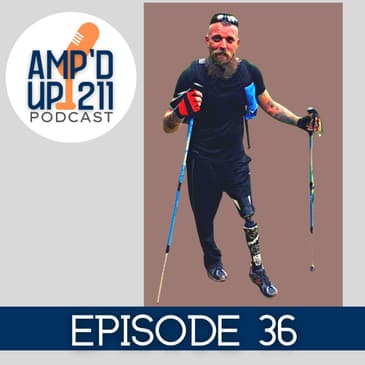
We are proud to present Chris Cavanaugh also known as THE MAD HIKER. Chris is a trauma survivor who lost his left leg in a terrible auto accident that led to multiple surgeries which saved his life. Chris has led a colorful life filled with tremendous challenges including drug addiction, and thoughts of suicide, and has risen above it all to inspire amputees and outdoor enthusiasts. Chris challenges himself while extreme hiking in the wilderness of Kentucky. Chris is a gifted photographer and continues to grow a loyal following through social media. The AMP'D UP211 Video Podcast is hosted by Rick Bontkowski, a right-below-knee amputee.
Subscribe to the podcast!
The AMPdUp211 Youtube Channel
Recorded at Audiohive Podcasting
Hosted on Transistor.fm
[00:00:00] Today on the AMPD UP211 Podcast, Chris Cavanaugh, also known as the Mad Hiker. Chris is a trauma survivor who lost his left leg in a terrible auto accident that led to multiple surgeries which saved his life.
[00:00:14] Chris has led a colorful life filled with tremendous challenges including drug addiction, thoughts of suicide and has risen above it to inspire amputees and outdoor enthusiasts. Chris challenges himself while extreme hiking in the wilderness of Kentucky.
[00:00:32] Chris is a gifted photographer and continues to grow a loyal following through social media. It is our pleasure to welcome Chris Cavanaugh. Hey Chris, it's good to see you, man. How's it going? Going good, how you doing?
[00:00:52] Oh, man, I'm doing well. I'm doing well in this chili Chicago weather. I know you're in Kentucky, correct? Yeah. And what's the weather like there right now? All right. Pretty nice right now, Sonny? Yeah, what's the temperatures like right now?
[00:01:09] Probably 50s, 40s and I would imagine that's is that good hiking weather? Yeah. Yeah, I would think so. I would think so. Good weather. Yeah. So the Mad Hiker, where did that come from?
[00:01:25] I know there's a lot of people that want to know where that connotation, where that trademark came from. Is this something that you've been carrying around for a while? Previously, before my accident, I undertell two shop and people around town had
[00:01:41] made me the Mad Tatter. And when I lost my leg, I wanted to hot-red river gorge. And one of my friends told me that I had to be mad to want to hike it. After I hike it, people saw a reaching out to me.
[00:02:04] Tell me how it helped them and motivated them. And I just got that idea to tell myself the Mad Hiker. Yeah, I love it. I love it. It's certainly something that caught my eye.
[00:02:21] Basically put me in a trajectory of wanting to learn more about you, wanting to follow you. And, you know, amputees come in many shapes, forms different ways of life. And I'm so glad that you were willing to come and be part of this endeavor, which is to bring
[00:02:40] these stories forward and let people really get to know on a deeper level, you know, what we're all about because all of us have a story. All of us come from some set of circumstances, whether it's
[00:02:54] from birth, whether it's to trauma, whether it's to a chronic disease. We all end up in this situation as amputees and very often we are underserved as a community I feel. And I think, yeah,
[00:03:09] I think it's important that we get our stories out there. And not only normalize our particular way of life and our lifestyle, our brotherhood in sisterhood but also to inspire others. And I can tell you by following you personally, there have definitely been moments where I felt like,
[00:03:30] wow, you know, really, really incredible words, inspirational words. Something that I was able to take a little piece of you and sort of inject it into my own daily routine or my own way of thinking.
[00:03:47] And then it just kind of sort of, you know, escalates from there. And I really feel like amputees very much can share that energy. And, you know, so thank you. Thank you for being here.
[00:04:02] I think the way I want to kick things off with you is I want to know what was the thing that surprised you most in becoming an amputee because I wonder were you pretty active before your accident?
[00:04:20] Or was this something you discovered as an amputee? But what really surprised you the most? Because obviously, you're incredibly active guy. You know, what you're doing in the hiking, you know, landscape, the hiking world is no easy feat, especially as an above the knee.
[00:04:39] So what was the thing that you think was most surprising for you? Honestly, I think the whole situation of being an amputee because I was so active before I was a skateboarder and played basketball and wasn't a adrenaline junky road, fast forward workers and
[00:05:02] bungee jumping, I could do. And I think the shot from going to that laugh to just bad ridden for months was probably the biggest hurdle for me like the mental shock of it one day going to the gym for two hours a day and in the next day
[00:05:27] waking up in the hospital, what no leg? Yeah. And, and I appreciate that that transparency that I think for people that end up as amputees as a result of a trauma, in your case, a car rack,
[00:05:56] there is certainly that moment of okay now what do I do? Because it's very sudden, I was someone that struggled with a bone disease in my right foot and it was something we
[00:06:12] were trying to fix for a long period of time. So the possibility of amputation was always in my sort of mental orbit and when it finally happened, I have to say I was relieved because I had just
[00:06:34] gotten so tired of trying to fix something that was not fixable and I just got burnt out unhoping that my leg was going to get better and it wasn't. So it's hard for me to get into your
[00:06:54] space look at it through your lens in one day skateboarding, doing whatever I'm doing and then the next day without a limb. And take us through that mental process. Do you remember that moment?
[00:07:17] How did you find out? I mean, did you just wake up in the hospital and they said, I'm sorry, Chris, you lost your leg. And what what did that look like? My situation was a little
[00:07:30] probably worse than that. My car got in pale by 32 foot of guardrail front of back and I knew it took my leg with it when it came through. So I already knew I wasn't going to have
[00:07:46] it with it. But I honestly didn't expect to leave because I was by myself for a while at the scene and I lost so much blood and I just it was inevitable they said the ambulance was like 20 minutes away
[00:08:07] and I already knew I was going to be an entity if I leave. Yeah, so so you were conscious enough in that moment to say well first of all there's a good chance I'm I'm leaving this earth right now
[00:08:27] and secondly if I do pull through this I already know I've lost my limb and that you know the fact that you're able to talk about it shows a lot of strength and
[00:08:43] the fact that you have pursued the things that you do currently as an amputee shows that there is life beyond that trauma that we can transcend and adapt and do you know really truly you know beautiful things I know you're your photographer as well and I enjoy
[00:09:10] following you through social media and seeing your photos and encouraging others to share their experiences um you're you know you're very very good at getting engagement and letting others know hey let's
[00:09:30] share some of our experiences let's share some of our photos let's share some of our you know you know humorous ideas things like that I mean you definitely you definitely have a what I would
[00:09:46] consider to be sort of a snarky sense of humor I like some of the things that you post it gives me a chuckle and um where do you think that comes from as far as you're being able to maintain
[00:09:59] that sense of humor in the midst of everything that you've been that way my whole life um problems comes from my mother honestly she's sarcasticly funny yeah stubborn what would you say
[00:10:22] are some of the things you know getting back into you know the outdoors you know hiking again doing all these things challenging yourself you know let's say becoming the mad hiker that you are
[00:10:40] what were some of the challenges that you faced and that could be physical challenges having to do with your prosthesis that could be mental challenges as far as pushing yourself to those limits
[00:10:57] you know how would you describe those challenges. I was I was prepared to push myself to the limits but physically I couldn't that was probably the most aggravating thing was uh building the muscles back getting my strength back to where I could tolerate walking on
[00:11:17] distances um changing my diet um prosthesis fitment getting the right socket and the right foot for the terrain I was using hiking and that didn't a lot of up heels and rocky and probably the
[00:11:43] I've seen yeah I've seen some of your videos and it's uh you're definitely managing some difficult terrain from what I can tell and now where you're located in the world and can
[00:11:58] tucky is most of where you do a lot of your hiking is that relative to where you live do you travel into those areas? I don't know how to tackle that work. Multiple states um
[00:12:12] grew up hiking that situation mountain that I think that helped a lot now I'm in south central Kentucky a lot of relevant heat okay okay and what would you say is something that when
[00:12:30] you're struggling in that space whether that's with your prosthesis or you know building those muscles back you know what do you feel like is the thing that inspires you to keep going? That's a good question um I honestly don't know I just
[00:12:54] the fear I get when I'm scared of the mad hiker when I struggle like down in a 5,000 foot pay or something over rocks and I guess the feeling you get when you get to the top?
[00:13:13] Yeah I think there's um you know there has to be some level of obsession let's call it to reach those goals those milestones I know for myself so much of my motivation is the expectation
[00:13:31] that I put on me it's not even necessarily that someone else is you know pushing me or inspiring me but very often it's that that desire to find your personal best whatever that is and it's
[00:13:49] you know it's all incremental Chris it's like you know when I started getting mobile again it was something as simple as being able to walk across the room just being able to yeah just being
[00:14:04] able to say hey I got out of a chair and I walked around the room and then that just sort of goes from there and newer activities start to become more possible and then for me and I don't
[00:14:20] know how it is for you but I have this visualization thing that I do where I see myself doing something I sort of visualize it it's it's like I can almost feel it in my mind that I'm doing it
[00:14:36] and then it's the pursuit of making that reality and saying yes I'm going to get on my bike and go 50 miles I'm gonna do it and there's that visualization piece that occurs where you know those gears start going those gears start going and within let's say several months
[00:15:02] I've reached that goal and had I not visualize that at some point it's probably something that just would have never happened so putting those expectations on ourselves is something that I think is is critical in reaching your personal best you talked a little bit about nutrition
[00:15:24] can you expand on that I mean what does that look like for you given given the physical test that you're putting yourself through when you're on these long highs? When I'm what I'm trying and
[00:15:35] just how can locally I've normally stay card deficient until I'm gonna do like a 20 mile or a 10 mile and then I'll just card blow like three days before but I'm a lot of lean protein
[00:15:54] that's just very it. Well yeah you found I'm a sounds like you found you know what works for you and so often people will ask me the same thing and my response is always that which is
[00:16:14] you've got to try different things and find out how your body reacts in those situations but I think you had the benefit too of before your accident you were pretty physically fit guy
[00:16:31] you were active you know you're in the sports you're in the extreme sports you were a thrill seeker you know you were you were sort of pushing yourself to limits anyway so to make that transition
[00:16:47] into being an amputee and then once again okay now I'm gonna really test you know I'm gonna really test drive this leg and see what it can do all of that is just sort of who you are as a person
[00:17:04] I was sort of different in the sense that most of my adult life although I would go through periods or what I refer to as you know little little sort of campaigns to like get in shape
[00:17:20] you know go to the club or you know you know do a 5k with friends things like that I was never really committed to like an active lifestyle so because work was so consuming for me
[00:17:35] I tended to float in and out of my fitness levels where you know I could go for three or four months and be in pretty good shape and then I'd spend like a six month stint just you know eating
[00:17:48] and drinking things I shouldn't and really not physically taking care of myself but what I found as an amputee is in order to make this work and to be able to do it well and function well
[00:18:04] as an amputee I needed to be in probably what I considered being now the best physical shape of my adult life. I'm very serious about it I'm very committed to it and it's only because I know
[00:18:20] if I was to suddenly not take care of myself and I'm not just talking about physical activity I'm talking about getting the right amount of sleep, getting the proper nutrition, reducing stress
[00:18:34] levels in my life, doing things that feed my body, my mind, my soul, loving myself enough to take care of myself then I can approach having this limb loss and I increase the odds greatly for success
[00:18:53] I mean how do you feel about that because from what I've read about you know what you've mentioned to me previous to this conversation I mean you were I mean you were
[00:19:09] running pretty pretty hard as a young guy. I mean you had a pretty colorful let's call it past where you know you you've been very transparent and I appreciate it because I think the audience would benefit from your perspective. You've been pretty transparent about you know
[00:19:33] drug addiction and living a life that was you know how can we say adventurous? You know so you know do you do reflect on those times in your life I mean what is that process
[00:19:55] like for you when you look back and you think about those moments when you know either you were abusing yourself or you were pushing yourself to maybe on a healthy moment. Obviously we're
[00:20:10] great a lot of it but it made me who I am I mean I went through a lot growing up how to fast life I guess you'd say in the music and tattoo world at early age and I think it taught me a lot
[00:20:32] too though going to what I didn't want to become what I didn't want to do because I seen it happen to a lot of people around me and so it's I went down a weird road I went down the road but
[00:20:51] I always hit the brakes at the right time because I knew I I knew I guess I had a future there what what I think we all you know I think we all made bad decisions I do appreciate the
[00:21:20] sentiment when you say it made me who I am because so many so many of the things that I regret you know mistakes I've made and things I look back on and I say oh man why do I do that?
[00:21:38] And I don't I think it's undeniable because you say yeah but I am who I am now because of that and it shaped me and it made me who I am now it developed all kinds of different
[00:21:55] characteristics for me that have either given me a certain type of wisdom given me a sense of self and worth and it's fueled my perseverance and it's also allowed me to live in a space of gratitude
[00:22:16] because you definitely seem like someone who's very very happy to be here and yeah absolutely I mean that's the vibe I get from someone like you is life it's really a celebration of things
[00:22:35] oh yeah if you wouldn't you say that's the truth yeah even when it's right in here I tell my wife she's like it's how we're writing and clapping and I'm not beautiful because it's a new day
[00:22:52] it's another chance to live and to enjoy things and to appreciate things and I think that that perspective is so important and I oh hell yeah I want to talk a little bit about your your hardware you had mentioned before you know getting the right prosthesis making sure
[00:23:17] you had the right equipment let's say to do the things that you want to do how how did that evolve for you what was that process like for you what do you mean like the systems of
[00:23:28] music well we all go through this evolution right we we end up in a prep socket and then they you know usually a prosthetist will fit us for something that they think might be a good fit for us
[00:23:44] and then we we start to become more active and we realize that maybe this is not the best you know way for me to approach the things that I'm trying to do and you know I myself I
[00:24:00] you know I started with an adjustable socket I'm now in a rigid socket I was had gone through a couple different types of feet I'm in a custom molded foot now that's kind of like split like
[00:24:13] right down the middle so it has the ability to sort of flex and all these different directions and that is such a such a process of discovery in terms of well what do I need in this moment
[00:24:29] to help keeping me move forward you know so so my curiosity is always you know what was that like for you and and what challenges did you face in getting the right types of equipment
[00:24:42] so that you could do my things you want to do I'm not okay fit my um all my knees I've been I guess I've been lucky with the with me and foot the feet with my socket fit with the guardrail
[00:24:55] committed angle so I kind of walk on a elbow like big at the top and get small at the bottom and once you get out active walking a lot I talk to get the sockets to stay so I've tried
[00:25:11] to elevate it back and it didn't work and I used the lanyard for a long time with a long land motivation is when I started actually being able to be active in the woods
[00:25:28] I could that was probably the game changer for it I used lamb for three years until I plan shining integrity now I'm using a it's a sailing with the rainbow the rainbow dial got it and how often do you find yourself and that's with the it's like
[00:26:02] I'm understanding correctly is that the system where it's kind of like panels that you dial and the compress got it and and with that system that revocystem how how often do you find that you're having to make adjustments on that I hardly ever adjusted honestly right now
[00:26:24] I'm sure probably in the in the heat and middle of a high for something you probably spending a lot more but I hardly ever touch it right now yeah so once you get a proper fit
[00:26:40] you feel like you can go go for a pretty long time without having to mess with it yeah no that's great yeah I actually had an adjustable socket through martin bionics for a few years and that really helped me make those adjustments that were necessary because I
[00:27:04] I just tended to have this very vast you know amount of you know fluid change so you know yeah it was it was it was almost extraordinary how much my my residual limb would change
[00:27:23] throughout the day and especially depending on my activity level if I was doing something active it it it wasn't something that could be solved with plice ox I mean it was literally
[00:27:37] you know if I was going to carry around you know 20 plies of socks in order to you know make these all these adjustments it just wasn't possible and at the time I was trying to get back to work so
[00:27:50] it just wasn't something that I could do efficiently it wasn't practical it wasn't sustainable so so that adjustment piece was really really important for me I did make the move to a
[00:28:03] rigid sock at a couple years ago and that's only because I feel I feel like I sort of plateaued and my my residual limb tends to not really change all that much anymore even when I am active
[00:28:22] it's a subtle change it's not it's not like wow I mean this thing really shrunk down it's more of let's say if I was using socks it would be maybe between one and five plies of
[00:28:36] socks in order to be able to you know get the the sweet spot as we say where you feel okay I've got a good fit this feels good you know I wonder what your perspective is in terms of how how you think people should perceive
[00:29:02] amputees I mean you've made yourself very available on social media what what what would you like to project or what do you what do you feel is something that you'd like to be responsible for and how people perceive who you and I are
[00:29:21] you mean how people perceive me as an individual I mean amputees I mean yeah I mean so many I hear so many varying things from able-bodied people about amputees and I'm sort of shocked by it on the one hand people think amputees are all
[00:29:46] paralympic you know sprinters and we all have really cool running blades and we you know we can run really fast and then on the other end of the spectrum there's this perception of like oh yeah
[00:29:58] you're a cripple and like you have a life you don't do it. I mean just happened to be missing a limb I still feel like the same person that I was honestly ironically it probably made me a better person so I don't think having two legs
[00:30:26] made me a better person oh great great I think you take like everybody yeah isn't that it's that's yeah that's that's very wise and I think you're right I think the normalization
[00:30:41] is so important I know one of the focuses of this podcast is exactly that which is to normalize what this is because it is a lifestyle we do things a little differently but we're the same as
[00:30:58] everyone else it's just there's some new ones sort of changes we might drive a car a little differently we might get dressed a little differently but at the same time people are just people and
[00:31:14] you know I try to at least put out the idea that you know limb loss is not a death sentence it's not something that means your life is over very often I mean amputees like yourself
[00:31:28] that'll say you know I I feel like it's actually improved a lot of parts of my life yeah I don't think like when I had two legs running the tattoo I don't think I would have had
[00:31:41] 20 miles so and so I think health wise it got me better physically and mentally because overcoming it just just overcoming it I think might be a better person yeah and certainly there's an emotional component you know you've been very candid about you know some of the
[00:32:19] some of the battles you've had emotionally you know with the trauma or the stresses that you've had in your life and I mean you're here you're obviously incredibly strong person but we all have our moments where we fall apart let's say I'm one of those people too
[00:32:45] and I have definitely had you know my dark moments where I thought okay you know is this all worth it like can I do this you know is this is this who I want to be
[00:32:59] kind of thing and I know that for a lot of amputees managing those sets of emotions can be pretty complex and I think that's why support groups are so important and being able to you know follow people through social media can be tremendously beneficial in this situation
[00:33:27] and do you I mean do you feel comfortable representing that for others is that something that you think about or is that something you just you sort of put it out there and you just don't really even think
[00:33:42] about how that's affected. It honestly just snowed about for me I didn't really give it thought I was just trying to accomplish hacks for myself and then when people started reaching out and contacting
[00:34:01] me I still I guess I seen a purpose felt like I had a purpose because from 2014 to 2017 I have to close down my business and felt useless so yeah I felt I could give me a purpose
[00:34:24] to to help people once I seen it could help people. Yeah and I'm sure when you know and I feel this way too when someone reaches out to me and says you know thank you for bringing
[00:34:44] you know this story to our community it really it's it's really helped me sort of put things in perspective to feel like I'm not alone when I became an amputee I think uh and I you know
[00:35:03] I've mentioned this to you one of the things that you know I found very comforting was being able to hear the stories of other amputees and being able to feel a connection point in their struggle
[00:35:22] and sort of feeding off of their experience and their pain and applying that to my process and it really made me feel like I wasn't alone because you know very often when something like this happens
[00:35:41] and you know you certainly went through you know a very traumatic experience a terrible car accident subsequent um you know amputation and you're sort of surrounded by family and friends and you know it's hard for people who are close to you to really understand
[00:36:07] what it's truly like to lose a part of your body something that has been there entire life yeah just a little and that is it's a it's a tricky set of emotions man because
[00:36:33] how do you explain to someone that that isn't going through that? What that feels like right and I recall shortly after my amputation sitting on the couch and just watching television and I had a panic attack I literally could not catch my breath my heart was racing
[00:37:02] and there was a signal going to my brain that was saying there's something wrong your leg is missing there's something wrong and I I felt this sort of like these alarm bells going off
[00:37:18] and I got so upset in that like this thing is not there anymore and how do you explain to someone that hasn't gone through limb loss what that feels like you know it's like it's like
[00:37:37] I don't thank you can go ahead it's sort of like trying to explain phantom pains to someone I think to to most people that's just sort of a bizarre concept that you could actually feel pain
[00:38:02] coming from an area of your body I think I've been fortunate not there anymore phantom pain I don't I don't experience a whole lot of it my head like the first little bit that's good what would you say is something that you consider to be
[00:38:26] your next big challenge like what's what's the thing that you're trying to accomplish in 2020 for I just want to I want to reach more from reaching over 3 million people right now worldwide
[00:38:36] I just want to grab my audience bigger and I want to complete the mammoth march again 20 miles that's my money that's great now that's in May yeah that's great yeah and is there any is there
[00:38:57] anything that you have to do specifically to get ready for that is there a training regimen is that just kind of staying the course with what you're doing right now or do something different two months before I'll start hiking back
[00:39:13] probably two to three miles maybe two to four miles a day just up until probably three days before and then I'll call it bloke for three days and relax it worked last year so that's my money if it ain't broke don't fix it
[00:39:40] yeah rest is important so when you're in that sort of training mode do you find that your your residual um you know do you find that that rest time is critical for that reset period
[00:40:00] and and have you ever struggled in in some of those more aggressive kind of training modes where you're pushing yourself have you developed issues yeah with your limb I've had a few exercises from hiking been hospitalized I've told the bottom of it open
[00:40:26] yeah I've had quite a few issues with my residual but I mean I get to expect the do long hacks yeah I'm baking up pretty good yeah funny you take it all in stride you're like oh yeah
[00:40:47] like I busted it open you know it's like it's so casual about it it was absets actually when I have to go with I just but I've just got out of the hospital the
[00:41:00] guy before oh my gosh oh man well I and maybe that you know right there Chris maybe that's the sort of the extreme sports Chris from years past sort of coming out like okay I'm just gonna
[00:41:24] push myself to those limits and oh pain what's that yeah but I think it takes a rare breed of person you know to sort of push through that you know and I'm not trying to cash shade here on anyone
[00:41:52] you know I definitely had conversations with the amputees that will get you know this kind of like one little red dot like on their residual limb and they're like wondering if they need to go to the ER and okay like calm down
[00:42:09] you know maybe you just need to take a break for a day but then I meet people like you you know who are literally you know tearing themselves open and they're just keep charging forward and it takes it takes a certain level of fortitude it takes a certain
[00:42:31] level of grit to say okay my my achievements in this are very important to me to the point where I'm gonna push my body to its absolute limit and that is something that I try to draw some
[00:42:49] strength from myself and wanting to bring my best self to whatever I'm doing as an amputee and I'm not saying that's always just physical you know like physical activity that might be
[00:43:06] you know a pursuit in business or a pursuit in you know charity work or you know just anything that I can do to be doing as much as I can do by being inspired by people like yourself
[00:43:22] and I think that's you know a lesson for all of us in terms of take away how do you prefer that people reach out to you if they're looking for guidance you know any kind
[00:43:39] of support or they just have questions like you're not asking it's not way I got a website the math hired for not over or contact me directly through Facebook I'm opposed randomly about once a month encouraging people to message me if they're a deadline or a one advice
[00:44:01] if I can respond to everybody I try my best too yeah well it's very generous of you you know do you feel like that component in terms of community because they're obviously there's so many
[00:44:24] and I've seen it grown you know grow quite a bit over the last let's say five seven years I've seen the community groups on social media they've really grown considerably for people in our space do you feel like that's that's a pretty critical piece of support
[00:44:47] I don't really like us probably one of the most important this day and age social media is it's free advertisement for not just any pt's or it's the world with pop or negative message
[00:45:10] so you must want to do it and you positive oh yeah for sure and when you say negative um you know I I'm always fascinated with the little sort of camps that's spring up
[00:45:29] in the apetty community groups and I I tend to struggle with so many folks that really really want to sort of stay in that negative space you know there's there's there is a lot
[00:45:49] of negative talk and what I mean by that is folks that seem to just kind of get stuck in this process and I feel like these communities represent you know sort of a lifeline you know
[00:46:07] kind of a a lifeperserver for us to at least you know if you are struggling with with getting the right kind of prosthesis um managing your limb care reaching your goals personally
[00:46:22] professionally at least we have somewhere we can go to talk to people and yeah and even if it it's you know wanting to complain about something that you're struggling with in this community having someone to talk to usually at least gives you some some sense of support
[00:46:53] and where I think I I get a little maybe a little uh I don't want to say resentful but more just disappointment is um when I I notice that people don't really even want to
[00:47:14] want to engage in any kind of positive talk that it's just you know kind of a for lack of a better phrase sort of a pity party of well you know I can't do those things
[00:47:28] I you know I'm never going to do those things and you know what what's your perspective on that because obviously you are someone that comes from definitely comes from emotional struggle um someone that has gone through addiction tremendous trauma in your life
[00:47:53] and somehow not only do you continue to pursue and challenge yourself physically but you also project what I consider to be sort of a funny sort of quirky sort of perspective on life I mean what would you say to someone that sort of stuck?
[00:48:22] Man I was there I was there for three years uh I guess Mark Twinset by the way we're not getting out of it alive so I'm not taking so serious I guess but I knew you can do it like the first time
[00:48:45] I tried to hot I walked maybe 300 foot broke down in tears in 2016 and then went back in hot black nine miles they read read record so you can do you just got a one to do it by enough
[00:49:06] yeah I think that's so true and I appreciate you saying that um I had a similar similar experience um the night the night before my amputation my orthopedic surgeon came in and said
[00:49:21] okay we're you know we're cleared we're you know we're taking your we're going to take your leg tomorrow and um do you have any questions and I you know I really struggled with responding
[00:49:38] to that because there were so many questions and I think I blurred it out maybe four or five questions in a row like how am I going to drive and how am I going to work and you know how many
[00:49:51] play drums again and how I'm going to do this and that and then with a bit of a and that surgeon looked me right in the eye and he said exactly what you just said and that was
[00:50:01] you're going to do everything if you want to bad enough that's what he said he said if you want it bad enough and that always stuck with me and when I hear someone say that it really resonates with me
[00:50:19] because I feel like we make such a deliberate choice in these things that we we choose to do or not do certain things and the only thing we really have control of is cliche as it sounds
[00:50:40] is we only have control over how we react to what happens to us that's the only thing we have control over and I choose to live well I choose to pursue my dreams I make those choices and I tend to
[00:51:01] gravitate towards people that do the same so when I see you know Chris Cabinaw the mad hiker you know posting his latest video on you know the you know the beautiful wilderness of Kentucky and how he's traversing through you know mountain streams and these beautiful landscapes and
[00:51:31] I mean shit man I'm like I want to meet this shit like that's that's that's the stuff right there that that's my connection point of I don't I don't know this man I did not grow up with this person
[00:51:49] but I feel a connection to the energy that he is creating in his own life and I actually want a little piece of that and I think that in the community our community we have the ability
[00:52:07] to share those things and I think in closing I just want to ask you what would be the advice that you would give someone that just found out they lost your leg like you did.
[00:52:23] For my personal experience I'd say don't lay down don't stop moving that's why I say keep moving forward because it would have been easy to sit on the couch and not moved change your diet a little bit
[00:52:41] because it affects your limb especially like sodium and a diet exercise and just don't give up but I wanted to give up for three years so it's all that's how I know just eat good and work
[00:53:10] out good and back to my second game don't give up don't give up yeah those are words delivered by don't give up Chris Cabinaw the Madhiker I appreciate you being here today please check out Chris online he's got a massive following that is continuing to grow
[00:53:38] and I'm one of those people that has been inspired by him thanks again Chris my name is Rick Bonkowski this is the Amped Up to 11 podcast I want to wish everyone health and happiness and we will see you next time