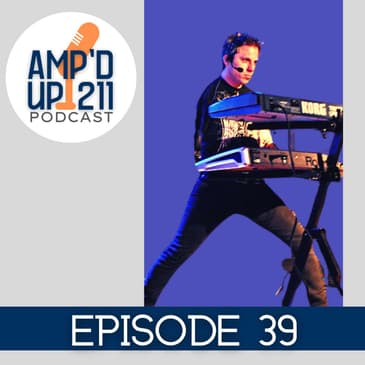
We are proud to present Professional Musician, Executive, and Motivational Speaker Todd Waites. After losing his complete arm and shoulder to cancer at 14 years of age followed by nearly two years of rigorous treatments, plus another surprising diagnosis of Thyroid cancer in late 2014, Todd has made the best of the cards dealt to him. People who know Todd Waites say he has already lived the life of 10 men. Ask Todd, and he says he’s just getting started! Todd inspires so many in the limb loss community and beyond, his public speaking engagements include schools, churches, and corporations. The AMP'D UP211 Video Podcast is hosted by Rick Bontkowski, a right-below-knee amputee.
[00:00:00] Now on the AMPD UP211 Podcast, Professional Musician, Executive and Motivational Speaker, Todd Waites. After losing his arm and shoulder to cancer at 14 years of age, followed by nearly two years of rigorous treatments,
[00:00:16] plus another surprising diagnosis of thyroid cancer in late 2014, Todd has made the best of the cards dealt to him. People who know Todd Waites say he has already lived the life of 10 men.
[00:00:31] As Todd and he says he's just getting started. Todd inspires so many in the Lim-Loss community and beyond. His public speaking engagements include schools, churches, and corporations. It is our pleasure to introduce Todd Waites. Mr. Todd Waites, how are you sir?
[00:00:57] Hey, I'm fantastic. Thank you all for your time. I'm doing well. Good to see you on this Winchery, Winchery, Crazy Day with Lots of Snow and Chicago Land. I know you're in Ohio.
[00:01:08] Did you guys get any snow today? We did it. We got all of the warnings of snow but no snow. So I'm okay with that. I see. So one of those deals where everyone hunkers down and then realizes,
[00:01:21] oh there's no snow. We can actually go out and do things today. Right? Yeah. It's one of those things and anyone that's from Chicago knows that we get pounded every single year. There is no such thing
[00:01:38] as it not arriving as far as, you know, large accumulations of snow. But we're always wondering when it's officially going to arrive and today is the day. And it was it was a little little treacherous getting to the studio today. But I'm glad you're here. I appreciate you
[00:02:00] spending the time with me and I have definitely read up on you and so incredibly inspired by the many facets of your amputee lifestyle given your public speaking, being a fellow musician like myself and also being successful in the corporate world and continuing to represent a beacon
[00:02:28] a light for so many people with limb differences that sometimes you just make it look easy, sir. Oh wow. Well thank you. And actually, you know, I'll say it is kind of easy because everything
[00:02:44] I do I'm passionate about and that's the key. So thank you for that. Oh no, it's it's definitely hard felt and the thing that sort of jumped off the page for me being that I am a product of
[00:02:57] the 80s was I read somewhere that you helped the keyboardist from Bon Jovi during a period of time when he had a hand injury. Can you explain to me what that was all about that you helped
[00:03:17] what's the guy's name David Brian? Yeah, you helped him in in what regard like what was the circumstance is surrounding that particular situation? Yeah, thank you for asking. So there was a back when we actually read magazines. There was a magazine called keyboard magazine
[00:03:37] and you're being a long, long time keyboard player my favorite magazine. All my heroes were always in this and I was actually in it. This was probably 96, 97 somewhere in there and
[00:03:54] about a week later I was on the phone with the editor of the magazine. He said hey look David Brian just cut off part of his finger doing some some woodworking. He has this big tour coming up and he
[00:04:05] nervous you because he can't use that finger and he connected us and I just gave him some tips and pointers and how to play wood without that missing finger. So that was really surreal
[00:04:18] just being some guy playing a local band and all of the symbols on the phone with this great player and then we kept in touch and he sent me a reference letter and all this kind of stuff.
[00:04:32] So it's kind of took off from there on a national level. No that's a really, really interesting story and you know we like to find the blessings where we can when when you lose a limb
[00:04:46] you sort of try to savor those particular moments when it would appear that this thing that is different about us puts us into sort of a space or a situation that we feel blessed
[00:05:01] and say well that would have never happened if I did not be put into the circumstances that I'm in right now and you know you you losing a limb you know at a very young age
[00:05:17] I think your perspective is pretty important. So did you play piano before you lost your arm? I did. I lost my arm at 14 excuse me because I lost my arm at 14 but I had started playing the
[00:05:37] keyboard to sink it around with this this four of you we had at home a pair of tats. What I was for and started taking formal lessons when I was seven so I had a lot of I had a lot of years
[00:05:47] into the instrument. Yeah that's it. Yeah that's always fascinating to me too because obviously there's there's some hard wiring that occurs as a musician and then suddenly finding out okay I have I've cancer something is going to happen where I'm gonna lose my arm
[00:06:10] and how is that going to affect all of the things that you were interested in at 14. 14 you know I can only put myself back into that moment myself you know 12 13 14 as a drummer I would say it was definitely around that age although I started at five
[00:06:37] you know my parents went out and bought me the you know the toy drum set with the paper drum heads you know from like you know came hard or something and I messed around with that as a kid
[00:06:49] but I would say probably probably in that like 12 13 range that's one I did and I don't know how you feel but I definitely had that moment of hey like I want to do this this is important to me
[00:07:04] and I want to be really good at it so knowing that about myself I can't help but go to your life and think gosh if I had lost my right leg at 14 would I have continued that pursuit
[00:07:26] would I have thought well my right leg being the kick drum would I said oh yeah I can still do this or would I've just said obviously drums is not for me so when I think about yourself at 14
[00:07:44] now knowing that you played piano for for many years up until that moment what I mean what was that process like for you how would you describe that part of your adaptation as a musician it's really
[00:08:03] interesting it would be great to have some kind of her heroic thought to say right what man I just touched on and I but the reality is is that I just didn't know life in the other way and
[00:08:17] music specifically keyboards was such such a part of my life when I say it was such a part of my life I mean all I ever wanted to be was rock star it's all I ever wondered be my whole life I still want to be
[00:08:30] and so my situation changed but my goal didn't change and what I kind of perceived myself as being in what I was purpose to do didn't change it was just a matter of trying harder and the
[00:08:48] interesting thing was I was ready to put the work in and I was ready to do whatever it took and it was perfect timing because you know if you ever see me speaks and where you would note
[00:09:01] no the story but to condense it you I learned on that big organ I was telling you about but when it was time to buy a professional keyboard to play with guitar friends or drum reference
[00:09:15] it was hard to lug an organ around so I saved up to buy a portable keyboard and that was the thing in my life that I thought once I had that there would be no obstacles and the day that I was
[00:09:28] supposed to buy it was on a Saturday and the Friday night before that was when I threw a football my arm broke nobody knew why I had no idea what was about to happen so I bought the keyboard
[00:09:40] the next day so when you look at the marriage of you're going to lose your arm but you just got this new keyboard was my way of and I really feel you know God's way of saying all of the key
[00:09:54] motor treatments all of the stuff you go through we're going to remember bits and pieces but it's really going to be a blur because your time is going to be spent relearning how to play with the
[00:10:03] shiny new keyboard and that's really how it went down so it was kind of an easy transition now I had to take I took a bunch of music theory classes I did all of that so that I understand the mechanics
[00:10:15] of music which really helps but again you know and I told you I'm not an ordinary or a maryambler but that's all to say it wasn't some kind of heroic thing it was a natural progression in
[00:10:29] life something that was already a big part of my life that I just wanted to keep in my life. Yeah and I think you're right and you're not rambling and that evolutionary sort of concept
[00:10:42] that I always sort of press into about how life tends to just kind of move in a way that we adapt we change we evolve there's forward movement and yes of course we look back and we say oh wow
[00:10:57] like there was a lot of stuff that happened but in the day to day in the hour to hour so sometimes it doesn't necessarily feel that way I want to talk a little bit more about the cause of your
[00:11:09] reputation I'm a little bit fuzzy on that so you're saying that that you you through a football was the breaking of your arm was that kind of like like the tipping point or did you as a child
[00:11:24] did you know like there was something wrong like you were let's say you were in pain or there was some discomfort like how how did that diagnosis come to be? So it was the breaking of the arm
[00:11:38] that revealed that I had no pain you know symptoms. Wow there was none of that so just a normal kid playing sports you know because of the cancer and that's how they found it. So just a normal
[00:11:51] kid playing sports and you go through a football and suddenly you're like oh my gosh I think I broke my arm and of course imaging is done all of that stuff and what what is what was the
[00:12:06] form of cancer what was it? The technical form osteogenics are coma okay it was that it was a childhood bone cancer yeah it was rare back then and I don't know if it's because I pay attention
[00:12:22] in the community or not but it seems to not be as rare as it used to be. Yeah and I think I think you know as I've gotten older I feel comparatively to let's say people of my parents generation
[00:12:40] there seems to be a lot more transparency about illness now. You know my folks came from that sort of culture of you know when you're sick you really don't talk about it it's sort of like hidden away
[00:12:54] um I know when I was struggling with my health I could tell it made my parents uncomfortable of course in the sense that they were worried about me but also almost as if they were trying to protect me from judgment because they're sort of this like this guilt
[00:13:14] thing that goes on like sure like how did this happen to you and you know my parents are that generation of who's fault is this right and I always find that interesting because I never
[00:13:28] felt that way when I got sick and I always felt well this is just sometimes what happens and right this is just part of my path this is part of my journey and I'm gonna learn how to adapt
[00:13:45] and change with it so yeah I find all of those kinds of things very fascinating and I do appreciate when someone like yourself can be so forthcoming and an offering of your story to help
[00:14:02] others feel that whatever they're going through on various levels it's a lot more normalized at that point and I think that supports people that are dealing with chronic illness like cancer and again you know rewind your 14 you know you want to play that shiny new keyboard
[00:14:26] but let's step out of that for a moment you're a young teenager and as a young teenager like most of us that can be a very awkward time that can be an uncomfortable time and
[00:14:43] fitting in being cool all the things that were trying to be or let's say pretending to be one more that age because we're sort of like you know there's all those insecurities and
[00:14:59] how do I how do I navigate friends and relationships and you know all of those things what was the emotional set that you went through you know losing your arm and
[00:15:13] was it your arm and your shoulder or just your arm. Yeah I don't we have a shoulder at all okay so it was that and it was going through the chemotherapy so as I was on chemo for almost two years so
[00:15:28] all in the same conversation with my doctor was we have to take your arm and you're going to be on chemo therapy you're going to be sick yeah lose your hip and all of the things that go
[00:15:40] with that and it's really strange when I look back there was certainly some emotional impact that I had but I don't think I realized that I did so I was very fortunate in the the
[00:15:59] town I I lived and I grew up in an in the town called Strongestville Ohio it's near Cleveland we had two what we called junior highs which now are called middle schools and then those those junior highs funneled into one high school and it's almost like you matter
[00:16:19] no matter how goofy you are what you know you're with it your mama always tells you you're the greatest year this year and it was kind of the same thing when I when I was surrounded by people
[00:16:29] in my school I didn't go through anything crazy I didn't go through much bullying and in much ridicule things like that so the positivity was was fantastic so I didn't go through a lot of the
[00:16:43] emotional stuff until I branched out of that now all of a sudden there were kids from the other middle school you know even though we were in the same town we were separate and I just remember
[00:16:55] I was at a high school football game and I wasn't really allowed to do much because of being on chemotherapy your white blood counts down to camping your out people you can't get sick
[00:17:07] because you could get a cold it can it can be the end of you just from that but just remember kind of be like wow I'm out I'm with my friends this is really nice you know very kind of a
[00:17:17] a nice moment I was bald from the chemo and you know it was was pretty sick like getting used to being left handed getting used to having one hand and and I got separated from
[00:17:27] my friends and somebody came up to me from the other school and asked a peek of all my comb right it was just just making making fun of me and that's when I realized like I you know everybody
[00:17:38] get to pick on a little bit growing up and it's not as big of a deal but that's when I realized what would a what a cool world that it can be up yeah um then you mentioned you know you're
[00:17:49] awkward you're 14 you're trying to figure out am I the cool guy am I what where do I stack up yeah in in social dynamic up there and um that started letting me know maybe maybe I'm I'm not as high
[00:18:03] up on the list is as what I've always thought you know on a level of cool popularity and so that was that was the start of some emotional stuff for me and people people didn't really
[00:18:21] believe that I could still do the keyboard thing you know people always encourage me like they you know oh that's great you want to do that but you need you should focus on this or you should focus on
[00:18:32] it so understanding that climate too of oh gosh I have this crazy goal that in dream that not a lot of people believe in you know so that manifested itself later probably three or
[00:18:46] four years later after the reputation where the emotional part kind of kicked in yeah that makes a lot of sense and I feel like for let's say through the lens of a young person when people know
[00:18:59] your story they're invested they're sort of those cheerleaders on the sidelines of your life and they can create you know a lot of momentum for you but once you step outside of that
[00:19:14] particular orbit and now you're just I mean I can say this because I'm an MPT too you're just some dude that's you know missing a body part right then it just becomes strange and awkward
[00:19:28] and I would think at that age for someone who who themselves is very insecure because let's face it a lot of that kind of talk that bullying it comes from people that are insecure themselves it's it's
[00:19:42] it's a way for someone to feel better about themselves is to push others down so but when we're 14 we don't really realize that we just feel as if we're being attacked so I admire the way
[00:19:58] you sort of explained it in like parsing it out a bit and that that gives a better understanding because when when I meet anyone let's say and who's usually I will meet a parent because
[00:20:14] you know parents will reach out to me when a child has lost a limb you know someone that is going through a family situation you know very very often their biggest fear is oh gosh are they
[00:20:32] going to get bullied are they ever going to you know be in a related committed relationship are they going to be accepted are they going to be able to find it find work and do all those things
[00:20:43] and my answer is absolutely they will do everything and more they will exceed all your expectations just do what you are best at doing love them support them and just keep being present
[00:21:00] and that's that's your job it's it's it's not to pretend that this isn't happening it's not to pretend that yeah things are a little different but at the same time there is no reason
[00:21:14] why your kid isn't going to achieve great things and obviously your your life and you know I have I have seen some video on your public speaking a lot of that comes through you know
[00:21:30] resonates and a lot of that messaging I find you know very valuable very positive I want to talk a little bit more about you technically as a musician so you know I've only been an amputee I'm going into my seventh year now and because I'd been a
[00:21:50] drummer my whole life I mean my body was just programmed I mean you know there were a couple times in my twenties when I took a right hand to drum kit and I turned it into a left hand drum kit
[00:22:05] just because I was trying to build independence but I failed miserably at it I mean I was just like I can't do this it's just not it doesn't feel right so obviously losing my right leg
[00:22:20] I thought okay well kick drums kind of important you know kind of drives kind of drives the whole thing it's kind of like losing the accelerator and your car you know like we're not going anywhere now
[00:22:36] so for me I had this before I could get into a prosthesis and and adapt to using a prosthesis while I was playing I was so desperate to play that I set up a remote pedal
[00:22:55] kick drum pedal for my left foot and I still played right handed but I was using my left foot to drive the kick drum over here let's say and I have to say it actually went pretty good
[00:23:11] I mean you know I wasn't playing like you know dream theater or anything but I mean I was at least able to play some you know basic sort of rock country you know no jazz
[00:23:25] but you know just able to do some basic stuff that sort of fed my monster to play and that was so important to me because it sent me the message that even if you don't
[00:23:40] acclimate to a prosthesis even if you remain in a wheelchair which thankfully you know those days are long ago like you could do this you could still actually enjoy your instrument and who knows
[00:23:56] maybe perform someday so of course once I got into prosthesis it was like all right I'm done with that let's make this work and embracing you know all of what my brain already was wired to do then it was just a matter of acclimating to how it felt
[00:24:15] to kick a bass drum the only way I could describe it is if like your whole leg is numb you know because there's no touch you can't you can't really tell where your foot is
[00:24:27] so when I think about what you do okay as a keyboard as piano player given that you were you were still pretty young and like you said it was just you know I just I just had to keep moving
[00:24:43] things along how how would a keyboardist with two hands through through their eyes how would they describe you know what you're doing or how it's different because again I'm a drummer I hit things with sticks I'm not all that intelligent when it comes to music
[00:25:07] so when you start you don't mentioning like music theory and stuff like that I'm thinking yeah what's that what's music theory I just know play it this fast if your meter's not good none of us are going to be so I appreciate no meter and groove
[00:25:30] I know are super important to everyone in the group but again I'm fascinated because obviously what I know about you know someone playing piano or keyboards is you need your hands
[00:25:46] so how how would you describe to let's say a lay person like myself well this is how I compensate that I can never share my secrets I it's a lot of different things secrets sauce I don't want to diminish
[00:26:07] what I do because I love what I do but I'm not a classical pianist but my goal was never to be that and I know that if that were my goal I would have figured out a way to do that and that's
[00:26:19] not a brag I'm read that's just a brag on anybody who is passionate about anything you shine a spotlight on something you know you'll figure it out but you know I'm more of a more of a
[00:26:30] a rock player and there are some complicated keyboard parts I've had to to learn to really maximize each of my fingers and understand that each of them matters at every time and so
[00:26:48] the the great thing too I know a lot of people and there's nothing wrong with it is just not my thing will play to track or will sequence your keyboard players will sequence parts
[00:26:56] at play for them and I've been very staunch I'm not not doing that you know I need to play everything like but with modern technology comes the ability to do that probably more now than ever
[00:27:07] meaning you know if you look at a piano and you look at okay if I have five fingers and I could reach an octave plus a few notes just say and in in simple terms you know I can make it so
[00:27:23] that what I'm playing with my pinky sounds like I'm playing that an octave or two lower and that what I'm playing with my thumb is is an octave or two higher so now I have to be in
[00:27:33] that old keyboard with two notes and then whatever I do with the other fingers matters within that that context so it's almost like but it's almost like understanding the the sort of the spectrum of sounds that can get you the result that you're looking for
[00:27:50] but also testing the physicality of your hand and making sure that you're covering as much real estate as possible and having a deep understanding of what you're trying to get out of the instrument enough that you can use every finger to its fullest. Correct yeah yeah and sometimes
[00:28:11] it's easier than others. When my goal was to be I'll never be the greatest keyboard playing the rope but my goal was to be able to to be a decent keyboard player for somebody with two hands
[00:28:23] not somebody with one hand. Like you you would not look at yourself and say I guess I'm an okay drummer considering I only have one leg. You would say well I've worked hard at this and
[00:28:34] chiseled this wood enough that I'm a contender of a drummer against somebody with two legs nothing it's a competition but no that's goal right yeah so yeah it's it's so it's just making that work and
[00:28:52] I play not play with a lot of bands over the years and play with some folks now and you would mention 80s I play in 80s to reband here in Columbus that's a big show it's spark machines
[00:29:05] and the fog and we were wigs and sunglasses because we're just not as close we want to work but amazing musicians which means that what what I do is just one of five people right so
[00:29:18] the nits that I feel the bass player covers the the bottom end so well and the guitar player does what he does and the studio doesn't need us in drummer you know all of that we have a sax player
[00:29:29] we may have a bagpiper I mean it's just it's just a really fun show and everybody does what they do well so as long as I show up and do what I do well as a unit it's it's going to be great so
[00:29:40] remember Columbus rock house rock house Columbus come come yeah we have a rock house in uh Illinois as well so we wrote that singer has kind of longer curly curly hair he's fantastic I've seen their videos
[00:29:55] yeah no that's that that's awesome and uh I you know I I appreciate the sentiment and I think that for musicians especially you know the idea of losing your ability to do something
[00:30:12] that you're so you know passionate about and that's so important to you I just wasn't willing to give it up I just wasn't and you know obviously you were just a kid full of dreams and
[00:30:28] you weren't gonna let any of that get in the way of your dreams and you know even today you know at my my de-age that I'm at now you never really lose that desire to
[00:30:47] to want to perform to want to create to enjoy the energy that's shared between musicians all of that is such a gift and yeah you know you look at some of these these you know elderly
[00:31:05] guys out there still doing these you know huge tours and yeah and you can argue well it's a money thing but I don't know I think a lot of them just don't want to let go of the vibration
[00:31:21] the buzz that they get from playing live there's nothing like it it's it's indescribable and um not that I don't enjoy recording recording can be a really neat experience as well but there's no greater feeling than feeling a reaction feeling that energy from other people
[00:31:43] that are enjoying music and appreciating that process that creative process um so thank you for that I I want to switch gears here and I want to talk a little bit about your public speaking
[00:31:58] because I I know that you engage kids I know you engage you know church I know you engage corporations so when you're coming at this with a speaking engagement you have a particular group
[00:32:16] what what kind of prep I mean what do you do to make the final adjustments necessary to reach any particular audience what is that like for you? I appreciate you asking that because my experiences and story remains the same right that's the common thread
[00:32:36] in every speaking even I do bring a keyboard I play a little bit I tied into music and I tied into what was happening at the time that I was going through that I played some music
[00:32:45] from those heroes but there's the the culture of where I am at the time you know if you're if you're in Indiana the culture is different than when you're in California speaking kids now a lot of
[00:33:01] it is the same meaning hey everybody wants to be like everybody wants to know that they matter and people want to know that that they're heard um but that means different things in different situations
[00:33:13] and different cultures so a lot of it is based on that understanding you know what what where the challenges of the people here so at schools it's where the challenges of the kids and I
[00:33:24] do a lot of elementary school kids and I do you know middle school high schools corporations it's a different delivery but the same challenges um so oftentimes I'll ask people individually tell
[00:33:38] me what you do for this organization and the people who have some kind of BP titles director see level title they're very proud of that but when you ask the person that maybe doesn't have the
[00:33:53] fancy title um they're not as proud of what they do but yet they should you know and so I'll break it down to I'll take a song example and I'll break it down in the parts of the song and I'll demonstrate
[00:34:04] that life look what happens when I take out this part of the song it's not it's not the same song and so it's just based on where I'm speaking and what the goal is what the goal of that out
[00:34:16] but what what a really really cool way to demonstrate why all the components are critical I mean music is such a great example we've all sat in a studio and hurts and heard you know tracks
[00:34:32] that are isolated and and the first thought we have is wow that that sounds really strange all by itself right but then you sort of see the layers you know and how that comes together so beautifully
[00:34:50] and for you to project that and say okay I'm going to show you a piece of music and I'm going to take out what you might think is in consequential or let's say not really as important
[00:35:04] and you might be feeling that way in this whole grand design now check this out here's here's here's when we don't have that here's when we have that you're pretty important to this I
[00:35:18] think that's such a great that's such a great analogy it's such a great way to get those people to understand that those key elements of a work culture or team are super important so I mean that's
[00:35:35] great and I mean reaching kids I would think you know I mean what what's typically the reaction because your your limb loss is is certainly you know very overt it's not it's not something that
[00:35:58] you know people don't see immediately especially you know when you're talking because I've seen you speak on video you know and you do use your hands a lot so it's like right away okay something's
[00:36:14] going on there and do you ever feel like you're navigating sort of based on that energy or that reaction very much though I have to use a slide deck to show pictures to remind me of where I am
[00:36:31] in the story because most of what I do is off the cuff again the story really means the same but I I'm so reactionary too while I'm being respond to one of the it's it's funny
[00:36:45] one of the things you said I'm going to I'm going to step back a bit when we're talking about schools but when you're talking about when a parent reaches out to you which I love that you make
[00:36:53] yourself available the parents and the things that they're worried about that you mentioned you know basically is is my kid going to be okay are they going to be able to work are they going to have a
[00:37:04] spouse are they going to have this we're going to have that the crazy thing is you don't have to have a kid missing a limb to worry about those things right I have four kids do them are older and they're
[00:37:15] on their own and they're very but have two younger ones I I wonder about that and worry about that for them and they have they have everything these kids need need to know that those questions are up
[00:37:29] to them that you know you could have really crazy crazy dreams just because they're crazy and just because your neighbors don't think that you can achieve that you get to pin that on yourself
[00:37:41] if you can or not and it sounds so simple and it sounds so easy but nobody told me that when I was that enough nobody you know I didn't grow up I grew up just having my own my own wants and dreams
[00:37:56] and all of that and nobody told me that I should chase all that stuff until I was older so the younger these kids are and the younger that they they stand up and just know I'm going to I'm I'm going to be
[00:38:10] successful in life with success means a lot of different things as you know regardless I'm going to chase this because if I don't nobody else is going to form me and I'll have to go live somebody else's
[00:38:22] dream you know I tie that a lot and to anti bullying is the big buzzword you know when I speak about bullying and the importance of not only not being the bully you don't feeling back or where they come
[00:38:35] from but the fact that bullying then makes you not see yourself in that way no I use this sometimes at Halloween you know the kids celebrate Halloween I just I remember dressing up a superman
[00:38:48] and in those moments I felt like I was Superman right remember those days and oh yeah and girls dress up is very pretty princesses and they believe that they are those things but then the world comes
[00:38:59] and tells us when you're not you're not you're not you're not pretty enough you're not strong enough to be Superman you're not this you're not that and all of a sudden you realize what you're not rather than what you are
[00:39:09] and so the school's I focus on that a lot but middle school high schools I get into anti drugs even anti suicide if if administrators are okay with that because that's all part of it
[00:39:22] it will get pretty heavy but for the most part man it's 90% fun and funny at least I think I'm funny no definitely definitely great sense of humor you know from from the show prep that I've done
[00:39:36] and the reading I've done in some of the video blogs that I've seen I want to pivot let's talk about 2014 um thyroid cancer yeah so I mean was there any part of you that was like
[00:39:57] what the F's going on here there was all parts of me that were saying that I bet you know when I had cancer the first time I I had to reveal my age but it was in 1982 when I was 14 and I
[00:40:13] that was my story of my past that was my you know that's what I went through so over you know I never revisited that again and just like the first time there were no symptoms there were no issues
[00:40:25] and it showed up during during some tests and I I went dark for sure and when I was 14 and I had cancer I was invincible when I had kids in a wife and people that relied on me
[00:40:46] I no longer was invincible and I realized I was I wasn't in charge and didn't know if the future health and they removed the the cancer which was great I have you know half a thyroid now
[00:40:59] but add to that when they did the surgery my vocal cord band and so my my voice was used for so much um you know and I didn't really have a voice it took me a long
[00:41:14] time to be able to say full sentences without being exhausted because my vocal cords weren't connecting so I had to take take some singing lessons and things like that just so that I had a voice
[00:41:25] but it was a dark time thinking now that stripped away from me like first first the keyboard thing kind of been stripped away from me and that was some some work you know to get that to be still
[00:41:36] part of my life and now I don't really have a voice which meant a lot of things to me and I didn't feel well like the thyroid thing is a weird weird thing anyway so it was a dark
[00:41:48] couple of years where I really wasn't wasn't me and it took some time to get back to that the I was I was confused as well like I didn't understand I'm kind of a guy that
[00:42:00] I'm not that deep of a guy but yet I always look for the purpose and things what's the purpose of this and I couldn't I just couldn't see any purpose in it. What do you feel uh what do you feel
[00:42:10] uh pulled you out of that eventually was it uh just a passage of time as they say you know things tend to just sort of dissolve over time or was there something that happened in your life that
[00:42:24] sort of knocked let's say some of those feelings out to let the light in I mean how would you describe it. So there's there's two different probably two different thought processes on that in which
[00:42:38] I believe both equally 100 percent um one of them is you know you'd mentioned that also speak a church is I do use camps of things like getting on my man of faith and um that drives me
[00:42:51] that is such an important thing to me and there was a there's a church a couple hours away from me that I played at before when I was touring in the Christian family like there a couple times
[00:43:00] and it's just like bike or church and they're so cool they're like these leather people that you know if you saw them in a parking lot you'd kind of grab your kids and put them close to you but they're
[00:43:11] the greatest passionate most passionate nicest people and and I love the church and they'd asked me if I'd come speak and I and I was turning down all speaking of the church because I wasn't
[00:43:20] a positive person anyway anymore I was in this dark rut I didn't want to say no to them and it was months and months and months and advanced I didn't even know if I didn't have
[00:43:30] a voice then and all but I took it and I really felt that you know not to get too crazy any with that god of telling me look you go around and you tell people that when you go through
[00:43:42] things in life that there's a grand purpose for you and that there's a grandiose plan and everything's going to be fine develop up but there comes a point where you just start to say things because
[00:43:51] you start saying things are used to saying them but you don't really you may or may not mean them right but it was kind of a reminder of you realize you're not in charge right and you realize that
[00:44:01] those words you're saying really mean something you've just kind of forgotten it because you're you're out in front of people and I think your musician and we like attention people like that
[00:44:11] people drawn to us I got so wrapped up in the end that I forgot the purpose behind it the second side of that is if you take a part take take out the the spiritual
[00:44:22] side of it is holy moly I just added a whole other story I mean there's a whole whole other story to what I've been saying and now there's there's this other thing that I was able to over time
[00:44:37] so yeah no that's I hear you there especially myself included in terms of you know multiple battles feeling like there was definitely a period of my life where it was either you know some some kind of major surgery going on or or some long extended form of rehabilitation
[00:45:02] and I meet so many people in the amputee community that will say you know when does this get better you know when when do things go back to normal and it's it's hard to answer that
[00:45:20] because so much of it I think for myself and I hope others would agree so much of it is dependent on you so much of it is dependent on your perspective and you know the night before my
[00:45:34] amputation I was not in a good place and I was struggling with trying to understand how things would get back to normal and my orthopedic surgeon was was very tough love with me he said you know
[00:45:50] I don't know if you're going to do any of those things again he said but I will tell you this you will do everything if you want it bad enough and I've always carried that in my back pocket
[00:46:05] and I always reevaluate when there is something I want to do when there is something that I want to accomplish whether that's professionally creatively how bad do I really want this am I willing to am I willing to do the work because if I'm not
[00:46:26] then I need to get busy with things that really matter to me so we have the power you know and and I just think that so much of that messaging that you're talking about
[00:46:45] is you know hey we're kind of in charge we're really we are really responsible for you know what's going to happen next and how how we're going to take those next challenges and
[00:47:02] yeah when I was reading about your story and I saw and then in 2014 I thought oh wow man what a curve ball but obviously you're here you're alive you're well who would you say is
[00:47:20] the person or what's the thing that inspires you when you when you reflect on that idea you know where are you drawing inspiration from? Well honestly what you just said inspired
[00:47:35] seriously I I I draw inspiration from many many places in its in its daily I mean what you just said was really inspirational as I said and I my wife and I adopted a little boy he's he's 11 now
[00:47:55] but we got him at 7 but he was homeless for the first two years of his life when he came from just horrible situation and he's gone through so much um a lot of it that you know he remembers
[00:48:10] in the back of his head somewhere there but I draw inspiration every time I see him smile because he's gone through insurmountable amount of rejection and all kinds but he's the happiest kid I know
[00:48:22] so that inspires me just people that that go through I feel like I haven't gone through anything compared to what a lot of people I know that got through so I just I draw inspiration from that
[00:48:32] for sure and um everyday life I think um is a great way to look at it I I I feel that as human beings we we all have the ability to lift each other up and we should try to
[00:48:48] utilize those opportunities as often as we can when we can I think it's important I think you being here today telling your story you know inspiring others offering yourself it's um it's really what
[00:49:06] we're trying to do with this podcast and not just with people let's say who have gone through lim loss but you know families of people that have gone through it and someone that is you know interested
[00:49:23] in you know come back stories and you know underdog stories and different things that we all tend to find inspiration from and for me very much it's it's a normalization piece that so many of us
[00:49:41] just want to be viewed as normal it's all just normal it's a little it's somethings are a little different but yeah that's okay because you know we're all in this together and we all have struggle
[00:49:57] some of it you can see but I mean Todd you know a lot of it you can't see there's a lot going on in our minds and our hearts that we don't we don't see on each other and people want
[00:50:13] walk around with stress and struggle all day it's um it's sometimes a it's not uh easy world that that we live in and it can be full of disappointment so um you know hearing you know your your story
[00:50:29] and being able to share with you I know is going to raise up a lot of folks out there how how do you prefer people engage you whether that's um with your public speaking or if they're they've
[00:50:45] watched the podcast and they just want to reach out to you and you know make a comment or ask a question um what's the best way to do that? Yeah I have um I have kind of a general website which is just
[00:50:57] Toddwates.com to ddwaitis.com or if you go to rockstars don't hate.com that's my school site that's probably my most visited site I'm readily readily available to to be contacted through those
[00:51:15] means yeah that's great and you know I had a thought um before we wrap up here um you know I'm an ampetee drummer your an ampetee keyboardist like I don't know is there should we put a
[00:51:33] call out to the other ampetee musicians out there? I mean that could be my main thing boy I love to play like one of the events the gatherings and and let's let's do it it's on you mentioned dream theater
[00:51:49] one of the bands I toured in I replaced the keyboard player that joined the Neil Morris band. Oh no kid with my partner when I from dream theater I'm out here.
[00:52:00] Uh yeah yes we didn't in that band with him all of it now he's back with dream theater. Yeah part importantly is definitely one of those guys that is a huge source of inspiration for me
[00:52:12] um I'm more of a deep groove you know heavy hitter like more of a bottom type but I'm blown away by these guys that just have such a high level of independence with all their limbs
[00:52:27] and they can do just incredible things with you know multiple kick drums and I mean it's it's it's it's a little hard for me to digest as a drummer sometimes
[00:52:40] because you know I when I was coming up as a kid it was all just you know Motown and Soul and Aaron or R&B and I mean my first concert was the Jackson 5 um okay so I kind of came from that
[00:52:55] you know just kind of less is more sort of attitude but I very very much appreciate progressive rock, progressive you know musicians guys that are just you know breaking the barriers and the boundaries of you know they're instrument and they're they're pioneers and you know
[00:53:14] they're technical you know sort of um you know aspects of their playing um you know I certainly was was never like a Neil Peart but I very much appreciated you know he was almost
[00:53:28] like this drummer like mad scientist you know the way he could do all of these things that I thought well there's a whole bunch of stuff I can't do but that's okay. Okay it's all my goals but
[00:53:40] I think everything has its place yeah I mean you know absolutely no for sure it's a big musical world out there I always say try to consume as much as possible because it's all good you know
[00:53:54] I have a I have my girlfriend son Aaron he's a guy who's into just a lot of you know really digitized and very sampled like rap and I mean just stuff that's you know you could almost describe it
[00:54:13] as sort of anti-draming it's it's just very um sampled and lots of loops and programming and he sends me stuff all the time which I love him for and I'll be honest I am going to a point where
[00:54:30] I'm actually starting to like it and um I'm I'm able to at least differentiate what I don't like versus what I like whereas I think initially I was just sort of in this ambiguous space of
[00:54:46] I don't even know what this is like is this music what is this I don't understand where's the verse where's the chorus? I'm like where's the structure in this song you know but now that I've sort of you know put my toes in that pool
[00:55:05] I think okay all right this is good all right this has got a cool feel to it I like that little hook right there okay that works and I can actually sort of zero in on some of what I couldn't hear before
[00:55:19] so again I say if it's out there you know at least give it a try give it a listen and you know go from there um final question how how would you like the world to perceive
[00:55:35] amputees? It's not correct question um the easy answer is just like you perceive anybody else let me give a caveat I believe that my intention my intentions are typically an A or an A plus
[00:55:59] but sometimes might the delivery hovers in that in the D minus F. There yeah because I I love my fellow man I'll do anything for anybody but sometimes on the amputees sites with the sometimes people come across as the whoa is me thing yeah and
[00:56:22] sometimes I should be friendly about the instead of the commands suck it up it's not a big deal to pick up in the road you know live like better than you did before blah blah and that doesn't get embraced very well
[00:56:32] and I think when when then people view amputees they view them as I feel sorry for them yeah I rather you know their challenges in life must be all wrapped around that amputation and that amputation defines them what I like the world to do is have people defined
[00:56:50] not by that right if that like like I learned not early on but by learned is if people are going to define me by my amputation I'm going to make sure that my amputation is not something negative it's
[00:57:02] going to be something amazing and positive and so if people are going to tie us to our limb difference or whatever you want to call it don't assume that that's a negative thing
[00:57:15] view it as I've been through more than you or are you or are you but where are we like like what am I doing today compared to what other people are doing and sometimes at the end of my life
[00:57:28] I want to say I would have done more in life but I only had one arm like what's your excuse and then I don't see that arrogantly I say that as
[00:57:40] you know and I would almost leave with this positive note and I'm getting a little bit off track here but amputees are not much different than anybody else and like we are all just running this
[00:57:51] this marathon but if we're not willing to run the individual races we'll never finish the marathon so amputees that are out there in their driving or the ones that are waiting to do that the ones
[00:58:02] that you're just kind of figuring it out don't assume anything negative about them don't assume that that's the finds and that's going to be what holds them back in life there's enough
[00:58:14] life that will hold us back. That's for sure. Very, very wise words Mr. Todd Wates. I appreciate you being here that's going to wrap it up for us today. I'm Rick Bonkowski that is Todd Wates.
[00:58:26] This is the Amped Up to 11 podcast and I want to wish everyone health and happiness and we will see you next time.