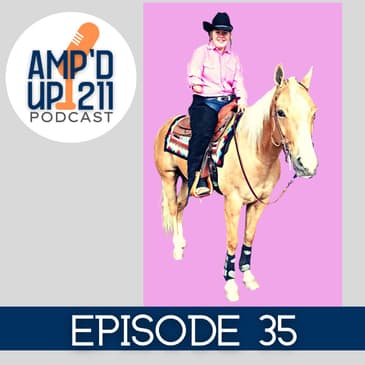
We are proud to present Alexis Mann. Alexis is a Horse Reining Competitor and Right Hand Amputee, Alexis’ limb difference results from amniotic band syndrome. Alexis recently competed in the 2023 National Reining Horse Association Derby. Alexis has been riding horses since 2 years old and competes for the Division 1 equestrian team at the University of Tennessee. Alexis inspires the entire Amputee Community through her passion for horses and collegiate pursuits. The AMP'D UP211 Video Podcast is hosted by Rick Bontkowski, a right-below-knee amputee.
Subscribe to the podcast!
The AMPdUp211 Youtube Channel
Recorded at Audiohive Podcasting
Hosted on Transistor.fm
[00:00:00] Now on the AMPD UP211 Podcast, horse-raining competitor and right-hand MPT, Alexis Mann. Alexis's limb difference is a result of amniotic band syndrome. Alexis recently competed in the 2023 National Raining Horse Association Derby. Alexis has been riding horses since two years old and now competes for the Division 1,
[00:00:26] a quest-driant team at the University of Tennessee. Alexis inspires the entire MPT community through her passion for horses and collegiate pursuits. It is our pleasure to welcome Alexis Mann. There she is, Alexis, how are you? Welcome to the show!
[00:00:51] Hi, thank you so much for having me. It's an honor. We're so happy to have you. I'm glad that I finally nailed you down in terms of your schedule. Yeah, it's been crazy here at College this semester. So thank you for being so patient.
[00:01:05] You're very, very busy young lady and it's impressive. It always inspires me when I see a young person doing all the many things that you do in terms of competing and school and
[00:01:20] somehow juggling it all. I think it's something I do recall when I was in college, but now that I'm 55 years old, it seems like a very distant memory to me. But no, I appreciate you coming on and becoming part of our list of amazing guests that we've had
[00:01:43] in our just over a year now. We've been doing this and I'm glad we were able to set some time aside and learn a little bit more about your story. I actually heard about you through the
[00:01:58] amputee coalition. They had done an article on you. I know you've been on television as well, but that was the article that caught my eye in terms of what you were doing with horse-raining.
[00:02:14] I want you to explain to the audience, I wasn't really familiar with sort of the textbook definition of what horse-raining is. Can you explain that for people that might be completely unfamiliar with it? Oh yeah, for sure and you're definitely not the first one. I'm going up everyone
[00:02:38] after if I did bear a racing or jumping. So it wasn't really until Yellowstone got us popularity the TV show with Kevin Costner because they had reigning horses and cutting horses showcased on the
[00:02:50] show. Now it's a lot easier to say, oh have you seen Yellowstone and they're like, oh yeah, and they can kind of piece it together a little bit. But reigning is kind of evolved over the years
[00:03:03] and thanks to Yellowstone and Taylor Sheridan has came in and it really helped our industry grow a lot. But it's I don't know for sure the exact textbook of it, but it's based on making sure your horse
[00:03:16] is very willing and what they do based on what you do through the rains. And unlike horsemanship and other disciplines, it's not really based on the rider's performance, but it's how the horse
[00:03:28] performs. And it's a judged event just like all the others. It's judged on a negative half or a negative one and a half to plus one and a half scale. And you start at 70 when you walk in
[00:03:41] the pan and you can go up or down based on how your horse performs. And so what I really liked about it is you have to be one handed to do it anyway to show. So it kind of was like I always used to
[00:03:54] joke like oh, raining was like I was made to do raining. So that's kind of where I fell in love with it. Oh, that's so interesting. So I didn't I did not know that about the one-handed sort of technique
[00:04:06] that you're referring to. So for our guests that don't know Alexis lost her right hand and I want to make sure I get this right to amniotic hand syndrome correct? It's um, amniotic band syndrome,
[00:04:22] got it. Got it. Amniotic band syndrome. Okay, so explain that to me so I can understand it on the clinical level. What is involved with that? Yeah and I actually didn't know what exactly
[00:04:39] it happened to my right hand for a really long time. I was kind of just kind of like oh that's just how God made me, but I didn't know the clinical term until I was about 11 or so. But an antibiotic
[00:04:52] band syndrome is where your mom is pregnant and there's amniotic um, a sack in their pregnancy. And sometimes during pregnancy that sack can get damaged and strands from that amniotic can
[00:05:06] wrap around limbs or digits. It's very common for it to happen in feet as well and kind of cutting off that blood restriction. Sometimes they can catch it and fix it other times you're born with
[00:05:21] differences such as hyam, um, so it affects individuals kind of each a different way individually way and so that's kind of what ABS is. Well it's fascinating and I and it's, I appreciate you correcting me because I actually thought it was amniotic hand syndrome. So it's essentially the
[00:05:41] amniotic band that wraps itself around and then whatever it attaches itself to just doesn't form completely. Now just so I can understand better when you were born, did you have that hand
[00:05:57] or was it a version of a hand or was just nothing? Um so I always tell the story and I always kind of joke about it but at 10 weeks the ultrasound showed I had two hands and some and then at 20
[00:06:13] weeks God said just kidding and I had one hand so it happened while in my mom's pregnancy. Got it okay so that makes a lot more sense and the thing you know I'm fascinated by
[00:06:26] with someone who has limb difference like you and it's been a part of your life from birth. Do you recall the age or the moment is there a significant point in time where you thought okay I'm
[00:06:41] I'm different. I'm different from the other kids and do you have early memories of that sort of realization and can you describe what that was like for you? Um yeah first shirt um so
[00:06:58] I'm an only child so it was just kind of me and my parents growing up so I didn't have a bunch of siblings um and growing up I never really had that concept of oh maybe I'm different than
[00:07:10] everybody else until I mean there'd be instances where I would be playing when I was younger and I would take my sweatshirt off and kids would see my arm and be like ooh that's kind of weird or not unsure
[00:07:23] but it wasn't really until I went to preschool and I saw that literally everyone else had to hand in and so that was just kind of the first kind of thing. Oh maybe I'm a little bit more unique
[00:07:36] than I thought I was. And it sounds like horseback riding has been in your life from a very, very early age from what I've been reading. I thought I read something somewhere that said two years old.
[00:07:51] Yeah there's a picture of me just riding bareback around and oh gilding that we actually still have we still around. My dad had raised harness horses and when he was younger so he loved horses
[00:08:05] and before I was born my mom and dad just had they weren't serious any kind of horses but just had them for the love of the animal and that's just kind of I've always had horses throughout my
[00:08:18] life. Going back to horse raining as a discipline and you giving that indication that so much of it has to do with the performance of the horse where my automatic assumption would be having a lot more
[00:08:36] with you directing the horse so to speak. I would think that there would be a lot of trust that would need to be established between you and this very, very powerful animal. And I just want
[00:08:51] to tell a quick story. My brother, his ex-wife was a horse stock and he actually had some horses on his property that were theirs and she would ride frequently and I don't think anyone truly
[00:09:11] realizes not only how beautiful horses are but how incredibly powerful they are. Until you are in the presence of a horse and just when you when you see their form and their muscles and
[00:09:29] and how large they are, I got to be honest, it kind of scared me and I thought whoa, you know, at this thing decides to get me out of the way it's not going to have any problems.
[00:09:47] So of course I go to that place of how do you get this very large, very powerful animal to trust you and again you being around horses since you were two years old obviously made that acclamation to being comfortable around horses probably pretty easy because you,
[00:10:11] you know when you're young you don't necessarily have as much fear about things. But again going back to the trust factor how do you establish that with a horse that you're
[00:10:23] competing with? No for sure and that's a very valid point. A lot of people are scared of horses just because I mean they can be very dangerous, it's a very real kind of issue that
[00:10:36] a question is do deal with on a daily basis of kind of knowing kind of like how race car drivers know that at any sector they can go into the wall, just kind of that, just kind of respecting the animal
[00:10:48] and respecting that. Yeah if you really want to it could really push me out of the way but anymore we have such a selective breeding in the competition areas of horses that they're bred
[00:10:59] so well and there's so much work it done on the front side of when they're young starting them breaking them out that when you do get to that kind of competition level with them that
[00:11:11] they I mean they'll still have their bad days they aren't animal with the brain but they're a lot more respecting of viewers a rider and when you go in that competition the goal is
[00:11:21] is you work so hard on the front side that you can trust them when you when you need to. Well that's that's pretty incredible. When you when you were a child and you know talking
[00:11:35] again about having a limb difference do you recall any point in time where you felt like those types of feelings recognizing your limb difference or let's say making friends being part of you know a group of people do you ever remember having any struggles in that
[00:12:02] regard where I mean anytime we feel different I think it's only natural when you're growing up to have a desire to belong and I know for myself not having a limb difference I struggled regardless
[00:12:21] I mean there was just all those insecure feelings that tend to hang around when we're coming a age as it is so then coming into that stacking on you know a limb difference the you know
[00:12:36] the loss of your right hand do you ever recall feeling like wow this is hard. Oh my gosh almost every day even even today sometimes and I always hear I mean teenage
[00:12:50] no one really wants to go back to their teenage years it's awkward it's fun it's it's a little scary because you're becoming an older and adult and things like that but now there are a ton of
[00:13:01] times where I've had to grow a lot as a person from the time I was 10 to now 20 now those 10 years have been full of growth because I mean I used to in a store kids would naturally they see something
[00:13:15] different they would naturally kind of look at me a little weird or ask their parents what happened to that grows hand and so I got into the habit of stuffing my right side of my jacket in my sleeve
[00:13:29] I kind of figured out that it kind of showed that hey I wasn't I wasn't I wasn't different than everybody there was a lot of times I mean there was it took me a long time to where my prosthetic
[00:13:41] around because I that's just indicated more that I was different in my head at least and there was a lot and high school I kind of got a lot better I turned that focus into horse riding
[00:13:55] and I became more successful with that and that for sure helped and college has been pretty good because it's always been around the horses I was able to put any kind of not basically show I
[00:14:08] was different because I could do everything they put on the horse so that definitely has helped a lot with my own insecurities just as I hate at the end of the day I know I can still ride I can still
[00:14:20] doesn't matter what people think of me on the outside and inside I can still I'm very capable and whenever I felt those insecurities I would just turn those into either riding or academics or becoming a better person just trying to work on myself when I felt those insecurities
[00:14:38] yeah and I appreciate your transparency when you said well yeah even today because you know I always say do you ever really get used to it I mean do you ever fully go oh yeah I'm completely
[00:14:54] comfortable and I will make mention of this to people who are close to me and I don't mind talking about it I've definitely had those moments where I find myself hiding and not necessarily
[00:15:12] putting myself in a position where people can see me as much I might position myself differently or I might stand in a certain part of the room or just do things that you know like you made
[00:15:28] mentioned about you know tuck tucking your hand in took me a long time just to be you know I'm a leg amputee took me a long time to just be able to wear shorts comfortably and feel like
[00:15:41] that's okay but I do recall this one moment where I had you know parked my car in a parking lot like a public parking lot and I heard some people coming you know up towards my vehicle walking
[00:16:00] into whatever story I was at and I hesitated I hesitated to get out of my car and it was this this sort of curious moment for me like why am I doing that? Why am I not wanting to be seen
[00:16:18] in this particular situation because I could hear multiple voices people coming towards me and I was going to step out of my car and become what you know maybe I thought in that moment
[00:16:34] I would become the source of conversation and I'm you know people sometimes find this hard to believe because I've been in sales and marketing my whole life but I'm very much an introvert
[00:16:48] and I don't necessarily enjoy being like in the spotlight but at the same time it really sent me into that sort of reflective space of you know why why did I do that and is it okay for me to
[00:17:07] still have those feelings and I think it is okay I think it's okay to recognize it and live with that and continue to take those energies like you said which is very wise and apply those
[00:17:23] to other positive forces in your life and that tends to I guess kind of write the ship a little bit I think that's you know a really really great insight the other thing you brought up that
[00:17:38] I want to ask you do you wear a prosthesis is there some form of prosthetic that you use? I don't wear it on a daily basis because growing up I was kind of too scared to wear it so
[00:17:50] I learned how to do everything without it. I do have one it's very up to date it's even Bluetooth to my phone everyone's like what no way and very grateful to have it my parents have for
[00:18:04] non-non-alternation so I'm able to have access to these great things but I do have when it's very awesome there's a place up in Michigan right in full of this that has done mine my whole
[00:18:17] entire life and there've been great but I do have one I just don't use it on the daily. Got it got it and what would be a specific reason that you feel compelled to wear it I mean if you
[00:18:32] acclimated and you know adapted so much of your life and the activities that you do with your left hand I mean when do you feel like oh yeah I should wear it today.
[00:18:45] I'm honestly not a lot we only timed I could see myself wearing it as if if I wanted a specific person asked to see it or can I see how it functions but no it happens very rarely and that's
[00:19:03] one thing that I'm trying to challenge myself is my next step of kind of character development kind of accepting myself more is to be more open about my prosthetic whether that's using it
[00:19:15] more or having or being open to using it more because I have such great access to it to be open to using it more and finding ways that I can implement it in my life.
[00:19:25] Yeah I respect that but at the same time when I think of myself if I could have adapted a lot easier without wearing a prosthesis I admittedly I probably wouldn't wear it because
[00:19:42] if I had somehow figured out a way to walk and work and drive and do everything with my left foot I don't know I would probably be like well why do I really need it I do everything
[00:19:59] that I need to do anyway but for me being a right leg amputee it's it's it's you know it's that moment of truth of long I ain't walking out of here unless I put my leg on
[00:20:10] so it's sort of forces me to kind of deal with it and maybe that's a good thing some days certainly a bad thing other days but it is what it is were you pretty active as a kid when you
[00:20:25] were growing up I mean you compete in volleyball horse training your college student your an active person I mean what was your childhood like and did your limb difference planning role in that as far as how sort of active of a kid you were?
[00:20:44] I'm a sales pretty active I'm going up I had the horses I was involved in for age kind of that kind of was kind of my first elementary school and then when I got in middle school in seventh
[00:20:56] grade I played volleyball and then I changed schools and I did volleyball in basketball that year and then in high school I did basketball for a year and then it was kind of that kind of decision
[00:21:09] of do I want to be more focused on horses or do I want to be more focused on the basketball and I chose horses so I can put 100% of my efforts in the bat and because of that I was able to
[00:21:23] have awesome opportunities and it just kind of one thing led to another. Well it sounds like for you anyway your relationship with horses it sounds like very much you're very passionate about that and when I've seen photos of you competing, riding
[00:21:43] it's really a beautiful sight to see you in that element and see you doing the things that you're doing. It's just incredible stuff when when you are competing I want to understand
[00:21:59] and again you're talking to someone that doesn't ride horses at all so so I always think of although I take that back I think I wrote a horse at camp or something when I was a kid
[00:22:18] and you know just not riding just walking around but when you're competing is it more physical? Is it more mental? Where do you feel the competitive edge comes in for you as someone who's doing that task? I would say almost probably 90% mental 10% physical.
[00:22:44] You still have to have that physical aspect of the more in shape you are the more capable you are to ride the horses correctly it's needed and but I would say 100% mental
[00:22:55] it's kind of like that saying if you think you can you can if you think you can't you can't so if you can think about how kind of trusting yourself, trusting your horse that you can go
[00:23:07] off there it's kind of and that's where a lot of people kind of discredit horses as a sport but it's just as mental if not even more mental than the other sports because you're accountable
[00:23:18] not only for your own brain but an animal that is not as domesticated as you are in their brain as well and so you really have to kind of think for both of yours because of horse they can feel a
[00:23:31] fly on their back they can feel your emotions they can feel when you're anxiety they know where your stress mad happy excited etc and so the more stress you go in or the more confident they're
[00:23:44] going to feel that so it's kind of like having that kid that you need to be happy for or confident for so they can kind of look up to you the horses just kind of like a kid in that
[00:23:55] case they need to trust you as much as you trust them yeah that's that's such a great point especially with animals in general most of the animal lovers that I meet feel very very connected
[00:24:08] to those animals and whether they are domesticated or not it's it's still a major connection point between humans and animals when you think about competing sports college you know again obviously are struggling to meet today given all that you you're involved in how do you feel
[00:24:38] you balance it all what what do you feel is the key to having all those pursuits simultaneously and being able to thrive in multiple disciplines like that and that's also been a huge character development the person I started as a college freshman
[00:24:59] and now is a college student here is completely different of gone through trials and tribulations of what works and what doesn't about for me personally is being very accountable for myself I
[00:25:09] have to do lists that I try and check off of here's what I need to do for the week and then break it down upon I need to do today the biggest things I think motivation for me I really want
[00:25:22] to be successful in whatever career feel that end up doing and so in every like book or podcast whatever I've listened to it's always been you got to start with a small task of the
[00:25:34] everyday tasks and that builds to the greater goal or the greater dream that you have and so every day I just try to keep tasks that I know I try to do tasks that
[00:25:48] or towards my physical goals my six career goals and my kind of spirituality goals whether that's where you're my barbell more stuff like that and those three are the big three in my
[00:25:59] life and so if I can do small tasks every day that can lead me to those bigger tasks that's what I try to do well it's certainly certainly great advice especially for us older people
[00:26:13] because very often we sort of stumble through life and never really understand that that finding that balance whatever it is is really the key to feeling joy to feeling happiness to feeling fulfilled and sometimes when those things are not in balance that's usually what
[00:26:38] creates a lot of our anxiety and our frustration and it sort of blocks us from enjoying the good stuff because we're just too busy over focusing on things that maybe don't matter or just
[00:26:53] a waste of our time and I think that's again you know very wise coming from a young person and I I think we can all learn something from people like yourself because
[00:27:09] doing what you do with the pursuits that you have done so early in life given what some people might consider to be somewhat of a limitation it's inspiring it's inspiring to see you know your spirit and you know I have to say looking at your your Instagram
[00:27:34] and reading some of your posts I mean there there really there's really some beautiful words in there I mean I can tell that you're a very reflective person that you explore your feelings
[00:27:49] that you sort of project what you're going through or what you're feeling and a lot of that is is probably much more helpful and inspiring than you probably realize because so much of us especially in our particular community you know limb loss limb difference
[00:28:13] we need those messages we need those words we need to know that we're not alone and that very often someone might be feeling some of the same things that we are maybe in a
[00:28:26] different place in a different way but all those feelings are real all those struggles are real and I appreciate that you're willing to put that out there and share it because
[00:28:40] all of that I see is just very very positive energy and we can all you know I always talk about the miracles that humans perform on each other which is the way we help each other
[00:28:53] and we sort of lift each other up and I think that that's at least how I try to live in that sort of light and if you were to think about let's say someone who inspires you
[00:29:09] who when you think about they have a huge impact on you know your focus and all of the goals setting that you're doing who would that be? I think it's I know this is very
[00:29:23] cliche answer but it's so hard to think of one person my parents are huge they've been through it with me since even before day one they were there advocating for me and they've been huge
[00:29:37] of just supporting my goals and I'm over giving up on me and then you're seeing oh gosh I would say Ashley she's kind of a first person that I knew that was kind of like me
[00:29:52] she's huge she lives in London now she's been starring in all these kind of models even some movies and even though that's a different career path and what I aspire to do that's still amazing how she's so confident in herself and just embodying that kind of
[00:30:09] confidence is huge and I hope to be successful like that one day and I think even kind of myself in a way because I was born with something so different and I think in a lot of cases
[00:30:25] I like proving people wrong I've done it a lot and so it's just kind of I've been told by a lot of different people through various reasons oh I can't do that I want to be successful in this and so
[00:30:38] now it's just kind of become a habit of oh watch me become really successful in this and so in life there's been a lot of obstacles and so I'm just trying to become the most
[00:30:48] successful person as I can the best person that I can and obviously it's another ending road you can always improve on yourself until I'm at the very end but just kind of seeing God
[00:31:01] how made me like this for a reason and so just kind of exploring of why that reason was. Yeah yeah those are beautiful words in terms of your your limit self obviously I'm a
[00:31:14] leg amputee so whenever I meet someone who you know who's who's missing their hand of course I think well is there limb care in that situation is there something that you have to do
[00:31:29] in order to you know maintain a healthy limb I mean am I am I completely off on that or is there something that goes on there? I think that probably ranges for everyone I'm extremely lucky and I lost mine before
[00:31:47] I was born so I've never had to learn how to adapt I could never imagine learning one way and then having completely reversed that so I'm very grateful not point that I did not very thankful for that
[00:32:00] so I'm it's just just like anything some very grateful not to have that but I'm sure that's different for absolutely everybody. Yeah no it's it's I mean you're really the first person that
[00:32:14] you know I've ever spoken to that has your particular limb difference I have had on the show a couple of different amputees that have had you know various upper extremity losses but
[00:32:29] nothing in your particular category is there a is there a statistic on what has happened to you and do you know what that is? I know that so I'm currently trying it's currently
[00:32:46] applying to the University of Michigan for next fall sorry it had to do a lot of these questions for essays and stuff and I believe this statistic for ABS happening to an individual person is
[00:32:59] one in 15,000 but I couldn't find the exact statistic for limb loss due to ABS so that statistic I couldn't quite find but I know ABS happens to at least one in 15,000 of just ABS
[00:33:15] ABS cases. Wow so so that's interesting I wouldn't have expected that but I I think it's it's interesting to understand you know how these things happen and then what's the result of that
[00:33:29] in terms of population when when someone says to you you elects as you inspire me when someone says that because I hear this sometimes how does that make you feel? Oh gosh I think I go through
[00:33:48] range of emotions and three seconds the first is kind of like oh my gosh like you're sure you talk to the right person like um because I forget that I'm different I forget that
[00:34:00] I mean in my head ever since I was three I just wanted to like everybody else yeah so I used forget that I have that difference but and then grateful that at least that I can I'm doing this
[00:34:11] for the greater good I'm not letting it define me in a negative right but instead of letting letting my right hopefully show to other people yeah no that's so great and what would be the advice
[00:34:26] that you think you would give to someone that came to you with limb difference um and they were seeking you out for some kind of guidance or or your personal brand of wisdom.
[00:34:41] I would say that there is absolutely nothing in this whole entire world that you can't do if um if you might have to do things different it when I was younger I thought it was
[00:34:53] impossible for me to time my shoes were handed and then my dad said well you're not gonna go to your horse lessons anymore until you learn and I learned them three days so
[00:35:03] anything is possible you may have to do it a different way you may have to take longer you may have to maybe invent a whole new way that's never been done before but if you want to do something
[00:35:15] there's literally nothing in this world that you can't do no matter what anyone says because I mean even Joe Burrow and huge sports very successful people they get haters all the time so
[00:35:26] of course someone that's trying to be a little different is gonna get some pushback and so just pushing through that and knowing that there's literally nothing you can't do. Yeah no that's excellent um advice I feel the same way and I think the thing that
[00:35:45] surprises me most about being an amputee is all the things that I had pretty much convinced myself I wasn't gonna be able to do that now I do and pushing yourself into those uncomfortable space
[00:36:06] is allows growth it allows forward movement and when we try and give ourselves a chance to try that's I think when things really get exciting and you suddenly think well wow I'm actually doing this
[00:36:24] because becoming an amputee for me it was you know that whole ideology of goal setting and once you get to that goal I think it's just the way most brains work you're looking for
[00:36:42] the next plateau you're looking for the next milestone so for me postop was I just want to walk I just want to be able to walk you know that's all I care about that's all I'm focused on
[00:36:58] and you know a year later two years later I'm walking and I'm walking well and my gate training is great and I'm not struggling with the prosthesis anymore I'm not in pain anymore
[00:37:16] walking around and people that don't know me are saying things like I would have never known you walk perfectly fine like your your I would have never suspected it but then it becomes something else
[00:37:30] it's I want to write a bike I just want to write a bike that's all I want to do I just want to be able to write a bike I want to be able to get in a bike and write a bike again so it just kind of
[00:37:41] builds from there and it's just one thing after another thing after another thing so tying tying your shoes one handed like to me you know someone who learned with two hands I think well
[00:38:00] that's impossible there's no way I'm going to be able to do that but obviously any like you said anything's possible and with faced you know faced with that that equation of well you can
[00:38:18] tie your shoes or you can have your shoe fall off I guess there's those of your choices and you just you adapt and I think as humans that's one of the most remarkable things that you know we do
[00:38:34] possess is that ability to adapt and to be able to get around those obstacles if we want it bad enough because I will tell you the night before my surgery my surgeon came into see me and
[00:38:52] I'm sure there's a lot of MNPTs out there that'll recall these types of conversations and he came to see me check on me do sort of a kind of like a final final little let's check
[00:39:07] all the boxes make sure you know I'm in the right headspace kind of thing and he said do have any questions and I said well first of all my mind just kind of went crazy it just I
[00:39:25] had so much coming at me in my mind and I think I just sort of blurred it out like well how I'm gonna walk how I'm gonna work how many drive a car how I'm gonna live a and he stopped me
[00:39:41] sort of cut me off which sort of surprised me and he said I'll tell you what I don't know if you're going to be able to do any of those things I just don't know
[00:39:54] but this is the one thing I do know he said if you want it bad enough you will do everything and that I will never forget that moment for the rest of my life when he said that to me
[00:40:11] because that put me on the right path the right course to say okay I just have to want it bad enough and if I want it bad enough I can do it but if there's something that I'm falling short on
[00:40:28] if there's something that I'm struggling with there's probably at least some component of that in the recipe where I just don't want it that bad and it's just like any other interest in life
[00:40:41] you know do you want to you know race NASCAR I don't so that's just me right as it's not something I want to do so obviously I'm not gonna do that but I think your life thus far is a
[00:40:59] testament to that grit that will that you know focus to do things and to do them well and I find it very inspiring if someone wants to reach out to you how do you recommend they do that
[00:41:15] no thank you for your kind words that means what no if someone wants to reach out there's my Instagram of course it's sliding and spinning on Instagram I also have a personal account Alexis underscore man 18 I believe and I always try to always respond to all of those
[00:41:38] because in my head if someone's gonna take the time to reach out to me then I'm gonna take the time and reach out back that's just always a kind of common thing I've had so just because I want
[00:41:50] to be able to help those many people if I can that's wonderful let's close with you describing what your next big goal is my next big goal is I put a lot of effort into this semester my goal
[00:42:06] is to get into the University of Michigan for next fall and that's kind of been my biggest goal that I've been really working hard on I submitted my application actually this week so
[00:42:18] while it's fantastic I very much wish you luck with that endeavor of course I'm going to continue to follow your journey which is fascinating and I'm so glad that we were able to get
[00:42:31] down the show you know after I saw the article with the NPT coalition I said this is just a whole other angle a whole another perspective and I'm hoping that we can get more young people on like
[00:42:48] yourself because I really think that you all represent something that we need to hear and we need to embrace your your voices are very important and very valid so I appreciate you representing
[00:43:03] as they say but I wish you luck with with your education and any future competitions and everything else that you're doing so you know we're going to close it up with that and I want to remind
[00:43:22] everyone that we have a big announcement coming soon we are going to be doing a partnership with the NPT coalition we're going to be developing some original content for them and we are also
[00:43:37] going to be making an appearance at the next convention next year so that's kind of big news but anyway Alexis Mann thank you for being here is there anything you want to say and closing?
[00:43:54] No just thank you so much for allowing us to help this platform I think it's very amazing very professional and just gives us a voice so thank you very much. Oh it's absolutely my pleasure
[00:44:06] Alexis Mann I am Rick Bonkowski this is the Ampt up to 11 podcast and I wish everyone health and happiness we will see you next time.