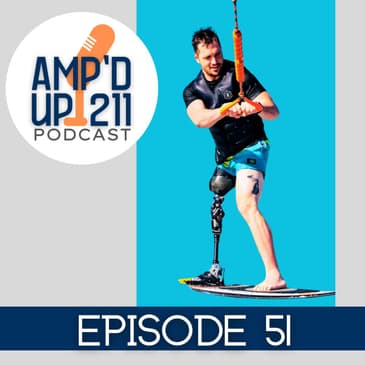
Join host and creator Rick Bontkowski, a right below-the-knee amputee, for an inspiring episode of The AMP'D UP211 Podcast—a show dedicated to empowering and uplifting the limb loss community through powerful stories of resilience and hope. Rick is passionate about breaking barriers and challenging preconceived notions about people with disabilities.
In this episode titled "Forged by Faith," Rick sits down with Josh Reed, who shares his remarkable journey from tragedy to triumph. After a life-altering motorcycle accident led to the amputation of his leg, Josh faced immense physical and emotional challenges. Battling depression and isolation, he eventually found hope and purpose through his faith and the support of the Beautifully Flawed Foundation's Forge Retreat.
Together, Rick and Josh delve into the depths of overcoming adversity, the transformative power of community, and how to turn pain into purpose. They discuss how setting small goals can lead to monumental achievements and the importance of having a brotherhood that lifts you up. This heartfelt conversation is a testament to resilience and a reminder that no matter the obstacle, you're never alone in your journey.
Tune in to The AMP'D UP211 Podcast to hear two inspiring stories that prove life's greatest challenges can forge the strongest spirits. Don't miss this episode that promises to motivate and encourage anyone facing their own mountains to climb.
[00:00:00] On this episode of the AMPD UP211 Podcast, we're diving into the powerful story of resilience
[00:00:06] and faith with Josh Reed. After a life-changing motorcycle accident led to the amputation of his leg,
[00:00:12] Josh faced an incredibly difficult journey, one filled with pain, isolation, and uncertainty.
[00:00:18] But through his unwavering faith and support of a close-knit community and his involvement
[00:00:23] with the 4-durethreat, Josh transformed his pain into purpose. Now as a leader in mentor, he's helping
[00:00:29] others find strength in his own struggles. Join us as we explore how Josh overcame his darkest
[00:00:35] days on the AMPD UP211 Podcast.
[00:00:49] Josh Reed, Good to see you my friend. How are you today?
[00:00:52] I'm doing great. It's a little bit cloudy in LA but can't complain.
[00:00:57] You're in LA. I did not know that. What part?
[00:01:01] Yeah. I live in Central LA on your anglewood.
[00:01:05] Okay. Yeah. All the ideas used to live in Chicago.
[00:01:09] When did you live in Chicago? I missed that part of your bio.
[00:01:14] Yeah, it was a 2014 to 2019 lived up an edge water so that was a past life back in the
[00:01:22] two-legged world. That's cool. I always say that too when I talk about myself with two legs.
[00:01:30] I say yeah in my past life. It's a perspective change isn't it?
[00:01:39] When I feel and I don't know where you're at with this, how long have you been an MPT?
[00:01:46] Going on five years. Five years. Okay. So I've just got a couple of years on you.
[00:01:51] I feel like when I say those things that it's this process where I've really accepted.
[00:02:02] You know, where I'm at. I don't really see it as, you know,
[00:02:10] it's not as new anymore. It's not as, you know, I'm not adapting as much. I mean, we're always adapting,
[00:02:16] right? Because every day is a little different and things. There's challenges
[00:02:20] and setbacks and all that stuff. But I feel in so many ways, like this is just normal life now.
[00:02:27] And yeah, I'm looking forward to that moment when I can say, I really don't even think about it at
[00:02:34] all anymore. It's just, it's just who I am. And you know, I think that's one of the beautiful
[00:02:42] things about struggle is we slowly put those little pieces together, you know, of resilience.
[00:02:48] And we get to that sort of those little milestones of, yeah, I'm okay with this. This is okay.
[00:02:55] You know, there's life after a motorcycle accident and I want to learn a little bit more about
[00:03:04] and if you don't mind sharing with our listeners, you know, what happened to you?
[00:03:12] And, you know, subsequent surgeries and things that went on, you know, post trauma.
[00:03:21] Because I'm not a trauma survivor. You know, my, my amputation was not necessarily elective,
[00:03:31] but it wasn't the result, you know, of what you went, something similar to what you went through.
[00:03:38] So if you don't mind sharing that, that would be great.
[00:03:41] Yeah, so I moved out here from Chicago in beginning a May 2019 because if you stay in the summers
[00:03:50] of Chicago, you end up looping the next year. So you got to leave, leave at the end of spring
[00:03:54] when you're still miserable there. Oh yeah. So I came out here in May and I worked in physical therapy
[00:04:01] as my career and was able to transfer out here, stayed in the same company, pretty easy transition.
[00:04:09] Six months later, so November of 2019 I was headed home from the gym.
[00:04:15] Went swimming with my girlfriend, did a workout with my friend, coming home and
[00:04:22] take those using ways so it took me on this weird route. That was like, I don't know, never been doing this
[00:04:27] before. Let's do it and I clipped at very end of an entrance from my own curve and
[00:04:35] it was about 8 30 at night, the roads were pretty empty and like I said, I clipped it and it
[00:04:41] threw me about 100 feet before I came to a stop. Luckily, I was only going about 65 because you know,
[00:04:47] those crazy motorcycles or riders they like to get a little bit more speed. They go so fast.
[00:04:54] But I was going about 65 and came to a stop and I was still in the entrance lane and
[00:05:02] I looked down and I'll save some of the graphics but saw my leg was barely attached
[00:05:09] and I didn't want to get a buy car. So I scooted off the lane under the shoulder
[00:05:18] and pretty crazy, especially coming from a world of physical therapy. I was also a personal trainer,
[00:05:25] a massage therapist so everything was about the body. I looked down. Okay, how are we going to process
[00:05:32] this? How are we going to deal with this? And a car came up behind me and stopped and it was
[00:05:40] coupled from up in Sacramento, San Francisco area. One was a nurse practitioner and her partner was
[00:05:49] a midwife. Incredible. And they had emergency turnicates in the car and I was down for probably
[00:05:58] a few minutes before they got there and losing a lot of blood when I got to the hospital,
[00:06:04] and they were having to put four units in me because I was pretty depleted. But laying there and
[00:06:13] I'm a Christian so for the viewers who understand this, okay but it was very much an audible voice
[00:06:21] of God being like if you want to let go that's okay. Like, we're getting through this and
[00:06:28] I was laying there and I was like no, no I'm going to get through this. I'm not given up.
[00:06:34] I'm not letting go. I've still got way more life to do and it was all right. All right, let's do this
[00:06:41] then and that's about the time that the car came up. So really that moment right there is the only
[00:06:47] thing that evokes a motion with me. Everything else I've said time and time again, I very much believe
[00:06:55] that you should tell your story until you get bored with it. Yeah, that's a great way to put it.
[00:07:03] Because then you you duplicate yourself on those like strong flashbacks that that PTSD mentality
[00:07:09] like I process by the accepted I've gone through this. It's an extraordinary, extraordinary set of
[00:07:17] circumstances because for someone like yourself who's very much not even in your career focused but
[00:07:25] also yourself as a person you're very body focused, right? Because you're you know you're in physical
[00:07:34] therapy your athletic your fit you know your your body is something that is very much a
[00:07:44] part of your daily routine and to suddenly be in that situation and look down and I think the
[00:07:53] you put it which is extraordinary to me it's like okay let's do an assessment like what
[00:08:00] needs to happen right in this situation it's a problem to solve. Now most of us would just be screaming
[00:08:12] an agony you know probably thinking like okay these are the last moments of my life
[00:08:19] and I can't believe this happened and it's just that shock and astonishment and just
[00:08:25] flooded flooded flooded of emotions and you were like okay wait a minute what needs to happen right now
[00:08:33] how do I how do I care for myself in this particular moment and I've heard this before
[00:08:41] and I think I reacted when you said nurse practitioner. I've known people that have gone through
[00:08:48] traumas and nurses show up. Yeah it's like they're there. It's it to me if there's any indication
[00:09:00] that people get put in places for a reason you know talking about your faith and God and
[00:09:08] moving those chess pieces around let's say I had an experience I was actually on my way this was
[00:09:16] during the time that I had my own health issues but I was on my way to a hospital in Chicago
[00:09:24] and I'm driving on I want to say it was wasn't 294 it was I think was 292 east
[00:09:35] and heading into the city and I see a girl just laying like on like a portion of a median
[00:09:44] just laying there lifeless so I get my car to a safe spot where it won't get hit I walk over
[00:09:53] and she's just laying there and all the sudden I realize I look over and her car is buried
[00:10:00] in some trees and bushes and stuff like I don't know maybe 150 feet away
[00:10:07] so I know this is an emergent situation but I'm not a medical person I'm just trying to figure out
[00:10:13] what's happening and I'm thinking okay she crashed over there she stumbled over here
[00:10:21] and she collapsed in the street I'm not kidding you Josh from behind me running up to us
[00:10:32] nurse practitioner yeah they're amazing I was like what is the timing this is incredible
[00:10:41] what put you here right yeah there's I do believe there's that divine intervention
[00:10:49] that can occur when things are bad things are happening because I hear this over and over again
[00:10:57] you're not the first person to say I experience this horrible trauma and a nurse was you know on
[00:11:05] standby ready to go right so emergency turniquit what happens next so it took about a half
[00:11:14] hour before the ambulance got there cut off all my clothes biggest group of people I've ever been
[00:11:22] naked in front of so last about that even as I was on the freeway I was like this is kind of crazy
[00:11:29] I'm very open right now so they give me loaded into an ambulance give me to seeter Sinai
[00:11:37] which I can't say enough good things about that hospital the physical therapist,
[00:11:44] occupational the surgeons, the nursing staff, the CNAs everything about that hospital was
[00:11:52] very good to me and I'm very thankful for it so was there like was there a limb salvage or was it
[00:12:00] was there nothing tried? one's we got in the operating room I was awake through the whole time
[00:12:08] we got to the operating room and the doctors are like hey we're here you can like go now
[00:12:12] like and I was like okay got it and I was out because I knew I started letting go I was going to go
[00:12:23] so three days and I see you had multiple surgeries I broke my forearm on the right side
[00:12:30] crushed my hand on the left side so it was on my chest they were trying to salvage the limb
[00:12:38] because I still had nerve connection as I was going to not the ambulance like I told the guy like
[00:12:43] I can still move my toes I can still feel my foot because I didn't know if they could maybe do
[00:12:47] some kind of knee replacement something but the surgeons that every time they tried to attach
[00:12:53] the blood vessels and they opened it up my blood pressure would plummet so they weren't able to salvage
[00:12:59] the limb it was near my leg so I think they made the right decision.
[00:13:06] you ended up below or above the knee? I'm above the knee.
[00:13:11] yeah my knee took the full impact of everything just kind of exploded.
[00:13:17] I see you for three days and then I was in the hospital for the next two months
[00:13:23] I had a total of 13 surgeries. I got infected so they had to remove some extra meat
[00:13:33] they had to shorten the femur a little bit because I didn't want to do a skin graft
[00:13:37] because any time you get a skin graft, the best skin is going to be weaker for the rest of your life
[00:13:42] and I did not want to risk the skin breakdown and a lot of that is due to working in physical therapy
[00:13:49] working especially with people with diabetes and their fragile skin already.
[00:13:54] I didn't want to be in that circumstance so got out after two months and 13 surgeries later
[00:14:03] and had to move houses and did up having a roommate everything was different.
[00:14:10] I had to learn to drive with my left leg. Me too.
[00:14:16] Yeah it's weird right?
[00:14:19] The thing that I found it's a great thing to bring up because people asked me that all the time
[00:14:26] they were like yeah I noticed you're right leg MPT how do you drive and the thing I thought was
[00:14:33] kind of interesting the first time I used an adaptive device to drive a car with my left foot
[00:14:41] right away I noticed wow my my cab muscle my left ankle it's not used to doing this
[00:14:51] it's not that I'm a drummer so I'm used to doing things with my feet complex things with my feet
[00:14:58] it wasn't so much rewiring my brain that okay it's your left foot now that that wasn't the issue
[00:15:06] it was more like these muscles are not you take for granted when you when you drive as a young
[00:15:14] person and you develop that muscle right to drive and suddenly you switch to the leg
[00:15:22] that's been essentially for many many years sitting dormant on the left side
[00:15:29] suddenly you're like hey you you've got to do the work now and I thought god oh my leg like it hurt
[00:15:36] right that I don't hear the sore like my leg is sore why I was driving what's that all
[00:15:45] you found a down here and we'll set up at all so my foot is crossed over and I'm doing this the whole time
[00:15:51] yeah that's even harder drive off switching my car over by that's even harder
[00:15:57] yeah because you because you and you don't do you don't a prosthesis when you're driving
[00:16:05] you take it off I keep it on you keep it on but you just rotate it okay yeah but you have to
[00:16:12] basically kind of step like almost like kind of cross your thigh a little bit right in order to do
[00:16:20] it or is it more position differently when you're sitting in the car I just just a little bit
[00:16:25] bring the leg over it's not too bad I thought about like I said throwing on adapter pedals or
[00:16:31] like a flip-flop pedal I think they call it yeah but there's never really worth it yeah my
[00:16:36] no that's great I mean again so much of this I always say is this massive exercise in adaptation
[00:16:45] doing all the things I did yeah doing all the things I did but they just they're different
[00:16:52] it's just different that's all and whatever that is driving a car riding a bike whatever it is
[00:17:00] yeah it's gonna feel different but as we develop those new muscle memories and our brains
[00:17:06] continually get rewired like over and over and over again because someone will say to me well you
[00:17:13] know what does that feel like riding a bike and I'll say well at first really really strange
[00:17:21] because my foot you know doesn't know where the pedal is and I didn't I didn't feel comfortable
[00:17:27] like clipping in or anything I was like I was like terrified that I was gonna fall especially
[00:17:33] when I first started riding again but now because I've developed so much muscle memory in my residual
[00:17:40] limb I know what it feels like when my foot is square on the pedal I don't even have to look
[00:17:47] I don't and I have to look down anymore it just it just happens over time where your brain goes you
[00:17:54] have that those aha moments where the brain goes yeah that's what it feels like yeah that's what
[00:18:00] it feels like that's what it feels like exactly I will say though the first time I started riding
[00:18:05] a bike again I used to be a pretty avid cyclist I've done half iron man wow whole century rides
[00:18:13] like next lago I've yeah I sat on the saddle a lot yeah and like clicked into the pedal
[00:18:20] I my friend is mechanic a bike mechanic so we have an altered seat for me to fit the prosthetic
[00:18:25] and that into work with that so I started a pedal and I couldn't get out of my prosthetic side
[00:18:32] and I was like oh and I fell over but going two miles an hour just slowly to go over and
[00:18:38] miles and I've done that too where you're not even moving so much but you're just kind of like boom
[00:18:44] I'm going from laughing I mean you okay yeah all right I just feel like an idiot all right
[00:18:51] but what are you gonna do yeah we would you have to we were at a we were on a bike ride once in
[00:18:58] in the city you know because Chicago has some great you know bike paths along like sure drive
[00:19:05] in numerous places and we're with a friend non-AMPT and you know he's you know sort of like
[00:19:14] charging ahead of us and in going in places that I thought well that's kind of dangerous or
[00:19:20] and I think he had more of a mountain biking kind of background which I'm more of a touring kind of
[00:19:26] cyclist like I need to be on flat surfaces and we got up to this like little hill like in a park
[00:19:33] where you just wanted to go down and I'm looking over to my left like there's a way to get down
[00:19:38] like easily right there but no he just kind of forged ahead and for whatever reason I sort of
[00:19:46] stuttered right and sometimes when you pause that's a bad idea like you just have to go right
[00:19:54] so I kind of paused and sort of like got disoriented and there were people around me so I just
[00:20:02] didn't recover from it like right away and I did one of those like I went forward like two inches
[00:20:08] and just went boom just fell on my side and everyone's like oh my gosh half laughing are you okay
[00:20:18] the only thing hurt is my pride exactly I'm like super embarrassed but I'm fine
[00:20:24] you know talking about going through such a traumatic event I want to take you back to maybe
[00:20:37] some of what you were feeling in terms of loss and you know what emotional set you experienced
[00:20:48] coming out of that life-changing event certainly there's all the logistical parts of
[00:20:56] changing your life and changing your routine and all that stuff but I want to go if it's okay
[00:21:03] a little deeper into you know where was your head at when you got let's call it home like
[00:21:09] what were you feeling what were you thinking yeah so being in the hospital two months gives you
[00:21:15] a lot of time to thank you can only count the ceiling tiles so many times so I have an uncle who was
[00:21:23] bilateral below the knee due to jumping on the train back when he was young and he had a life that
[00:21:31] was full of just anger a lifelong victim never really processed the emotions strong addictions to alcohol
[00:21:41] and drugs and growing up I saw that and it was scary for me it was this is an example of what
[00:21:50] not to be growing up so as I'm laying in the hospital I had a really take time and build a strong
[00:21:59] platform and I encourage everybody to do this especially amputees like build this foundation
[00:22:08] of what you are going to be and what you are not gonna be and I saw him and how we processed it
[00:22:15] and how we just ruined lives of people around him because he couldn't get through the trauma
[00:22:20] and I was like I'm not gonna be like that this is hard it's not fun I didn't want this but I'm not
[00:22:29] gonna be a victim I'm not gonna be angry I'm gonna work I'm gonna over at home this and that's it
[00:22:37] like that is the foundation that I'm setting today and I had to really think about it and deeply
[00:22:44] embedded because I knew I would have to come back to it when days got hard when things feel like
[00:22:51] I can overcome so really that is the period where my recovery started and it's very much as
[00:23:00] as you know becoming an amputee is more about the emotional and the mental recovery than it is
[00:23:05] the physical recovery from the days that we have to process the PTSD and the depression
[00:23:12] and things are hard and maybe there's pain for it a lot of pain for you thrown in there as well
[00:23:17] it can be very overwhelming and so if we don't have those boundaries if we don't have a strong
[00:23:24] foundation it's gonna crush us yeah it's a really good point and I think that I was similar
[00:23:33] in that regard now fortunately for myself I had some time to prepare and what I mean by that is
[00:23:41] I again I wasn't victim of a traumatic event it wasn't just taken away from me suddenly
[00:23:49] I kind of knew this was coming and then my surgery was to be quite honest was almost a relief
[00:23:57] but nothing takes away the pain of looking down you know at that big swollen stump
[00:24:04] you know I hate that word by the way I don't know why it's just like a stigma with me
[00:24:10] you know I always think of a stump as like this ugly thing right in your backyard there's a
[00:24:15] stump out there so looking down at my residual limb for the first time and of course it's you
[00:24:23] it's just this big swollen you know kind of mess and there's this part of you that's gone
[00:24:32] and I recall shortly after I came home having panic attacks and I would describe it as
[00:24:46] feeling almost like a tingling in my residual limb but something something was some signal
[00:24:53] was going to my brain that was saying it's something's missing like it's something's missing like
[00:25:01] there's an emergency like my brain was almost trying to tell me something's wrong something's really
[00:25:07] really wrong with you right now and someone in PT speaking of PT had told me you know
[00:25:20] if that's something that you have experience it's it's really important to breathe and it's
[00:25:25] really important just to gently kind of massage your limb it's a way of training your brain
[00:25:31] to understand that this is where you end now and it's okay that there isn't a part of you missing
[00:25:39] anymore um this is just how you're built now and I really appreciated that because it helped
[00:25:46] but I I have to be honest um I very much employed what you're talking about initially
[00:25:52] which was the I'm not gonna let this break me I'm not gonna let this change me I'm gonna overcome
[00:25:59] this now fast forward five six seven years honestly Josh I have moments where I'm very sad
[00:26:10] like I'm very sad about the loss and I'm you know generally to be quite honest I'm more active now
[00:26:23] as an PT then I was before my amputation in my past life right so by all accounts and measures
[00:26:34] um you know fitter than I've ever been I'm happier I'm doing more with my life I'm more engaged
[00:26:42] I'm more appreciative I'm more present and I'm loving myself like my life depends on it now
[00:26:51] so why this wave of sadness I don't know and it's it's fleeting but I'll just have those moments
[00:27:01] where I look down and I'm like wow that's pretty messed up everyone this is Rick Bancowski from
[00:27:11] the Amped up to 11 podcast every so often I come across a product that I just want to tell our
[00:27:17] entire audience about it this product is snap slide snap slide is a cap that goes on your
[00:27:25] prescription medications that allows people that struggle with these things to get the cap off
[00:27:31] much easier introducing snap slide snap slide is a revolutionary single handed closure that
[00:27:38] solves an unmet need I'm paralyzed partially on my left side so it makes everything difficult day
[00:27:44] to day and I'd even miss my dosage medicine because it's just too difficult with one hand but
[00:27:49] with this product I was able to do something that everybody else could do I could take my dosage
[00:27:54] and live back to the life I had before my stroke if every bottle I ever used was like this
[00:27:59] I might even have a smile on my face just taking my meds I will be switching pharmacy I will be
[00:28:05] switching doctors I will switch everything to get this bottle by allowing for single handed opening
[00:28:12] and closing that requires less force and austerity the current child resistant closures
[00:28:17] our patented solution brings life changing potential for over 70 million Americans with physical
[00:28:22] limitations what's more if every pharmacy in the US which to snap slide the plastic reduction each year
[00:28:29] would save the planet nearly 21 million pounds snap slide would help so many of my patients
[00:28:35] and millions worldwide snap slide better for all life changing for many learn more at snap slide.com
[00:28:44] I want to share some testimonials with you this is not a commercial this is a product that I do
[00:28:50] I want to share it with our community and I hope you'll check it out here's what customers
[00:28:57] users of snap slide are saying about it check it out. This is the best product I have seen ever
[00:29:04] can get my medications out easily also working as a nurse this I can just tell you right now
[00:29:11] for for patients especially older patients during atric patients this would be brilliant
[00:29:23] oh you have to do it's push and slide we need this and every pharmacy
[00:29:29] this should be everywhere everywhere this is just one hand great I love it this should be
[00:29:35] every medicine bottle i'm sick of trying to open bottles that I can't open this solves the
[00:29:42] problem absolutely amazing but first time user is using it it's very simple to use all you have to
[00:29:48] use one finger to open it which is so much more easy than the other it's ridiculous that we have
[00:29:54] to have that we don't have all of our pill bottles like this as in the confessional therapists I see
[00:30:00] people having different cases with daily tasks all the time and opening you know containers
[00:30:06] most frustrating task I hear when it comes to opening medication and stuff like that this is
[00:30:13] really cool I can just like push it like this and bam look at that and one handy no fighting
[00:30:21] so these are cool I like it these are so easy to open I want to be able to do my meds independently
[00:30:36] get these out there there's a lot of us i don't want to ask by mom to open my meds
[00:30:47] can't open pill bottles at all but this i can open that's only for amputees but there are a lot of
[00:30:53] people who are having arthritis and different kinds of things on the hand and they cannot use
[00:30:59] the bottles it is wonderful so much better than what we have any pharmacy that would have this
[00:31:06] where you can easily slide it to open I would go there put it in my pharmacy right now
[00:31:12] I mean that I don't have any products I can do it I don't have any products I can do it
[00:31:17] I'm going to do it in the pharmacy because it would help a lot of people I need this
[00:31:23] I stopped my tracks when I saw it because the power of this particular top is life change
[00:31:37] Snapside better for all life changing for many learn more at snapshot.com
[00:31:44] I think that's completely normal though right yeah like if we have somebody that's close to a
[00:31:49] sky we don't just stop missing them and some days you really miss them and most of the time you're
[00:31:57] like you know what I enjoyed my experiences I have great memories I will always love them
[00:32:02] I'm okay then sometimes it's just that gut punch and it's like wow today is just hard
[00:32:08] so I recently got married this spring congratulations and thank you and
[00:32:16] you know thinking about what the family gonna look like what's our future gonna look like
[00:32:21] am I gonna be I'm never gonna be able to pick up and run with the kids
[00:32:25] I'm never gonna be able to do this I'm never gonna be able to do that
[00:32:28] and sometimes it gets really heavy and kind of sad for things that haven't even happened right yeah
[00:32:35] I think about it and it's like is it is it a sadness or is it a fear that I'm not going to be
[00:32:42] able to fulfill something that they need like what is it and there's nothing wrong with feeling sad
[00:32:49] if you start dwelling in that sadness if you start letting it overtake you
[00:32:54] if you start only thinking about what's not gonna be there then you lose out on so much of what's
[00:33:01] already there so much as an amputeuse you know that we're gonna be able to adapt and change
[00:33:07] and do and who knows what technology is gonna be in 10 15 20 years. It's exciting but we can get
[00:33:13] so stuck in that moment and it just will overtake us it'll lead to the depression lead to the
[00:33:24] we stop contributing to the world at that point we're just slowly dying inside and we're throwing
[00:33:30] away the life that we've been given and which is a gay like yeah I mean I have I have hard days sometimes
[00:33:39] especially the amperversory comes up uh most are always kind of harder days uh you know I'm I'm
[00:33:47] very much less to be alive but on those days I really try to take that step back and it be
[00:33:53] retrospective and especially the first couple years it was terrible and then since then it's like okay
[00:33:58] what have I done this last year what have I overcome this last year what are my goals for next year
[00:34:04] and instead of having a being this hard day it's where am I going yeah and it's so much about
[00:34:14] healing is perspective accepting what happened and then changing your view to allow you to keep growing
[00:34:22] and jump into my story that that first year I was like I'm gonna overcome this
[00:34:28] I'm not gonna let it get be down and then COVID started and I was like okay well this sucks but I got this
[00:34:34] and then I got my first prosthetic leg and they wanted to do like telehealth and I was like well
[00:34:39] that's not gonna work so cancel that and but I'm gonna get through this and my first year
[00:34:44] it was the slow decline into isolation into just I'm surviving isn't that enough
[00:34:58] and it was everything I could do to hold on yeah I hadn't put that together in your timeline so
[00:35:06] during during some of those really in critical moments of development as an amputee now
[00:35:13] given that you're you were active you're very much in that physical you know fitness space
[00:35:22] physical therapy being a fit young guy you're probably like let's go like I need to get back
[00:35:30] to what I was and doing what I want to do and then COVID shows up because everyone's got a
[00:35:41] COVID just arrived and it was like oh no like now what do we do and for someone like yourself
[00:35:50] and I appreciate this man talk about bad timing like I need to be getting back to normal
[00:35:57] this COVID stuff what are you kidding me I can't I can't do what to tell a health for
[00:36:03] I mean it was it was they tried it was just it's not working with learning how to walk again
[00:36:12] and but I went through set up my short-term goals my long-term goals I recorded myself
[00:36:17] standing at weight shifting transferring from sit to stand watched myself walk with crutches
[00:36:24] learning to walk without crutches everything was recorded everything was analyzed everything
[00:36:29] had a plan yeah and it was very much like I have to remove my emotions from this and I have to fix it
[00:36:36] and I think I did it the right way I'm not gonna be hard on myself about that but everything
[00:36:41] I was doing physically I wasn't doing emotional I wasn't having flashbacks or nightmare so
[00:36:48] how could I have PTSD I'm waking up and showing up and I'm not using pain meds so how can you say
[00:36:57] I'm making all these excuses for what I'm not doing and about one year later who's the end of
[00:37:03] October my wife now of her name's Grace she was like drop-sh I can't do this anymore
[00:37:13] I love you but it's killing me and I was like what do you mean I'm doing everything I can
[00:37:18] she's like I know and I love you but I can't and I was like I'll do better and you know
[00:37:27] immediately start bargaining immediately start that negotiation and it was terrible but it was also one of the
[00:37:36] best things and I she left I spent a couple days and just pure morning and then it was like why would
[00:37:44] she want me like what am I actually doing I'm I'm surviving I'm not dying and that's supposed to be good enough
[00:37:52] yeah and it took some time I found a therapist I started journaling again I started really trying to
[00:38:01] process process what it was and one of the best things my therapist did like one she was like
[00:38:07] Josh just because you don't have nightmares and flashbacks doesn't mean you don't have PTSD so
[00:38:12] acknowledge what it actually is and every time I start making excuses or dodging the questions she
[00:38:19] called me out on it and she's like this upper 70s by foot nothing 100 pound backs and she'd be like
[00:38:26] are you ready to stop lying to me and like you're really actually talk about this or you're going to
[00:38:33] keep avoiding it and I had to be called out uh and so I started studying started like processing on
[00:38:41] how I'm dealing with what I'm actually going through I started a men's group with with some
[00:38:48] different guys that I've known from different churches and that's been going on now for
[00:38:53] about four years where I meet with them once a week on zoom and it's just kind of like
[00:39:00] what are we going through how can we help support each other how can we be vulnerable and build that trust
[00:39:08] because without that support if you're trying to do it only alone you're not going to get anywhere
[00:39:14] yeah um and then so it was all that and then one thing that Grace had said to me she was like
[00:39:23] Josh you're so busy running away from something that you're not running to anything
[00:39:28] and that's that with me because the path looks the same but the intention that perspective behind that
[00:39:36] is completely different and so I was like I have to start running to something
[00:39:43] I have to start contributing I have to be something in this world I survived and now I'm throwing it
[00:39:49] away you know yeah and so that first year was learning to walk learning to ride a bike learning to
[00:39:55] lift weights but emotionally dying and then after that it was I'm actually healing I'm actually
[00:40:01] contributing I'm actually growing uh and to the point where you know by time that second year was
[00:40:08] done I looked at myself and I was like you know what I think I am a better person today
[00:40:12] wish I had my leg I wish I was as strong as I was but who I am as a person is completely different
[00:40:22] and I I also much of it to her first saying Josh I can't do it yeah I you know that's a beautiful
[00:40:30] I mean God wanted an incredible comeback story and for her to love you enough to tell you
[00:40:37] you know hey you know I I see you and it's it's not good and that takes a lot of strength
[00:40:50] and a lot of it's a lot of courage to learn yeah it takes a lot of courage to tell someone especially
[00:40:55] after they've gone through something like what you've gone through because very often people will just
[00:41:02] back away like yeah there's a lot that's a lot there's a lot there there's a lot a lot of layers and
[00:41:09] and for her to just sort of cut through that and say no I can't do this I can't I can't stay on this
[00:41:19] train with you and just to sort of shake you and get you to recognize that you were just at the
[00:41:29] beginnings of that emotional process that healing process and there was so much work ahead
[00:41:37] which was gonna require you to get really really uncomfortable because so much of that healing
[00:41:44] you know we're men traditionally you know the physical part you know putting your leg in a
[00:41:51] prosthesis and building your gate again and you know getting active and sweating it out
[00:41:58] men no offense that's easy yeah like we can do that we you know we're physical specimens that can
[00:42:08] overcome those challenges right but I think where we tend to lack or fail at times
[00:42:18] is understanding the emotional component and how much healing is required in that emotional space
[00:42:27] to make those gains and to flex that sort of muscle again right because so so much of that
[00:42:36] resilience and so much of that you know being present and being engaged and feeling all those things
[00:42:44] that you should feel going back to what I had mentioned which I appreciate your comment
[00:42:51] yeah I feel like there's still those parts of me that has to revisit disappointment
[00:42:57] that has to revisit sorrow that has to revisit loss and manage it receive it right accept it
[00:43:08] and then start to do the work to heal to tell yourself it's okay to feel that way
[00:43:15] it's okay to have that bad day right that was a bad day and you're going to have that again
[00:43:22] that's not going to go away and that analogy with losing someone it's it's so incredibly true
[00:43:30] that you know we we we can celebrate you know someone's life and what they meant to us and
[00:43:36] wax nostalgic about memories of them but then there's that moment where you go they're gone
[00:43:44] yeah that's hard you know that's that's when the clouds you know come in and cash shade and
[00:43:53] it's like uh and that feeling probably will never go away but we learn how to manage it
[00:44:01] it's just it's learning how to cope and get through that stuff um I want to talk about uh
[00:44:08] the forge and yeah there were a treat um tell me a little bit more about how that came about
[00:44:17] and then I want to dive into sort of your your path and what seems to be it had a profound effect on you
[00:44:28] yeah so uh and the forge is part of beautifully flawed uh I have I had notes over here because I was like
[00:44:36] what do I need to remember because I'm not going to I got notes too yes it's all good
[00:44:43] so beautifully flawed it's uh was started by Bethany Hamilton uh who we know Loster Arm
[00:44:49] when she was a I kid from a shark attack went on to be a professional surfer lives in Hawaii
[00:44:56] she started friends of Bethany Hamilton in 2007 and then it was rebranded it's a beautifully
[00:45:04] flawed foundation and it started out uh as a women's retreat and then it started incorporating men
[00:45:16] and that was only in 2020 so January of 2020 the forge was started and it was all before just before
[00:45:24] the COVID things started and so they were able to have one retreat in in Hawaii and then since then
[00:45:30] it's moved to Delmar uh so I started in 2022 with my first year so it hasn't been going on
[00:45:41] very long I missed the first two and I heard about it I'm like a podcast or I was just scrolling
[00:45:47] through something and so I just stumbled across it and I was like that would be cool so it's a Christian
[00:45:54] organization that's focused on like surfing and being physical it's with other men who are
[00:46:03] amputees and I was like this this could be something that's that could be beneficial
[00:46:08] I'm going to throw myself at it cost money that I don't have but if something's going to be
[00:46:13] impactful you need to invest in it yep and so I was like let's throw some things up money I don't
[00:46:19] have that this unless let's go and I'm going to make the most out of it to get my money is where
[00:46:25] maybe meet a few people I don't really hang out with amputees let's see let's see
[00:46:30] and so they split the week into into a first half and second half and all journeys between the men
[00:46:36] and the women and so I get there I have four days with some people I don't know I'm one of the
[00:46:48] like in their 20s which is fine with me and I went I was like okay this is pretty cool some of
[00:46:57] these guys you know I hear their story and there's our MMPTs they're like MPTs there's my laterals
[00:47:06] I guess it's okay and so they have lessons are not lessons like they have like speakers
[00:47:13] you have a devotion in the morning you build this camaraderie with this other guys
[00:47:17] and like most things like if you're willing to throw yourself at it you're always going to get
[00:47:21] a lot more out of it you can't you can't force for something on somebody who doesn't want it
[00:47:27] and so I was like let's let's let's get this and so like date two or date three
[00:47:34] it's like I think this is really good for my healing so the focus on that week was really about seeing
[00:47:43] ourselves for who we are and really trying to find our identity and that was really big for me
[00:47:52] that year especially because that's where I was those some of those areas that I was really
[00:47:56] struggling with and being around being around MPTs like that I have to be honest because I you know
[00:48:05] went to some support groups shortly after my amputation and it was it was difficult for me
[00:48:16] and I mean now I mean these are my people now and you know I'm very much embrace it
[00:48:23] and you know I have great engagement with our audience with MPTs that I meet if I go to conventions
[00:48:29] whatever I feel very much at home but initially for me it was it was kind of tricky and
[00:48:38] I don't I don't know why but at the same time do you do you feel like that was I don't know
[00:48:49] like an opportunity for you to kind of you know kind of get out of that comfort zone
[00:48:57] and do some things experience some things where you tapped into some energy that maybe you didn't
[00:49:03] know was there physically not really it was fun but I have a background in being physically demanding
[00:49:14] on myself and so there's like surfing there's wake surfing there's like doing like jujitsu or doing
[00:49:23] process stuff so nothing not about was new since being in an amputee I don't jujitsu for like a year and
[00:49:29] half not in it right now I've gone surfing I've done bike so like nothing was really new but what was
[00:49:36] new was dealing was talking with these people who are dealing with some of the same problems that
[00:49:41] I look at myself and I don't recognize myself like I'm not ashamed of my scars I'm not ashamed
[00:49:48] that I don't have a leg but sometimes I don't recognize myself like you're saying like I stand in
[00:49:54] a mirror and I'm just like who are you you know especially in the beginning stages so the retreat
[00:50:03] was great that first year and I was like I want to get more involved in this and so
[00:50:10] reached out to a couple of the people that helped run it and then last year I picked up a leadership role
[00:50:17] and I spoke to the group once and kind of filled in and helped in some of those areas that I thought
[00:50:23] it could be better and from my perspective like it was a group of guys where most of them were returning
[00:50:30] and so even more camaraderie was built sure and we're able to bring in the few new guys
[00:50:37] and in this sense then as we prepare for this next retreat in a couple months
[00:50:43] I'm taking more of a leadership planning what the whole theme is going to be planning on like
[00:50:48] what the versus of the week who's going to be speaking how many times am I going to be speaking like
[00:50:52] what does it look like as we continue to grow this because it's still just a baby
[00:50:58] you know this is only year five of the retreat and I think every year it's gotten better
[00:51:05] I hope this year has even been continues to grow on that and continues to be better for my own
[00:51:10] side sake because I don't want to be taking a leadership role and have it not be good
[00:51:16] but really it's pushing yourself into the uncomfortable especially as as men like you said like
[00:51:23] we can face physical demands we look forward to it that pain, that pressure, that that
[00:51:31] is very part of us but it pushes you also to be vulnerable with these other guys and say man
[00:51:41] I'm also struggling with this whether it's depression or anxiety or addiction or or whatever
[00:51:50] it is it's helping open that up and give you a platform to speak on to be accepted on and show
[00:51:57] yourself at these guys who very much want to be there and support you. Where would someone need to go
[00:52:08] to learn more and engage? So on all the platforms it's at beautifully flawed foundation
[00:52:17] and then on Instagram it's at forge men's retreat. So those are where you can go it's also beautifully
[00:52:25] flawed foundation.com and registration is close for the year but there are still openings so
[00:52:32] somebody here is listening they're like wow that would be good for me or my friend cousin whoever
[00:52:38] let him know um direct them to us we are very much a year-round support
[00:52:46] there's a great community we still though have a couple months before the retreat so there's still
[00:52:51] this time. Now that's awesome but but really the more you can do to hone your situation
[00:52:59] to not have pity on yourself but I mean at same time having understanding of what you're going
[00:53:04] through and accept that and really just ride yourself to to healing let those people surround you
[00:53:15] let people uplift you on your circumstances. Oh absolutely I want to and overrun not a time but
[00:53:23] I want to talk a little bit more about how your faith has played a role in so much of this
[00:53:31] and you know provided a beacon you know of light for you to keep you on this path
[00:53:41] you know what what do you see faith is playing a role in this experience for you.
[00:53:50] So I grew up in church I grew up family devotions I grew going to a Christian school it was very
[00:53:57] much completely every aspect of my life which means I dinner really picks uh put the belly on
[00:54:06] that it deserved you just take it for granted. Went to college, had college years,
[00:54:13] living in Chicago and I was riding my bike home down the lake one night it was like 11 o'clock,
[00:54:20] pitch black and I just kind of broke and I was like what am I doing with my life I'm just
[00:54:27] there's so much hypocrisy in my life that I'm always wearing a mask I know who I'm supposed to be
[00:54:33] I'm grayish and pretending to be what I'm supposed to be. But what am I doing? And so that was my
[00:54:41] first real wake up call to looking at my life and claiming this faith, this this life
[00:54:49] for myself and not just because it's what I'm supposed to do. And then
[00:54:55] gone involved more involved with my church that I was going to there they had a
[00:55:01] pastor who was really focused on developing men in society and that was kind of put on me
[00:55:07] and I very much shifted my focus of there are not enough men in society. There's a lot of adult
[00:55:14] males but there's not a lot of men and I can't tell women what they're supposed to be
[00:55:21] or what they're supposed to do or the role they're supposed to fill.
[00:55:25] Well you can try. Yeah, yeah, yeah, because that's going to be a possible.
[00:55:32] But I can talk to other men. I can challenge them. I can help lead them. I can help guide them.
[00:55:37] I can help grow with them. And so got more involved in that started learning started studying
[00:55:45] started watching videos started healing moving out to LA got more involved at that like I said I
[00:55:52] started the men's group. And as I was going along you know your faith is challenged and if it
[00:55:59] doesn't get challenged you're not going to get stronger just like in the gym. You know work a
[00:56:03] muscle that muscles not getting stronger. And so losing my leg that's a big step of faith.
[00:56:10] Going through a breakup that's a big step of faith. Losing a job that's a big step of faith.
[00:56:16] And so there's these constant challenges and it's hard and some days it feels like you're
[00:56:21] going to fail. But then you look back over the last six months or the last year preparing for the next
[00:56:27] year and you're like I've gotten through that God was with me in that. I had a support system that
[00:56:34] came out of nowhere like that nurse who shows up. Yeah, I had friends that showed up. I had
[00:56:40] a pastor who showed up. I have people call me and be like haven't talked to you in years.
[00:56:45] And that support is there. And then I made phone calls and Facebook messages,
[00:56:50] pizza people and be like man two death gates ago. I was a real jerk and I'm sorry and I've been
[00:56:56] holding on to that. Man it's okay, like whatever it's fine. I'm like okay so I was able to unload
[00:57:03] some of that just the things that you do growing up you know and after forgive myself for it but I also
[00:57:09] wanted to let people know. I am sorry. And so through the last 10 years it's been a healing process
[00:57:20] internally. It's been a growing process especially spiritually and you know it's good days,
[00:57:31] it's hard days. It stays where you don't do what you're supposed to do and days where you do what
[00:57:35] you're not supposed to do but it's like this is who I am. This is where I'm at right now but it's also
[00:57:42] not where I have to stay. And so we keep pushing, I keep growing and it's very much been
[00:57:50] been that pillar in that comfort, in that part of my life that I know God's not going anywhere.
[00:58:00] Yeah and that you know that can tether us and although like you're saying you know we we operate
[00:58:08] in kind of a wide set of lanes sort of a wide highway but we need to be going in a particular
[00:58:16] direction and having that you know tends to keep us at least in that forward movement kind of place
[00:58:25] and having that you know those affirmations of you know why we're here and what we're meant to do
[00:58:32] not only for others but for ourselves and I think it's an incredible demonstration of strength
[00:58:39] and your correct faith and pressing into that, trusting in that and it being a guide you know
[00:58:48] so I would encourage everyone to check out the Forge Retreat and Josh is obviously out there on
[00:58:59] socials and I'm truly inspired by your story who was it Hugh Boyle that introduced us,
[00:59:10] fantastic fantastic guy really really appreciated his story as well and yeah it's really
[00:59:17] you that hand cast. Oh I appreciate that and you know I of course want to thank you but also
[00:59:25] go a step further and I so appreciate your transparency and what you sort of bring to this table
[00:59:33] and your vulnerability and giving of yourself and your emotions and I like to think myself that
[00:59:43] all of this sharing this is what being a man's all about and we you know people tend to think
[00:59:54] that you know men are not capable of what we're doing right now and I say no no men
[01:00:02] were emotional creatures and we're always seeking places to you know emotionally dump so to speak
[01:00:11] so yeah I mean yeah we're super well known for the hard physical stuff but
[01:00:19] you know most of us have a tender heart and we're trying to navigate those spaces as well so
[01:00:26] please give us the room to do so and you know I appreciate what you bring to the community. I appreciate
[01:00:33] what you're doing with your group and I would encourage you to stay on this advocacy path
[01:00:43] and just continue to be the rock star that you are in this amputee space.
[01:00:49] Such a pleasure to meet you everyone that's going to wrap it up for us that is Josh Reed
[01:00:56] please check them out my name is Rick Bonkowski this is the Amped Up to 11 podcast
[01:01:01] and I want to wish everyone help and happiness we'll see you next time