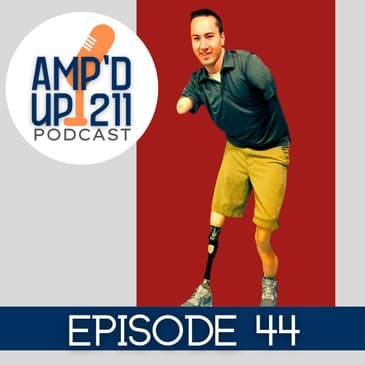
We are proud to present Motivational Speaker and Limb Difference Advocate David Powell. David's journey embodies the resilience of the human spirit. Born without hands and with malformed legs in New Orleans, he adapted early, using his feet and an electric wheelchair. His life took a dark turn with his mother's overdose and his subsequent struggle with addiction during high school. However, David overcame these adversities and now, as a motivational speaker and married father of four, he inspires others with his story of hope, resilience, and the boundless potential within each person. David's talks motivate others to pursue their dreams and harness the power of a positive mindset, proving through his life that despite significant challenges, one can live a life full of joy, positivity, and purpose. The AMP'D UP211 Video Podcast is hosted by Rick Bontkowski, a right-below-knee amputee.
[00:00:00] Now on the AMPD UP211 Podcast, we are thrilled to present Mr. David Powell.
[00:00:06] David Powell's inspirational journey began at birth being born without hands and malformed legs.
[00:00:12] These were challenges that have never slowed him down.
[00:00:15] As a freshman in high school, David lost his mother to a drug overdose, leaving him devastated.
[00:00:22] A few years later he fell into a dark hole of drug addiction and alcoholism until the age of 29.
[00:00:29] Over time and after a move to Salina, Kansas, David once again beat the odds and overcame those struggles.
[00:00:37] He is now fulfilling one of his lifetime dreams of becoming a motivational speaker
[00:00:42] to help people through helpful messages of life and its perspectives.
[00:00:47] Please welcome David Powell.
[00:00:58] David, how are you? Good to see you today, sir.
[00:01:01] I'm good, my man. How are y'all doing?
[00:01:03] Oh, we're doing great. Welcome to the AMPD UP211 Podcast.
[00:01:07] I am super pumped to learn a little bit more about your story.
[00:01:11] I've been doing lots of research on you, which I appreciate that you put out content.
[00:01:17] I've been sort of combing through your video blog, your YouTube channel,
[00:01:23] the many things that have been written about you, news articles that have been done about you.
[00:01:28] You are definitely someone that is not hard to find, which is nice.
[00:01:34] Yeah, it's a very good thing. Someone like yourself, your limb difference is definitely
[00:01:42] extraordinary in the sense that you don't have your hands.
[00:01:48] And describe to me exactly how your legs are malformed. What happened where
[00:02:03] you don't have full use of your legs.
[00:02:08] So I'm glad you've kind of been looking me up a little bit to kind of see a visual of it,
[00:02:11] because it's kind of hard to explain. But on my left side, I have from my hip down to my knee,
[00:02:19] and that's all normal. And then from my knee down, I have just a fibula,
[00:02:24] just one bone of fibula with a little foot clean that has four toes.
[00:02:29] And on the right side, that's where it gets kind of confusing if you don't have a visual.
[00:02:33] But I have from the knee down without the knee attached to my hip.
[00:02:39] Oh, interesting.
[00:02:40] I have a fibula that's not really that goes out and have a little foot on the end of that
[00:02:45] one too with four toes, like a premature foot smaller one. Now the hip,
[00:02:51] I don't know if this is too much information, but it's not like a ball and socket. It's just
[00:02:54] a fibula that goes into it just connects to my pelvis with cartilage and muscle.
[00:02:59] Got it.
[00:02:59] And growing up, I used to eat before the use of prosthetics. I used to use my feet for everything,
[00:03:06] eating, dressing, writing. I could write essays with my feet. I can barely write here now.
[00:03:13] But yeah, I used to do it all with my feet.
[00:03:16] But when I think about you and observe you on video, and I very much appreciate
[00:03:25] you making that accessible to people so we can better understand what your journey is like,
[00:03:33] what this human experience is like for someone like yourself.
[00:03:38] I definitely go to that place of your life is such a huge exercise in adaptation.
[00:03:46] Because what we know as people with fully formed limbs is there's one very
[00:03:54] specific way to do things. And we walk a certain way, we handle things with our hands a certain way.
[00:04:02] People are sort of hardwired into that thought of, well, this is just how you do things.
[00:04:08] And then we meet someone like David and we say, okay, hold on a second.
[00:04:14] How does he drive? How does he prepare a meal? How does he play with his kids?
[00:04:23] All of these things you discuss and you cover in a lot of your content.
[00:04:31] Again, it's this adaptation piece. And I think what was really heartwarming for me was to see
[00:04:39] just how incredibly normal your life is. It looks a little different, right? Because we all
[00:04:45] have that picture of what things are supposed to look like. But you're doing all the same things,
[00:04:52] thriving in that space. I want to talk a little bit about your childhood.
[00:04:59] And I talk about this a lot in the podcast in the way that I am fascinated with people that
[00:05:08] I refer to as lifers, people that have just been this way their whole life.
[00:05:14] And I came to my amputation about seven years ago. So I spent the majority of my life because
[00:05:22] now I'm 56. I spent the majority of my life with both legs and then everything. So I had
[00:05:30] this cataclysmic shift into redefining myself. But I look at someone like you and I say,
[00:05:41] huh, was there a moment that you can recall significantly because you're different,
[00:05:54] but was there a moment in your childhood where that became most apparent? Because when we're
[00:06:01] babies and stuff, I mean, we're very nurtured and we're very cared for. But then suddenly
[00:06:06] you have to interact with the outside world. And I have to assume that those are the moments
[00:06:13] when you sort of process in your young mind, okay, something's very different about myself.
[00:06:19] What did your childhood look like?
[00:06:22] So I'm glad we brought this up because people ask me why I'm so positive and why I'm so
[00:06:27] independent. And it has to do a lot with how my parents raised me.
[00:06:32] I think the reason you mentioned earlier how you're pretty transparent and have all the
[00:06:37] content out there and I want people to see how normal of a life that I have even though I
[00:06:42] have a lot of people around me. I don't have a lot of people around me. I'm not like them.
[00:06:45] My dad, when we went to the park when I was younger or at somebody's house,
[00:06:50] they would look at him and go, oh, what happened to him? He goes, right there. Ask
[00:06:53] him. He's the one that has it. Ask him. And then of course I would explain what happened.
[00:06:58] So I kind of credit him on me being so open about the disability.
[00:07:07] They didn't really give me boundaries. That was another cool thing I know,
[00:07:09] and especially with some presentations that I do, I have parents come up to me that have
[00:07:13] disabled children. Oh, should we let them do this or should we let them do that?
[00:07:16] My mom was letting me jump off the couch. She was letting me do all kinds of stuff.
[00:07:20] And it wasn't to let me be a rambunctious kid. It was just to let me figure out what my
[00:07:25] boundaries were, to help me figure out what I can and can't do. And I think that's super
[00:07:30] important. Being disabled is kind of frustrating when I see other parents coddling their kids
[00:07:37] or sheltering them, should I say. We're people too, man. Just let them live life. I know we got to
[00:07:43] figure out life a little differently than most people, but that's a part of the journey.
[00:07:49] We got to figure out what we're capable of and what we're not capable of. And I think it's
[00:07:52] important to not let anyone tell you what you're capable of and whatnot, what you're
[00:07:56] not capable of because they don't know. Only you know what you can and can't do, and you
[00:08:00] have to figure it out. So allowing you to be just a normal kid, doing all of the things that your
[00:08:11] instincts were telling you as a child because kids are just going to do what they do.
[00:08:17] And sometimes parents have to step away and let them, for lack of a better phrase,
[00:08:27] let them fall down. Let them make mistakes. And I always think of the times when your parents
[00:08:34] would say, don't touch the stove, it's hot. And for some reason, children still need to find
[00:08:42] that out on their own. You can tell them 50 times, don't touch that stove, it's hot.
[00:08:49] And until they touch it and go, you know, ow, then it sort of sinks in. So creating an open space
[00:08:59] for you as a child and giving you the opportunities to discover the world on your
[00:09:05] own and what you could do, what you couldn't do, and then maybe how to adapt to be able to
[00:09:13] do some of those things that other people were doing, but figuring it out in a way
[00:09:19] that provided you that feeling of self-worth, pride, things that, well hey, I can do that.
[00:09:28] You know, I can use my crayons just like every other kid. I might do it a little bit different,
[00:09:35] but I can still do it. I have coloring books too, that sort of thing. And the physicality of it
[00:09:43] in saying, you know, if he wants to jump, you know, body slam off the couch or do something,
[00:09:51] let him figure it out. Yeah, let him figure it out. And I think it's a great point about,
[00:10:00] I think you said your father was like, he's right here. Look, he can answer the question.
[00:10:05] That happens a lot on our idea today too, when someone's with like especially,
[00:10:10] I don't really experience it because I guess my personality doesn't portray
[00:10:15] me having any setbacks. But I used to work for an advocacy business back in the day
[00:10:22] when I went to doctor's appointments with other disabled individuals and the doctor would
[00:10:27] be talking to me. That's your patient. That's common too. I've heard numerous
[00:10:32] stories where the doctor talks to the caregiver versus talking to the individual.
[00:10:38] That's a big issue in the disability realm is people don't make, they don't talk to the person
[00:10:43] they want to talk to the other person that's with them. I don't know.
[00:10:47] So those disability rights sounds like that resonates for you. Being regarded
[00:10:55] in a very sort of validated way that ham... I'm right here. I'm sitting right here.
[00:11:06] I'm a person. I'm not less than. I'm a full functioning person.
[00:11:13] I had read some things about Scottish Rite Hospital and how it influenced your perspective.
[00:11:22] Can you talk a little bit about that for the audience?
[00:11:25] That was... Scottish Rite Hospital is amazing by the way. They're in Dallas, Texas.
[00:11:30] So 1996 I want to say. I was living in New Orleans with my mom
[00:11:38] and she had some issues going on where my dad got custody of me
[00:11:41] when I moved to Dallas. Then I was in a wheelchair at that time.
[00:11:45] And if you know anything about electric wheelchairs they don't fold up and just
[00:11:49] sit in the back seat of the car. They got batteries and it's a big mess if you don't
[00:11:54] have a lift in your vehicle. Major piece of equipment.
[00:12:00] Oh yeah. And it's not cheap either. So my mom had a van with a lift and that was fine but
[00:12:05] without moving to Texas my dad wasn't really... It was kind of a spur of the moment decision
[00:12:11] when that happened so he didn't have a vehicle with a lift in it.
[00:12:15] And not just that but I've always been a very social person and I love going out with friends
[00:12:20] and staying the night. Especially when I was a kid staying the night at friends houses and stuff.
[00:12:24] And not everyone had a wheelchair, you know, capabilities of transporting a wheelchair.
[00:12:30] So my dad knew that and he found that hospital in Dallas. Actually my stepmom found it I think
[00:12:37] and it's all free for people that are under 18.
[00:12:40] And I still get the look when I go to different prosthetics so I don't have like stumps
[00:12:44] at the end of my leg. I have like I told you earlier I have actual feet.
[00:12:48] They tried to amputate those when I was a kid but my dad was like no he doesn't have any
[00:12:52] hands. You're not going to take anything else from them, you know, let him have what he has
[00:12:55] and he'll figure it out. Not to break your momentum. What was the thought behind
[00:13:00] the doctor saying well we should probably take his feet as well? They thought a stump would
[00:13:06] be easier to fit for prosthetics. Ah so they were looking at the long game and saying
[00:13:12] he's probably going to things will go better if we remove his feet and you're
[00:13:20] you said it was your father that said no don't do that. Right he already doesn't have hands
[00:13:24] since he's already, you know, doesn't have a lot as it is so we're gonna whatever he has
[00:13:28] he's gonna keep because he needs that. And did they feel that you could you know use your feet
[00:13:36] for certain functions? Was that the thought? That was the thought of my parents because I
[00:13:40] didn't have hands obviously but the doctors were just so focused on the prosthetic piece of it
[00:13:45] and that wasn't really we tried prosthetics when I was a kid but I was in New Orleans at that
[00:13:51] time too and they didn't have the best technology at that time. So anyway yeah and
[00:13:57] luckily not to shift gears again but luckily we kept them because as I told you I used my feet
[00:14:01] like they were my hands for the first you know 10 years of my life. Yeah but so we get in the
[00:14:08] Scottish Rite and they kind of that was the first person they've had with like feet on the
[00:14:14] end of their limbs so it was kind of it wasn't a hardcore process but I mean it was
[00:14:18] a little bit different than they were used to. So we got fitted and I'm a determined
[00:14:23] person so when I want to do something I'm going to learn pretty quickly on how to do it
[00:14:27] and I was up and walking after they were fitted and done. I was probably walking within the
[00:14:33] first two or three weeks but I had to build up endurance and that was the hard part
[00:14:37] was building up their endurance to walk long distances. So I'd wear my legs and then
[00:14:45] at that when I got my legs this and I talked a lot about this in my presentations too about
[00:14:49] adaptability. I'm used to doing everything with my feet and now when I wear my legs all the time
[00:14:54] my feet are gone like they're covered up so that's why I got these bad boys that I don't
[00:15:00] have these things my nubs man I would be I don't know where I'd be but um I remember
[00:15:06] so when I started going to school I was in fourth grade and uh having my legs on I'm
[00:15:12] right we've got to figure this out you have your legs now we gotta we gotta do something.
[00:15:16] So I remember just sitting in a regular desk I had a lower desk that I pulled up in my
[00:15:19] wheelchair with so I just meant I remember sitting in a regular desk having a pen and
[00:15:23] paper on the table and I was like all right well I gotta figure out how to write
[00:15:27] and I can't remember like what all I tried I remember what worked so I picked up a pen up
[00:15:30] with my my lips put it between you've seen videos I put the pen between my face and
[00:15:36] my nub and right like that I ended up being able to write essays
[00:15:41] with my arms. I learned how to eat with my arms I learned how to you know I drive with
[00:15:45] my arms I throw a football you know with the kids baseball and football with my arms
[00:15:49] I'm right nubbed by the way I'm not amster nubdiest or whatever you want to call it
[00:15:55] I'm not going to try to I'm not going to try to create that word for you
[00:15:59] I tried it's very well right but yeah man I don't know what I'd do without my arms
[00:16:05] so I've gone with using my feet from my hands and I'm glad that was all done at a young age
[00:16:12] that way I didn't go 15 20 years on doing it one way and then have to relearn
[00:16:16] you know I only did it a few years and then just relearned how to do everything my arms
[00:16:21] so but circling back to my parents I'm very fortunate to have the parents that I did that
[00:16:25] didn't feel sorry for me they pushed me yeah to do what I had to do yeah and my step mom
[00:16:32] especially as well she had a lot to do with my upbringing as well my uh especially with
[00:16:37] the endurance game I was telling you about with the legs my dad and my mom I wouldn't say they
[00:16:42] felt sorry for me but they were like oh no he's tired or it hurts him a little bit but my step
[00:16:48] mom was on the other end oh he's got this he's gonna I was I was remember being so mad at her
[00:16:52] a few times too but uh if it wasn't for her man I wouldn't say I wouldn't be walking
[00:16:57] but I wouldn't be walking as fast as I would she she pushed me a lot and I'm very grateful
[00:17:01] for the way she maneuvered things it was a lot of a couple things she pushed me with growing
[00:17:07] up that I didn't understand at the time another example was um doing laundry I can't reach in with
[00:17:13] my hands obviously to do laundry and now I do it with my feet I just jump up on the dryer pull
[00:17:17] stuff without my feet throw in the dryer but back then they didn't want their kids hopping
[00:17:22] on washers and dryers so I had a broomstick yes I don't know it sounds horrible but it made
[00:17:29] me figure out on how to do things but I had a broomstick and just fished everything out
[00:17:34] took me a while at first even like socks were pain to get but uh they're they're pain to get for
[00:17:40] us who have hands let alone let alone without you know right so I get it I just bring that
[00:17:48] you know very fortunate that I had a step mom though that I did because she she she pushed
[00:17:53] me influenced me a lot yeah I mean you you you talk about your parents and it's beautiful
[00:17:58] to hear you speak in a way of your support system and so often people in you know our our community
[00:18:08] you know people with limb differences and amputations and things like that you know
[00:18:13] support systems seem to be the most critical part of how we create forward movement in our
[00:18:21] lives and and feel validated especially when you're disabled because everyone feels sorry for
[00:18:26] you and they want to do everything for you but the support system is who pushes you to figure it
[00:18:30] on your own yeah I I would agree with that sentiment the the whole it's it's not it's not
[00:18:37] about someone feeling sorry for you it's about someone giving you the right forms of support
[00:18:44] that give you the ability to create that progress and help you reach your personal goals
[00:18:52] just as a person whatever that looks like but you've been very transparent about
[00:19:00] you know your parents um your mom uh the loss of your mother and that is uh a part of your
[00:19:10] story that I found really captivating and um I can only assume that this is
[00:19:20] it's never a comfortable topic but it's something that you're willing to explore
[00:19:25] because I look at you and I say okay you know here's this courageous you know kid
[00:19:34] that has been born with this pretty dramatic limb difference and he loses his mom how old were you
[00:19:44] when that happened 14 oh the fresh 14 wow yeah and I tell people too and that's another
[00:19:51] thing I talk a lot about my presentations too um you know I do have limb differences obviously
[00:19:57] and I've also went through an addiction phase in my life but losing my mom was by far the
[00:20:03] hardest thing I've ever had to deal with personally um and this was after your parents were no
[00:20:10] longer together and this is okay he passed away on this on the same boundaries as why I moved
[00:20:17] to Texas she my mom and dad both met in recovery they were both drug addicts and alcoholics
[00:20:22] and in Kansas where I eventually went to get clean up and um my dad ended up kind of catching
[00:20:30] on to staying clean and living a productive life when my mom kind of got stuck in that life
[00:20:35] she'd have spurts here and there which would go to rehab and and that's kind of what happened
[00:20:39] when I moved to Texas is I was supposed to fly home I went I went to Dallas for for
[00:20:43] Marty girl because it's a holiday in New Orleans for a week and uh when I was supposed to go
[00:20:48] home my dad got a call from his attorney actually I still don't know how he got wind of it but my
[00:20:54] mom ended up in rehab she passed out in a restaurant um on pills the night before I was
[00:21:00] supposed to come home and wound up in a detox and treatment center where there was no one to
[00:21:04] pick me up in the airport and this is just one of many examples that my dad had to deal with
[00:21:10] and that was one of the reasons why they divorced and um that was one topic we talked
[00:21:16] about as and I was a huge mom's boy mama's boy that's why he didn't want to take me away from her
[00:21:21] but there was numerous conversations we had growing up where hey you want to come live with
[00:21:24] me or how would you feel about that I kept on turning them down but eventually he had to be an
[00:21:30] adult and not just listen to his child's wants and make the the best decision for him
[00:21:35] for his child so that's when uh he took me to a park one day after my daycare he's like
[00:21:42] hey you're staying with me now that was pretty rough too moving to Texas it was it was an awesome
[00:21:46] thing you know as time went on but it was just a very as a as a nine-year-old that was pretty
[00:21:53] tough moving from your home just all of a sudden and I was the only child too and my
[00:21:58] stepmom had three kids of her own so I had to learn how to share I had to learn how to
[00:22:02] have brothers and sisters and that wasn't um as easy as it sounds but so you moved in
[00:22:10] with your father his your stepmom her children and then your mom was sort of left to her own
[00:22:17] devices so to speak yeah she ended up moving to Texas to be closer to me because it was
[00:22:23] nine or ten hour drive from New Orleans to Dallas and then she moved to Wichita Falls
[00:22:27] where she had a couple friends at um and she kept trying to get sober going to A
[00:22:31] meetings and rehab just never got it but um I would go to see her every other weekend
[00:22:37] and on the holidays and a few months in the summer and um going back to when she actually
[00:22:44] passed she went to go visit a cousin in Arizona who was also a drug addict she started
[00:22:51] when the internet became a big thing um she was dancing for guys on the internet the cousin
[00:22:55] her cousin was and ended up moving in with my mom and then she met this guy online
[00:23:00] the cousin who was rich supposedly Florida Arizona bought her an RV and um Benann was her name
[00:23:09] and she was like hey Susan Susan was my mom and she was like hey we'll we'll we'll fly you down
[00:23:13] here I need you to drive my car back behind this RV and they were going to pay her some
[00:23:18] money for it to help her out because she was struggling and we I wasn't there obviously so I
[00:23:23] don't know exactly what went down they said there was no foul play it was just a an
[00:23:27] overdose on one of her medications she was on um with mixture of alcohol and uh she called me
[00:23:34] from the airport it was the day before she died saying she was leaving and that next day
[00:23:41] oh no hold up it was a week before I was supposed to go see her so she called me
[00:23:46] from the airport that Friday before not so I'm going to go visit her on a Friday but the
[00:23:50] weekend before is when she called and when she went and I don't know what like I said
[00:23:55] what transpired but the Friday came along where I was supposed to go to her house and I still
[00:23:59] haven't heard from her and I just remember some weird feeling in my stomach hold down
[00:24:03] just knew something was off yeah and then when I got off the bus I rode the bus and uh I was
[00:24:09] halfway home and I saw my dad and stepmom pulling up in the car and when they let me
[00:24:14] in my stepmom gotten the back seat with me and that's when I knew something happened
[00:24:17] that's when I lost it just I was like what's wrong what happened and that's when she let me
[00:24:20] know you know she passed away and I can't describe that feeling man that's like a
[00:24:26] I guess some people can relate that's lost uh you know like a wife or a husband or mom or dad but
[00:24:32] it's like an indescribable you feel all kinds of emotions at one time and it's kind of
[00:24:35] suffocating but and that was uh how long ago now you were 14 then so how many years ago was
[00:24:44] that 23 years 23 years and yeah so 20 yeah crazy when you when you visit you know those
[00:24:53] emotions because those things when we lose someone close to us that that that doesn't go
[00:25:01] away I I believe that we learn how to cope we learn how to process some of that information
[00:25:13] whenever there's uh has ever been trauma or some kind of struggle in my life
[00:25:20] I feel like I go through various phases of healing because usually when things first happen
[00:25:29] to me it's it's sort of that numb kind of okay this happened it's it's kind of shocking
[00:25:37] but then I will find years later when I revisit those feelings or what had happened to me
[00:25:47] I tend to go to a pretty emotional place like I've almost given myself permission at that point
[00:25:55] to now really feel all the things that maybe I couldn't when it was happening in real time
[00:26:04] so as you know uh an adult who now has children and a family to raise and all of those things
[00:26:15] you know what about your perspective as a father you know sort of approaches
[00:26:22] those emotions about losing your mom well of course yeah there's there especially when I had
[00:26:30] my first well like I told you I have one biological than the other three there step
[00:26:36] but I remember when I had my first when I had the biological when I had my first kid
[00:26:43] that was something that anybody wants their mom to be a part of
[00:26:46] and that was also something that we kind of talked about as I was growing up she wanted
[00:26:52] grandkids um you knew she was curious too on how I was going to handle things because
[00:26:58] she asked some kind of personal weird questions growing up like how are you going to do this
[00:27:01] with the girl or this that or the other so I know she was curious and I know it made her
[00:27:06] heart melt when she knew I got you know the relationship one I won't say all the relationships
[00:27:11] have been in but when I got my first girlfriend or when I had my um first kiss
[00:27:15] or when I had a kid or even when I graduated high school to shift gears not even you know
[00:27:20] girl or parent-wise but even graduating high school um there's a lot of things I envisioned
[00:27:26] my mom being there for that I don't just watching you uh become a man right and just
[00:27:34] thinking now that I have kids those are things I can't wait for because I'm going to definitely
[00:27:38] be a part of that and it's as you said it's watching your kids grow up and especially I don't
[00:27:45] have any you know luckily my kids don't have any disabilities but the way I see it if you
[00:27:51] have someone who know doesn't have arms or you know is different than other people you're
[00:27:55] going to have questions just like the doctors did when I was born or is he going to have
[00:27:58] a productive life is he going to have a career is he going to have kids and so being able to
[00:28:05] watch that happen would kind of solidify it for me and give me kind of a piece
[00:28:09] and you know I know she's up there watching she watched from afar but it would have made
[00:28:15] me feel it would have made me feel really good for her knowing knowing that she's
[00:28:19] watching me do it just to make her feel better knowing I'm living a life that you
[00:28:23] know she'd want me to live yeah wanting you wanting to share those those accomplishments
[00:28:29] those triumphs those beautiful moments you know with your with your mom and her seeing
[00:28:36] you thriving with your family and all the other endeavors that you're pursuing in public
[00:28:43] speaking and otherwise I would think would be a huge affirmation that she had done a good
[00:28:51] job she laid the foundation for your life and you and you you know you built on that foundation
[00:28:59] that she created for you do you feel like the loss of your mom played a role in you falling
[00:29:08] into addiction yourself 100% yeah and I kind of learned that I didn't really realize it at the
[00:29:14] time but when I went to rehab and and working the 12 steps to doing AA and all that
[00:29:20] that's where I kind of figured out that that's that's where it started or I don't want to
[00:29:25] phrase it it had a lot to do with it should I say because I was already in high school at the
[00:29:29] time I think I was I was a freshman so I probably drank a handful of times on the weekends
[00:29:34] like at friends houses or something like that nothing crazy though but I remember starting
[00:29:39] the sophomore year and I love football and I can't play football obviously so I was with
[00:29:44] the I was a manager for the team so I traveled that was my friends the football
[00:29:47] players are my friends and you know they've already so sophomore year man that's when the
[00:29:53] drinking really started started taking its toll um and my dad you know like I told you growing
[00:30:00] up being our him going through alcoholism and addiction he wanted me to stay away from parties
[00:30:08] and stay away from those types of things but that didn't mean I did I did a lot of lying in
[00:30:14] high school and a lot of you know things I probably shouldn't have but uh it was it was
[00:30:20] mainly just drinking and smoking a little pot in high school and when I moved out my parents
[00:30:25] house because they were pretty strict on me in that category because of their past
[00:30:32] but that's what I wanted to do so I moved out when I was 17
[00:30:36] and that's when the party really began I'm not going to go into details on all the drugs
[00:30:41] that were out there but I tried everything under the sun but uh when I took my first
[00:30:45] loratab that was a game changer and my dad was a I guess the apples don't fall far from the tree
[00:30:52] because my dad was a heroin addict and of course uh hydrocodone is an opiate same thing
[00:30:59] that he did and I fell in love with the man that feeling that I had I don't never forgot
[00:31:03] it was a 7.5 milligram hydrocodone and the warm fuzzies you get from it
[00:31:09] I loved it and uh that's where that's where stuff really took off for the addiction part of it
[00:31:16] I got an apartment with a few friends after high school went to college to a junior college
[00:31:22] and what the plan was not to shift gears a whole lot here but I'm a huge lsu fan
[00:31:28] and so what the goal was I had a little bitty scholarship nothing big like nothing
[00:31:32] to support lsu but it supported a junior college in new orleans for a year or not
[00:31:37] for a year or no actually we thought it was for a year but we found out it was only for a semester
[00:31:42] and I was gonna transfer to lsu eventually is what the goal was
[00:31:46] but when we found out the scholarship didn't cover more than a semester
[00:31:51] my parents couldn't afford the tuition so I moved back to Texas I went to a junior college
[00:31:55] there because out-of-state versus in-state tuition is a big difference and um I moved
[00:32:02] back into with my folks for just a couple weeks got an apartment with a few friends
[00:32:05] I went to high school with and it didn't last in college for long we'll put it that way
[00:32:10] um maybe for the first year I was doing pretty well before I stopped going to class I was
[00:32:16] partying every night um stopped going to class this was before online class was a thing so
[00:32:21] you had to physically go to class yeah I remember those days you had to show up
[00:32:27] yeah and in high school man I never had to study I just I made pretty decent grades but
[00:32:32] I never really studied it was just kind of came natural to me but in college it's not like high
[00:32:36] school you have to study or you're not going to or at least that's how I was I couldn't make
[00:32:40] it without having a having a study yeah and I wasn't used to that routine and I thought
[00:32:46] you know drinking and drugging are more fun than school so ended up ditching school
[00:32:52] um I maintained I worked at a call center that was my can't stand them now because
[00:32:58] I worked for one a couple years ago I'm call center or I'm burnt out of call centers um but
[00:33:05] I maintained paid rent you know did everything I was supposed to do um but eventually you know
[00:33:11] as addiction you know it starts off one way but it gets way worse as time goes on
[00:33:17] and before I knew it a few years later I was in my so my dad was a heroin addict my mom was
[00:33:22] a pill popper but she wasn't really she was more Xanax than anything but she'd go to
[00:33:27] doctors and put on her little charm and she was a good looking lady and she'd get anything
[00:33:31] she wanted from doctors and that's what I ended up doing I told doctors something hurt on me
[00:33:38] remember that ball and socket I told you my right leg that I don't have oh yeah well I don't
[00:33:43] have a ball so did you were you using your disability as as a function of getting
[00:33:49] prescriptions written and things like that this was before tracking you know prescription
[00:33:55] tracking and doctor tracking were a thing so I'd go to multiple doctors a month saying my hip
[00:34:01] is killing me because it doesn't have a ball in a socket so the doctors aren't familiar with
[00:34:05] that because I had to find something that dogs weren't familiar with so they couldn't tell
[00:34:09] me oh that's probably not a big thing but they couldn't tell me it didn't hurt because
[00:34:13] they had no idea and so I would I remember one doctor I would tell him what I wanted
[00:34:17] and he would just write it out and I'd have multiple doctors doing that a month but
[00:34:25] it eventually became not enough as crazy as that sounds yeah and I also had a thing where
[00:34:32] because pills are very pretty expensive on the street so I had a thing in my mind I never
[00:34:37] worked out time and time I tried I was like okay well I'm going to sell half of them
[00:34:40] so I can have a good grip of money to go shopping or do whatever want to have the bills
[00:34:43] paid and have some extra money to do whatever I wanted but nine times out of 10 I'd use
[00:34:48] all those profits that I made to buy them back from the people that I sold them to
[00:34:53] because it ended up running out of the personal supply that I had it was addiction is a nasty
[00:34:58] circle man I mean David when you think about it the loss of your mother set off a chain
[00:35:06] reaction that most people would probably say could have led to the end of you yes you know
[00:35:15] it could have led to not only succumbing to your own addiction and having a similar fate
[00:35:22] to what your mother went through or it could have ended you in the sense of
[00:35:30] I mean you were a drug dealer jail so you could have went you could have went away
[00:35:37] I mean you could have been in all kinds of you know legal and criminal and all kinds of
[00:35:42] trouble and I've I speak to you know many people in this community that fall into the trappings of
[00:35:53] addiction as a result of you know some some some form of pain and trauma that they're going
[00:36:02] through related to their physical condition right right whereas it seems like you know your wick
[00:36:12] got lit by your mom right and from there you know you you ended up with a certain let's call
[00:36:21] it kind of a wildfire where it just you know addiction has has this ability to sort of
[00:36:27] reach all these different parts of your life whether you you want it to or not it it tends to
[00:36:36] sort of grow right and get legs and suddenly it's it's touching your professional life and then
[00:36:43] it's touching your personal life and then it's touching you know your your well-being
[00:36:51] your well-being physically and emotionally and you know and and now you're doing things
[00:36:58] that are completely compromising to you know your well-being as a person where
[00:37:06] where you're taking like major risks just to be able to survive pay the bills
[00:37:12] feed your addictions things like that so when I think about you know your ground zero let's
[00:37:19] call it I mean you were in the basement I mean you were you were I was in a 30 dollar a night
[00:37:27] hotel room yeah those who's around me relying on a dollar cheeseburger meal for or not even
[00:37:33] a meal just a dollar cheeseburger for the day that was my ground zero I was panhandling
[00:37:38] I would I know this is horrible to say but just to throw it I'm pretty I'm really
[00:37:41] transparent as you know which I appreciate well I think that's the right way to do it
[00:37:46] somebody's going to tell somebody about something might as well tell the whole thing
[00:37:49] I had a church shirt a shirt with a cross on it and then I had a pair of khaki shorts that
[00:37:55] had a few holes on them where it looked ruggy ruggedy or whatever the word you want to use
[00:37:59] and I'd put my legs on of course I went out I'd go to quick trips I don't have quick trips
[00:38:04] or your ad but it's a gas station real popular gas station yeah we have a few and I would
[00:38:09] just literally go stand not in front of the door obviously but kind of to the side a little
[00:38:13] bit wouldn't even have a sign or anything but people would just come drop money in my pocket
[00:38:17] and I would make hundreds and hundreds of dollars and all that money went to like I said my hotel
[00:38:23] in the room was only thirty dollars a night I only ate a dollar cheeseburger from somewhere
[00:38:28] a day and all of it went to make sure I had enough you know whatever I was doing whether
[00:38:35] it was heroin and pain pills I'll make sure I have enough for the day of the night a little
[00:38:39] bit for the next morning so I wouldn't wake up sick just to go do the same thing over and
[00:38:42] over again man it was looking back it's insanity man I well it's it's extraordinary to to look at
[00:38:50] you now to you know doing my research for this particular episode of the podcast and realizing
[00:38:58] that here is someone that is is thriving here is someone that is raising a family and living
[00:39:08] his life with such grace and purpose and to me you are in this moment you're very much
[00:39:17] the picture of courage and strength so you bottom out mom's gone things are really messed up
[00:39:28] what would you describe as the turning point I'm going to answer that two ways
[00:39:36] the turning point I thought should have been the turning point is I ended up overdosing in 2014
[00:39:44] and I wasn't breathing for seven minutes I think my heart stopped for a moment
[00:39:51] well then to resuscitate me and bring me back I ended up being in a coma for a week
[00:39:57] for a week and I didn't have brain damage in the fact that I forgot people places or things
[00:40:06] I just forgot how to do every I forgot how to physically do everything I couldn't even work
[00:40:09] my cell phone I didn't know how to unlock it I didn't know how I held my phone I use my nose
[00:40:14] when I'm on the fly I just have my phone on the arm and use my nose I couldn't I couldn't
[00:40:19] get dressed I couldn't go to the bathroom I forgot how to do everything and you would think
[00:40:23] that would be the turning point but it wasn't right when I got at the hospital I was right back
[00:40:27] where I was but the turning point for me I was so after that happened I was still in Kansas
[00:40:36] I ended up coming back home to Dallas thinking I need to be around family and friends for
[00:40:39] support for you know just having the overdose and trying to get back on my feet
[00:40:43] when I just wound right back up on old playgrounds with old friends
[00:40:48] and that lasted for about six months doing the same old stuff but I can't explain it more than
[00:40:55] God talked to me man like that that it was like an epiphany I was on the couch at a friend's
[00:41:00] house I was I was couch surfing I'd woke up I think I was withdrawn a little bit because
[00:41:06] I didn't have anything but I just remember thinking I was 29 at the time I was like man
[00:41:11] you're 29 years old you don't have a family you don't have a career like your time's
[00:41:15] running out man I don't you don't want to be 40 50 years old just figuring out what you want
[00:41:19] to do with your life and I got in touch with some people back in Kansas went back to the
[00:41:25] halfway house that I originally stayed at the time before this time I wanted to do it I wasn't
[00:41:30] in a position where I know we didn't go into the this earlier but I wasn't forced somewhere
[00:41:38] this time it was out of me wanting to do it and that's very important with addicts is
[00:41:42] there's family that try and push them to get clean push them into rehab or push them into
[00:41:47] counseling or whatnot but you gotta want it until that person really wants it
[00:41:53] and I wanted at that time and so I got back to Kansas I remember when I got to Kansas I knew
[00:41:59] a person that had some pills I had one last two raw and then the next day I went into that
[00:42:04] halfway house and never looked back that was November 5th of 2015 so November 4th of 2015 was
[00:42:13] the last time I took any kind of any kind of hard drug your life changed on my birthday
[00:42:20] November 5th oh no that's kind of crazy yeah that is crazy I want to sort of circle back
[00:42:27] to something you just said about you you you can only be the one to make that decision
[00:42:34] so so often people want to believe that you know it's it's like every other cliche you know
[00:42:42] I can lead a horse to water but you can't make them drink stuff like that but it's it
[00:42:47] really is it really is truth because so much of our journey in our community when you're
[00:42:55] looking at amputees people with limb differences to make a change for the better no matter what
[00:43:03] that is whether that's you know pulling yourself out of addiction whether that is
[00:43:11] wearing your prosthesis whether that is going to physical therapy whether that is educating
[00:43:18] empowering doing something to build your story let's call it it's up to you
[00:43:27] it's up to you no nobody can do it for you you can you can surround yourself with a team
[00:43:34] of practitioners and doctors and therapists and you know counselors and all these talented
[00:43:42] really really smart people because I've been there I've been there myself where I'm just like
[00:43:50] wow everyone is here for me right nobody gets anything done out of guilt no one gets
[00:43:59] anything done out of feeling that they owe those people to do well it's a conscious decision
[00:44:07] that we all make and say I'm going to do this all of that other stuff is over and today is my day
[00:44:15] one and now I'm going to change you know for the better and obviously that that served you well
[00:44:24] and propelled you to where you are today I want to use that as a segue to talk about
[00:44:30] your public speaking what a fantastic endeavor to offer yourself in that regard
[00:44:37] to go out into the world churches schools businesses and talk to people share your story
[00:44:46] give them a little piece of your energy right give them a little piece of David and what
[00:44:56] you've been through and offer that hope that whatever the struggle is that the struggle is real
[00:45:04] and things will get better so when do you feel like that became hey I think I want to do that
[00:45:12] I think I want to put myself out there that's been and then I won't say my mom
[00:45:21] I guess she put in my head a little bit but as I got older it's just something I wanted
[00:45:25] to do so growing up I wanted to either be my mom wanted me to be something she wanted me to go
[00:45:31] around you know exposing my story to helping other people and then on the flip side of that
[00:45:39] I wanted to be like I told you before I'm a huge sports fanatic football specifically
[00:45:44] and I wanted to be like ESPN anchor or some kind of sports broadcast or something like that
[00:45:50] and you know with with the drug thing happening and I never went to school
[00:45:55] I really got involved with broadcasting at all but when I got out of rehab the time that I
[00:46:02] because I went to rehab two other times before that but the third time when I actually when
[00:46:06] everything you know panned out when I got clean that's when I was able to put action into
[00:46:12] you know putting the effort into building whatever career that it was that I wanted to do
[00:46:18] and you know you don't have to have a college degree I know it's preferred for some
[00:46:22] people but you don't have to have a college degree to you know speak so in Kansas I she
[00:46:30] wouldn't really so I worked at Walmart to ship gears a tad I was like I told you I was burnt
[00:46:34] out of call center so I worked at Walmart as a door greeter huge networking opportunity man
[00:46:41] because everybody and their mom goes to Walmart and I'm a I talk yeah I'm one of them yes me
[00:46:47] too and so I met this teacher who knew this person named Kevin Honeycutt he's a international
[00:46:55] keynote speaker he doesn't he's not you know disabled or anything to that extent but
[00:47:00] he's a past teacher that he speaks all over the world and she's like let me get you with
[00:47:05] him let me get you meeting with him and see if there's anything he can help you out with
[00:47:10] and so he ended up being in the part of Kansas I was in at one time we went out to lunch
[00:47:14] and that's when he was just telling me how websites important kind of just telling me
[00:47:19] little things here and there on what what what I should do that's when I kind of I guess my
[00:47:28] mind shifted into okay this is what I'm doing so let's figure it out so I started building
[00:47:33] presentations I did a lot of social media that's where I got a lot of business in Kansas
[00:47:40] um was social actually that's where most of my business came from was was social media
[00:47:44] and it just took off I did one did good they left a review I got another one Kansas
[00:47:50] Solana Kansas that took when I first started speaking in 2016 it took off big time and
[00:47:58] then it kind of went stale after about a year and a half it's a small town and um
[00:48:04] we thought maybe moving to a bigger city would help and so we moved to in 2019 2020
[00:48:13] we moved to Greeley Colorado which is about an hour north of Denver and I found out that
[00:48:19] didn't really help much I was kind of in the same predicament and that's when um I
[00:48:24] started making flyers and was just handing them out to churches um so I got a few
[00:48:31] a few from doing that most of them come from social media I've taken a few classes since then
[00:48:35] where I rely on emails and stuff now but um yeah man I love helping people and what better way
[00:48:42] to help people you know I speak to audiences I probably spoke to maybe four or five hundred
[00:48:49] people is my biggest audience and I know I'm not gonna have and this is just one example
[00:48:53] but I'm not going to be able to help every single person in that room not every single
[00:48:57] person that room's going to be interested not every single person that room's going to be
[00:49:00] paying attention that's not really what it's about is it if I can help that one person
[00:49:05] yeah I was gonna say because I feel the same way that's where I was going
[00:49:09] was I always say if we can get one person up up and moving or get one person
[00:49:20] you know in a new fresh kind of positive head space about their situation about their amputation
[00:49:30] or about their limb difference or give them something to feel a sense of validation
[00:49:39] just one person then it's worth it it's completely worth it and I think that is just
[00:49:47] that whole power one kind of attitude where um yeah I certainly have delusions of grandeur about
[00:49:57] reaching you know millions and millions of people and sharing sharing these stories with
[00:50:04] huge you know audiences but at the same time your story is going to resonate with people
[00:50:14] and if it resonates with 100 000 people great if it resonates with 100 people great it to me
[00:50:23] it's all good work and I think the fact that you were so offering of yourself you know boots
[00:50:31] on the ground kind of campaign saying okay I'm just going to pass out flyers
[00:50:37] and I'm gonna see if someone will have me come and speak you know with uh with their congregation
[00:50:47] why don't you tell me about this little person that's next to you at the moment
[00:50:54] oh now we got oh we made him go away he's looking at me oh my
[00:50:58] he's getting so that's Emmett he's five Emmett is five yeah but I'm gonna shift
[00:51:05] gears a little bit too speaking to Emmett um and it's not really just Emmett because so my other
[00:51:10] kid my other other the step kids there it's Aiden Logan and Brooke Aiden and Logan so Aiden
[00:51:18] was like one because they're only pretty much apart they have the same dad and Logan was
[00:51:23] like two months old and before you know you know I met my my wife that was something in
[00:51:31] the back of my mind because sometimes I doubt myself you know I know I talk about all this stuff
[00:51:37] but I'm guilty sometimes too you know for doubting myself or not thinking I can do something
[00:51:43] sure but I remember thinking about when I do have kids kind of how you were saying at
[00:51:47] the very beginning I'm not gonna be able to pick my kids up and throw them in the air
[00:51:50] or play with them how you the typical way my air quotes my typical way how you play with
[00:51:56] the kid or even make a bottle for that matter sure but one thing I found within myself if
[00:52:01] I want something I'm going to figure out a way but I still doubt myself sometimes even to this
[00:52:05] day with new things especially but um wash my feet made a bottle put the baby powder or the
[00:52:12] formula in a bottle put the bottle up on a sink put the water in shook it up fed them
[00:52:19] changing diapers with my feet I can probably do that with my eyes closed now
[00:52:22] um and as so there was a certain way that I picked them up with my kind of similar to how
[00:52:27] I write I'll turn them on the side and kind of pick them up with my arm in my my my side
[00:52:32] of my face and throw them over my shoulder and as they get older they kind of form to me too
[00:52:41] like when I get down that's how they know I'm picking them up when I put my head down
[00:52:44] and they wrap their arms around me around the back of my neck and I just pick them up
[00:52:48] um of course I don't know if you've seen some tic tocs with me and eminent on the bed wrestling
[00:52:52] sure there's just certain things that I doubted myself on that a lot of other people would
[00:52:56] probably doubt me on doubt not just me but other people with limb differences how they're
[00:53:00] going to do this or do that but you just figure it out man just like I can play
[00:53:06] with my kids just like anybody else I can change diapers I can make bottles I can play
[00:53:10] with action figures with them I can do anything any other dad can do but it's just one of
[00:53:14] those things where you have in your mind based on other people how you do something
[00:53:20] but then if you're not like other people you have to you can't just go with what other people
[00:53:25] do you have to really sit back and figure out how you're going to do this because nobody
[00:53:29] it's kind of rare you see someone like me so you can't just go google someone with my exact
[00:53:34] circumstances on how to do this people if they don't know how to do something go to google
[00:53:37] to figure it out easy but I had to I don't know that's one thing I pat myself on the
[00:53:43] back for is I'm pretty adaptable I can figure stuff out absolutely there's Emmett I see him
[00:53:51] say what's up man you don't gotta hide he's been seeing you the whole time I don't know
[00:53:54] why you can't just now that he sees you yeah no the adaptation piece is very compelling
[00:54:04] with your story and the fact that you get have gone so far beyond probably the expectations
[00:54:11] of a lot of people that knew you let's say when even when you were a child to say okay
[00:54:19] it's it's going to be a struggle in school or it's going to be a struggle in relationships
[00:54:25] or it's going to be a struggle with career things like that your your struggles are not
[00:54:34] any different than people that have all their limbs we all have similar struggles
[00:54:42] and that's just part of what makes us human and makes this life experience interesting
[00:54:50] and challenging and I always feel like no matter what's going on as long as I feel engaged
[00:54:59] and there are things that are have me curious or have me thinking or problem solving then my
[00:55:05] life is good and sometimes that can look very dark like hey we're going through a rough period
[00:55:12] right now right and I will look back on some of those darkest moments in my life
[00:55:18] very fondly I'll say yeah that was a tough time and I work through it and it's something
[00:55:26] that I revere as you know a character builder or a big part of who I am today so you know
[00:55:36] your your particular story is definitely proof of that that struggle and coming back from
[00:55:45] something that was very difficult you can now look back fondly and say and again I appreciate
[00:55:52] your transparency when you say like yeah it was it was pretty messed up you know it was
[00:55:58] pretty bad and now that your lenses are clear and you can see it for what it was
[00:56:06] it's not necessarily who you are but it is something that shaped who you are
[00:56:13] because you've gotten beyond that you've conquered that particular mountain
[00:56:18] and now you're on to other things which is very very inspirational I know your story is going to
[00:56:24] uplift a lot of people I'm really excited to bring this to the audience and let them get to
[00:56:31] know you where is the best place to reach out to you specifically when we're talking about
[00:56:39] speaking engagements or just any kind of advocacy work that you might consider
[00:56:46] engaging if someone wants to network with you so I would direct them to my website
[00:56:52] and I say this right now especially I've had the same website for a few years now and it's
[00:56:57] I don't like it anymore it's very redundant to me so it is in the in the process of getting
[00:57:02] redone but um it's davidpowellspeaking.com and at the very bottom you'll see all my
[00:57:09] social media links you'll see a button around the middle of the page that says let's
[00:57:14] chat and then I'll go straight to my email so I just hit the let's chat button
[00:57:20] and that goes straight to my email box and I'm pretty good about getting back with people
[00:57:23] in a timely manner so it's perfect thank you that's perfect I appreciate you making
[00:57:29] yourself available today thank you I will cert oh it's our pleasure and I'll certainly be
[00:57:35] following along and wishing you well please don't be a stranger I want to say uh thank
[00:57:41] you to our very special guest Emmett Emmett uh is uh gonna be a superstar he's a budding
[00:57:49] superstar he's a little shy sometimes but um he's got it down he's he knows how to get in the
[00:57:56] camera frame I will give him that it's kind of funny too his grandma his nickname is Hollywood
[00:58:01] so we'll see how he loves making videos on tick tock and that kind of stuff and being
[00:58:07] yeah well also he loves being in the background we'll make sure to credit Emmett you know when
[00:58:11] we when we write up the narrative on the on the episode that we have a special guest
[00:58:19] isn't it funny like like kids will just sort of linger and then once you notice them
[00:58:24] you're right and then they just want to then they just want to disappear they're like oh I
[00:58:28] got to get out of here crazy crazy shit yeah well thanks again David I wish you well
[00:58:36] that's going to wrap it up for us today my name is Rick Bonkowski this is the amped up to 11
[00:58:40] podcast and I want to wish everyone health and happiness we'll see you next time