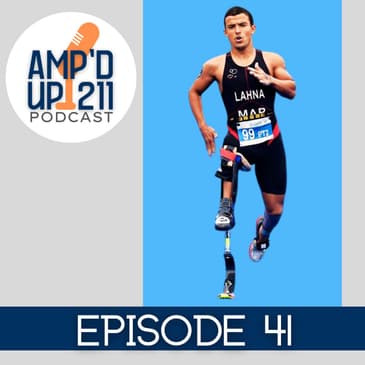
We are proud to present Paralympic Athlete, Ironman, and Paratriathlon American Champion Mohamed Lahna. Born in Casablanca Morrocco, Mohamed was born with a birth defect called Proximal Femoral Focal Deficiency that effectively left him without a right femur and fibula. Mohamed embodies the saying, “It’s never too late.” He was fit with his first real prosthesis at the age of 20, rode a bike for the first time at 25, crossed the Atlas Mountains at 26, and ran his first marathon at 27. Mohamed has officially qualified for the Paralympics in Paris 2024, making him the first male Para triathlete to make Team USA. The AMP'D UP211 Video Podcast is hosted by Rick Bontkowski, a right-below-knee amputee.
[00:00:00] Now on the app up to 11 Podcast, Paralympic Athlete Ironman and Paritriethalon American Champion
[00:00:07] Muhammad Lana. Born in Casa Blanca, Morocco, Muhammad was born with a birth defect called
[00:00:13] Proximal Femoral Focal Deficiency that effectively left him without a right femur and fibula.
[00:00:20] Muhammad embodies the saying it's never too late. He was fit with his first real prosthesis
[00:00:26] at the age of 20, wrote a bike for the first time at 25, crossed the Atlas Mountains at 26
[00:00:32] and ran his first marathon at 27. Muhammad has officially qualified for the Paralympics in Paris
[00:00:39] 2024, making him the first male paratriethalete to make team USA. We are thrilled to present Mr.
[00:00:46] Muhammad Lana. Muhammad, how are you? Good to see you. Good to see you. Very good. Thank you.
[00:00:55] I'm so glad to have you here my friend. Where are you in this vast world right now?
[00:01:02] Yeah, I'm in Hayworth, California. Okay. So you're in California. This is home, right?
[00:01:09] Yes, that's what I thought. Someone who has been in California for how long now?
[00:01:17] Well, I've been on and off 12 years in California where I also spent two years in Colorado Springs.
[00:01:26] Okay. Yeah, that's wonderful. That's wonderful. Yeah. Your story is fascinating to me. Your
[00:01:32] limb difference is something that I'm not had never heard of. I was not very familiar. So
[00:01:40] so many people that view the podcast listen and consume this content, you know, they're used to
[00:01:49] hearing stories about people that have had amputations. And your limb difference is quite
[00:01:56] extraordinary. And I want to make sure that I'm not that I'm not messing this up. You have a
[00:02:03] birthday fact that is called proximal femoral focal deficiency. Did I get that right?
[00:02:11] Correct. Exactly. And if I could explain it through my lens, which is very primitive,
[00:02:16] I'm sure you can explain it in more of a medical way. When when I look at photos of people like
[00:02:24] yourself, it's almost as if one of your legs is shorter than the other. Meaning you have,
[00:02:33] is it a right foot? Yeah. You still have your right foot. It's just you don't have
[00:02:42] explained it to me. Your femur? I don't have the femur, the tibia and also I don't have the
[00:02:49] no, so I don't have the femur. You know the tibia bone that is two bones, I have only one one of them.
[00:02:54] Yes. And then I don't have the the hip joint and the hip socket. I don't have that. So there is
[00:03:01] this kind of unique formation in the top where it's not a knee by the hip and it's not connected to
[00:03:08] the hip socket. And the PFFD, it's a congenital condition that has different variation and different
[00:03:16] categories. Yeah. So there is what like an it's not an exact like condition, it just like there
[00:03:22] is a variation where it's in that range where people sometimes they have three quarters of their legs,
[00:03:29] sometimes just like me like half missing the whole femur and no knee, some people they haven't
[00:03:36] knee but like in the center. Interesting. Yeah. So it's there is different variation of it. Yeah.
[00:03:42] It's interesting because obviously I mean we're organic creatures and we you know we develop in
[00:03:47] the womb. And when things don't quite you know develop in the way in which they're fully formed,
[00:03:56] you can end up with lots of different variations of a particular type of congenital issue.
[00:04:04] And something and I'm you know just being transparent. I knew nothing about. So looking at
[00:04:12] images of you when I was prepping for this particular episode, the first thing I notice is
[00:04:21] your prosthesis which in my mind I'm like wait a minute it looks like he has a foot right
[00:04:29] and then I realize after doing some some diligence on your condition, okay now I get it,
[00:04:38] you're actually loading that residual limb or the portion of the limb that is formed with your
[00:04:45] with your foot. That is loading into a prosthetic and then you have an additional
[00:04:52] prosthesis whether that's a blade or whatever you're employing that gives you the ability
[00:05:01] to touch surfaces and obviously in your case perform like a world-class athlete which is it blows me
[00:05:11] away literally to see some of the things that you're doing. And I think what's most extraordinary
[00:05:19] about all of that is you have not been necessarily in a prosthetic your whole life because what was
[00:05:29] the age that you first done to prosthesis? Yeah so I just want to go back just a little bit to the
[00:05:36] running setup and the walk-in setup because I don't have the hip joint like a hip socket,
[00:05:45] most 90% of the weight that I have on my walk-in leg or running leg is on the issue that I have.
[00:05:51] So my leg is going all the way high up to the to the to the issue where this is where we put the weight
[00:05:59] especially running. Got it and but I love my little foot and my kids play with it all the time.
[00:06:07] It helps me get a little bit of that what you said the waist bearing but most of it isn't up there
[00:06:14] by the issue. Got it. Yeah growing up I mean I grew up I was born in Casablanca and we were very
[00:06:22] modest family and back then we didn't go to the hospital to give birth just at home you have the
[00:06:30] local midwife who when she heard it's time of the woman she will come and help her deliver her baby.
[00:06:38] Did you have siblings? So I was the first one. I was the first of how many?
[00:06:44] A five. Okay so first of five. Yeah. First baby's coming there's a big deal in the family.
[00:06:51] Exactly. Right and you come from a very simple kind of life. Casablanca, Morocco.
[00:07:02] You're not necessarily employing state of technology hospitals this and that.
[00:07:08] You're like hey midwife's coming and we're gonna have our first baby.
[00:07:14] And yeah Mohammed arrives. Well it was not that easy because I was troubled since day one.
[00:07:25] The first one is because we don't know you know like here I mean with my kids too like you check
[00:07:31] the baby you need to have the head first and all that stuff. I came with my legs first
[00:07:36] and then that was all make it complicated and my left arm got stuck and this is my mom telling me
[00:07:42] the story that it was like chaotic and the lady had to put her hand inside the break my shoulder
[00:07:51] to bring me out to save my life. So I was born with with a broken shoulder and affected my arm
[00:08:00] like length and all that stuff. Yeah. But that was that was the and everybody's watching like we lived in
[00:08:04] a family where it's not just my parents and it's like my grandparents, my other uncle and his
[00:08:10] families like a big house with everybody and the same everybody's waiting and everybody's watching.
[00:08:15] So it was it was uh in the beginning it was a very sad moment for my parents because you are
[00:08:21] waiting for that pride then you know your first son and all that stuff and it was it was not what
[00:08:28] I was expected but I mean we believe in God and the faith like push them down to just move on
[00:08:36] and take care of me. They took me to the local doctors to see if there is a community this or
[00:08:44] I don't know surgery whatever and the doctor the orthopedic just said like just take him home
[00:08:49] and and and take care of him. Yeah, take him home and love him the way he is and
[00:08:55] and all that love and care look where it took you. Yes, pretty cool story right?
[00:09:02] Yeah yeah but also like waiting for the second baby was a lot of would my parents have in my sister
[00:09:10] there was a lot of um like intense moment it's just going to be the same as me or not
[00:09:17] and like it was same born at home and like yeah it's it was such a relief for them by
[00:09:23] anyway. Yeah all my other I'm the only one with with the birth defect like this and then my other
[00:09:30] four siblings are are fine by my parents I think this is where huge difference is like they treated
[00:09:38] me like my other siblings like yeah meaning like no special or exceptional treatments
[00:09:46] you get punished we need a vet thing sure you are do need it so it was like this is like how I grow
[00:09:52] up. Do you think that created some some resilience for you as far as dealing with your limitation
[00:10:01] and knowing like no one's going to help you along here Muhammad like you have to do what you have
[00:10:08] to do to get ahead in life. Yeah I mean we're gonna talk about this subject back then um when you have
[00:10:16] I think things have changed now but back then when you have a physical disability
[00:10:20] were you born with it or something like that it means like life is over for you and parents society
[00:10:29] treat you like you have a mental something like you just like we're gonna take care of you
[00:10:35] we don't have to work hard you know have to go to school are we gonna take care of you and that's
[00:10:40] I think things have changed now but back then that was the mentality but um
[00:10:45] I and I went to elementary school where we all of us were just um kids were physical disability
[00:10:52] just physical and the whole elementary school like six years of education basically we're going to
[00:11:02] like um a daycare we just spend a day our plane having fun we didn't learn anything and
[00:11:08] just came back home yeah basically and uh and that caused a lot of problem afterward because when I
[00:11:15] switched to um middle school um it was very hard for me that's the reality of education
[00:11:20] and all that stuff and I suffered that was the period where I suffered a lot but uh
[00:11:26] and suffered suffered because you had not given a foundation educationally or suffered
[00:11:34] in that kids you were no longer in a space where you shared sort of a common bond with other
[00:11:41] kids with disabilities like you were with like normal or let's call them I don't know able bodied
[00:11:48] or whatever um I hate I hate to use a lot of those words because I don't know if they're necessarily
[00:11:54] representative of situations um I try to be careful with that talk but um difficult in both
[00:12:02] regards or one or the other it's more like the educational the foundation part okay because back then
[00:12:10] um I had i had really like a very balanced life I would spend day with that day um the school day
[00:12:17] with the kids with this physical disability and it was good because I saw a lot of physical
[00:12:21] different disabilities yeah back then it was a lot of polio because we had a lot of polian Africa
[00:12:26] um but uh coming back home I'll also go like we didn't have any after school program
[00:12:32] and I think you just go home eat and go outside the street and play yeah and basically open
[00:12:36] to donnacea playing with other kids fighting with other kids yeah and uh in Morocco soccer is
[00:12:42] it's the game like this is what we played day and night sure oh I would just be playing soccer
[00:12:47] baseball in the US yeah exactly yeah yeah no I get it and what I was gonna ask you is
[00:12:55] it sounded to me from my research on you that you were like a really active kid that you were not
[00:13:04] you you weren't like you know like suffering away in like a dark closet like you were like no I'm
[00:13:10] I want to be out there and I have this energy and and obviously anyone that follows you
[00:13:18] taps into what your journey has been especially your your paralympic journey um
[00:13:25] can see that you are this you're this very very bright light that you are um someone that is sort
[00:13:32] of resonating you know this this energy that you're you seem very alive let's put it that way um
[00:13:40] and I find that to be a huge source of curiosity for me because I always want to trace it back to
[00:13:49] well you know what were you like as a child and I think I read somewhere that you know
[00:13:55] you're you're just kind of like always getting into everything um you know when could kind of like
[00:14:00] hold you back so to speak and when you say soccer um explain to me given your socioeconomic situation
[00:14:12] given where you were growing up what was resources that were available to you how did you maintain
[00:14:18] such an active life as a kid yeah this is a good question thank you uh so first of all uh when I
[00:14:26] start like when I start crawling like you can crawl like with my disability like any other kids but
[00:14:32] once you start walking it's kind of this funky and balanced uh walking yeah um and when I was
[00:14:39] younger the difference was not that high so my dad hates watching me like that so he will take
[00:14:44] him into the local um um it's a like like the guy who repairshoes uh cobbler uh what do we call him
[00:14:53] the person who repairshoes yeah so he will take me to the shoe guy and he will just like put layers of
[00:15:02] foam in there my shoe this way he balanced the heights so what was the differential as a kid like how
[00:15:08] many inches was the differential when you were a child so it was it was growing the difference was
[00:15:14] grow it was getting um bigger and bigger as I'm growing how much taller so I remember it was like
[00:15:20] this much I don't know like five six inch okay as I'm getting taller it gets bigger and I remember
[00:15:28] like every time like someone on six months or whatever made that will take me to this guy he will
[00:15:33] a nice solid leather shoes and maybe two size up yeah and the guy will just slap layers of foam all
[00:15:41] what I have pink yellow whatever yeah I had like this rainbow shoe and it got to a point where
[00:15:49] it just started breaking because I was running like crazy playing soccer with other kids in the street
[00:15:54] yeah and then it got to a point where it was not sustainable my dad got me crutches uh like
[00:16:00] within crutches from I don't know where and uh again like I break everything everything growing
[00:16:09] enough because you're a super physical kid you're just breaking stuff and you're out you're not
[00:16:14] only outgrowing what you said it's not sustainable like you know how big of a heel can we create
[00:16:20] and I'm able to run right because here's this very ram bunches active pushing the barriers kind of
[00:16:28] kid that seems to only be happiest and smiling when their body is moving um this kid does not want to
[00:16:37] sit like just in a chair and observe the world he wants to engage he wants to do these things and
[00:16:46] you know it's it's it's remarkable to me that all of that winding path of your upbringing
[00:16:53] and you know having an opportunity which I want to discuss a little bit more
[00:16:59] what was sort of the the moment that led you into competitive sports
[00:17:07] and coming you know the US being a possibility because I I think based on the research I was doing
[00:17:16] you actually uh represented um maraco initially correct as a perillembian and that somehow
[00:17:26] transcended to you representing the US as well um when when did
[00:17:34] becoming a you know a perillembian or the possibility of competing on a world stage
[00:17:42] when did that sort of get plugged into your brain like who was it a person
[00:17:47] was it just you saw something on television when was that moment where you had that little light bulb
[00:17:53] go off where you went wait a minute like I could do something with my physical body
[00:18:00] that other people can't or aren't willing to sacrifice themselves to um when did that happen for you
[00:18:07] yeah um it happened like very early like around I would say 10 11 um my dad is a taxi driver okay
[00:18:18] the um one day he has this client um he was limping he has crutch like one crutch and he was limping
[00:18:28] but he was uh you know why he got him and he was start talking to him taking him to his destination
[00:18:35] and talking I have a son blown of love with this with this and the guys start talking to him and
[00:18:41] and the guy said I want to see your son and right now say yeah right now so they drove home
[00:18:48] and I was home back then at the time I think it was a weekend or something like that
[00:18:52] and this guy my dad came home say I want to introduce to this guy and I was shy when there
[00:18:59] is a stranger I was hiding by my mom and this guy like very tall guy I remember how the entrance to
[00:19:04] the house this hallway wasn't just long coat and tried to shake my hand he has this massive hands
[00:19:13] and all this I have them like memories in grain in my brain and uh he just went out he was very
[00:19:19] friendly want to talk to me and then he was talking to me but I was not like really listening the only
[00:19:26] thing that I pick up is picked up as I will take you with me to the swimming pool and I've never been
[00:19:31] to a swimming pool before in my life and never I've never seen a swimming pool or swimming I don't know
[00:19:38] how to swim or anything um and then later on this guy he's the only uh parallel more rock
[00:19:49] and paralympic swimmer who went to the paralympics in swimming and won a bronze medal
[00:19:54] and until today he's the only paralympic or Olympic swimmer who had
[00:20:00] Olympic or paralympic medal he's the only person so far until today anyway that guy one day came home
[00:20:07] took me with him to the pool he was very well respected uh I remember he took me with the pool all
[00:20:14] the way with his with his car all the way inside the pool the gate like he's like he owned the place
[00:20:19] is like his own his own pool but this is like a public pool that allowed him to go with his car
[00:20:25] inside and uh he took me to the pool and he said okay well we just sit on the ball of the pool for now
[00:20:34] um I will do my workout and come back and I will play with you a little bit basically and for me
[00:20:42] the smell of the chlorine of that's 50 meter underground pool and the people swimming and the
[00:20:47] nose and the echoes are just like everything this is all new to me yeah and I just wow this is very
[00:20:53] dreamy I love this and the lifeguard walk by and I see him and I try to not look at him and he come
[00:21:01] to me say what do you do in here what do you what do you do here uh do you know how to swim
[00:21:05] and I say yes and he said okay show me and without hesitation I jump in the water and I drown
[00:21:12] obviously oh yeah I don't know how to swim
[00:21:17] oh yeah there you go i'm just doing young mo uh oh yeah I can swim
[00:21:24] help and uh yeah i mean i drowned and they had somebody to pour me of the water
[00:21:31] i don't like water and uh yeah that was my experience with the whole thing with swimming or with
[00:21:38] the Paralympic athletes that was your baptism right there exactly right into the water
[00:21:44] right into the water that's wonderful so yeah go ahead and I want this then i wanted to learn how to swim
[00:21:53] and the name his name is jelil i want he's like he went to the Paralympics this traveling
[00:21:59] to world he's well respected he's like solid solid i want to be like him unfortunately didn't
[00:22:06] happen because some in the reason the financial aspect it was very hard to get into the pool
[00:22:13] frequently it was very hard to get to swim with the team uh i mean two years later we found this
[00:22:19] team that uh for physical uh with athlete with disability that they do once once a week
[00:22:27] for swim and start to win them but it wasn't enough to reach the Paralympic level at all like
[00:22:34] we have all this event in Morocco like for swimming championship and all this stuff but
[00:22:38] it was a very low level um so i was i did that for i don't know five six years seven years
[00:22:47] yeah and then uh it came to this reality where okay i never i'm never gonna do this uh i start
[00:22:55] working as a graphic designer and then um uh my dad also again is a taxi driver heard about this
[00:23:03] because all these years i had this uh i got to a point where what i got this leg
[00:23:11] but proceed walking leg that is made of wood the foot is wood yeah two bars of aluminum
[00:23:17] leather around my foot feel like a primitive uh prosthesis that you can walk around in now
[00:23:23] yeah no need nothing but i was very happy with it and i had that for since i was like 14 all the way
[00:23:29] to 24 year old yeah so at that time my dad discovered this center that serves uh um
[00:23:37] moroccan veteran who served in water war two it's a french service in moroccan kessah blanca
[00:23:42] so we went there we saw the doctor there we saw the service
[00:23:47] they did an examination and all that stuff but they say we can we don't serve you but we're gonna keep
[00:23:51] your file just in case and six months later they had this uh what we call this like uh
[00:23:58] they have these prosthetics came from France to do this training for local prosthetics and the team
[00:24:03] was birth defects so came they called me say yes you may have a leg blah blah blah um and i was super
[00:24:11] excited i got my first leg with like articulation it was this hinge on the side but the twist in
[00:24:19] this is the guy who was planning this uh bike event between french and pt and moroccan and pt
[00:24:26] and he asked me if i want to join and i i never bike before i don't have a bike i say yes
[00:24:33] of course i bike all the time on the time just like i just like i can swim i bike exactly
[00:24:41] and all along this way these pieces keep coming together uh so we did the event
[00:24:48] uh i start i love cycling i fell in love with cycling and i started doing basically after that
[00:24:55] it was like 500 kilometers in the atlas mountain i fell in love with mountain biking i just
[00:25:01] do in mountain biking every weekend with my friend go camping the mountain bike can you feel um
[00:25:07] because what you're describing to me uh you know um i've heard from different athletes like yourself
[00:25:16] did you ever feel in that process like i'm kind of a natural at this like i'm good at this
[00:25:24] like and i'm not trying to diminish your training i'm not trying to diminish your focus
[00:25:30] you know your nutrition you know all the key elements that go into competing on this level right
[00:25:38] because so few of us get the privilege of you know not only you know representing a country but also
[00:25:46] being considered an elite athlete you know where your body i mean your body is literally a
[00:25:50] machine like you take care of it in such a way but was there ever a moment because i always
[00:25:55] i'm a musician better musician my whole life i always felt like there were guys
[00:26:01] that worked so hard they practiced they rehearsed they worked so hard
[00:26:05] but they never really quite get there right and i always felt like i had i had kind of this gift
[00:26:14] where it wasn't it was hard and it required a lot of effort but there were certain kind of core
[00:26:22] characteristics that i thought i i didn't really have to try that hard to do that like it just kind
[00:26:29] of came to me like my body just sort of agrees with this right when i when i first you know
[00:26:37] i'm thinking about you first getting into a pool like like i can do this well yeah i got a train
[00:26:44] but some of it it just it's in me like there's something about me as a person physically
[00:26:52] spiritually whatever you want to call it you get on a bike and you say i love this
[00:26:59] like i don't just love it because i see it as a you know sort of a vehicle to get me to competition
[00:27:06] i actually love doing this like it makes me feel something spiritually that i know my body needs
[00:27:15] and my mind needs to feel alive to feel human right and it's only it's only i'm just so much more
[00:27:24] blessed that people recognize that and they want to propel my talent into a space that i can compete
[00:27:33] represent and also inspire other people and reach my personal best as an athlete right because
[00:27:42] so much of what i see in you and just following you is this joy that you have about what you do
[00:27:52] because you know people can be hard-nosed competitors and you know they're all full of you know
[00:27:58] just sort of like you know stern and grit and they're just you know uh you know like i you know
[00:28:04] i'm you know i'm this machine that just destroys everything around me um
[00:28:10] you definitely seem very formidable don't get me wrong but you have this joy about you
[00:28:17] and you know i look at your list of accomplishments it's kind of it's kind of intimidating you know
[00:28:23] it's like uh parametriathlon world championship uh in 2011 ironman world championship in 2014
[00:28:32] Rio Paralympics in 2016 norsmond extreme triathlon um 2017 world paratriathlon series in 2018
[00:28:44] 2020 Tokyo Paralympic games i mean mo that's it's a lot to digest right like how does this guy do it
[00:28:56] all and stay that focused and that committed to reaching those plateaus um i mean where do you see
[00:29:06] that balance for yourself so when someone says shit man how do you do it all you know what's
[00:29:12] to what's your typical response uh i don't know man uh i mean parts of it may be my
[00:29:26] upbringing uh like our life was very very modest and very simple we didn't have a lot of things
[00:29:33] and also like for example in middle school and high school i wasn't able to do like PE because
[00:29:39] I have disabilities so i wasn't able to play with my classmates during basketball or huntball or
[00:29:44] for for like six years when you go to school i was not able to do that because i'm missing parts of my leg
[00:29:52] and uh i think my my parent the way they educated me i think big part of that back to them
[00:30:01] is being grateful of what you have and appreciate what you have and also um when when things come to
[00:30:09] you don't be quick at refusing i think that's like whatever opportunity like conversation with
[00:30:16] the stranger whatever like just take it and give it time respected and i think with that
[00:30:25] in my mind i think what where i am today is because of all with a lot of people that have met
[00:30:32] they helped me a long way i learned from them my best friend Patrice who is a prosthetic he's a
[00:30:38] fresh prosthetic who live in France i spent so much so much time with him i i learned a lot from him like
[00:30:47] i want to tell you this story like it's it changed my mind forever uh when we want to do triathlon
[00:30:53] and like i know how to swim i know how to cycle i want to do triathlon i want to do triathlon
[00:30:59] so i was working full time and he's also he's a prosthetic he's working full time
[00:31:03] but back then because i didn't have the hip socket the idea that i have with the doctor in
[00:31:10] Morocco say you can't run because you don't have that balance you can't run and this is when i was
[00:31:15] like 26 27 year old so the next thing that comes to my mind is and with Patrice like let's use a race
[00:31:23] in wheelchair those you know racing wheelchair let's do one of these and we couldn't find one it's too
[00:31:29] expensive we didn't have the money for it and we couldn't find a used one he was looking in France
[00:31:35] for his friend he couldn't find a used one so and one day he came to me and say and it's been like two
[00:31:40] years we are looking for a racing wheelchair and to start doing triathlon and he said why we don't make
[00:31:47] it ourselves ourselves and i looked at him and say careful of shit i didn't say it right but in my mind
[00:31:59] have you seen a run over the hardware store and get the parts real quick
[00:32:03] i'll be right back yeah have you seen a race in wheelchair look air dynamic two large wheels
[00:32:09] front wheel like all this stuff yeah and like i pass for a moment and you know when you say yeah
[00:32:17] like with hesitation but you're not convinced yeah and say because out of respect because he's
[00:32:22] trying to help me and i don't want to be a jerk to him i said yeah okay we can give it try
[00:32:28] with with low confidence that's okay and the first thing is okay do you know a friend who has a
[00:32:35] racing wheelchair say yes so can you ask him to borrow it for one night just to take a picture as
[00:32:39] a measurement i can do that i went to ask friend we brought it to his lab like to his where he
[00:32:46] worked and we took a bunch of pictures measurements like all that stuff and this is like night time
[00:32:53] every night after work my work as a graphic designer and his work as a cpo we have dinner around
[00:32:58] seven and we start to work in on this wow and we'll go like like find like pieces of scrap of
[00:33:06] metals and random wheels and like we're just like looking for junk pieces yeah and then
[00:33:14] in the in because of the junk and those weird markets and
[00:33:19] he managed to get like a well then like like like like i don't know what you call it in english
[00:33:26] called the post but anyway the well-being machine all this stuff and i start to learn
[00:33:29] how to weld and okay i don't know where this is taking us you're a welder now after a month after
[00:33:34] a month we made it we built a racing wheelchair it's incredible it was heavy it was like
[00:33:40] like basically when you push it it's like you're doing weight lifting with the racing wheelchair
[00:33:45] like you push it like always let or something in the gym
[00:33:50] but there is two there is two two things to this the first the first thing is
[00:33:56] and it's not perfect but we made one step forward it's heavier as hell but
[00:34:02] it's so a racing wheelchair i can train on it i can go to a flat surface and push yeah
[00:34:07] and i get started and the second thing is after six months his boss was watching me every time
[00:34:16] go to his work office because we started there i will go there before work to go train and come back
[00:34:23] he saw me like for two weeks and he asked batteries like what is this blah blah blah and then
[00:34:29] he went and he pressed one of his friends has a company to pay for proper racing wheelchair yeah
[00:34:36] so for me this sequence it happened within eight months and crazy like from nothing to top
[00:34:45] and the equipment that i needed yeah but if i didn't say yes and i made the first step and
[00:34:52] and trusted him and worked and nothing would happen maybe i would be still waiting for this
[00:34:57] a racing wheelchair yeah ten years later so this lesson like for example people like batteries
[00:35:02] uh everywhere in the u.s. in europe when i lived for a couple years i i tried to learn from them
[00:35:09] and appreciate uh all the stuff that i have and also strive for more and that this racing wheelchair
[00:35:17] story has just like changed my mind yeah completely no i really am a firm believer in the idea that
[00:35:25] as humans we make our luck yeah i'm not a big believer in like you know
[00:35:32] luck as a concept i i believe that when we engage opportunities conversations when we make
[00:35:39] ourselves available and present in these situations things just naturally start to come to you
[00:35:46] you become magnetic in its sense right because so much of everything you're describing was what i
[00:35:54] was i was reading this article the other day and they were talking about just highly intelligent people
[00:36:01] and i'm not trying to blow smoke here i'm just saying highly intelligent people are um open to new ideas
[00:36:11] they're very good listeners and when they see opportunities for growth no matter what it is
[00:36:20] and it doesn't necessarily have to lead to something as like a reward system
[00:36:26] yeah just purely in the space of oh yeah i want to learn that i want to know more about that
[00:36:34] or that might be an interesting experience just to have those are typically the people that
[00:36:40] advance most in life and it's it's a component of intelligence that you're willing to receive it
[00:36:47] because we all know the opposite end of that spectrum it's you know it's the narcissist that knows
[00:36:52] it all and you know this is how you get a wheelchair this is how you get a wheelchair and this is
[00:36:58] what you're supposed to do and you're supposed to you know this is how everyone else is doing it
[00:37:02] it's like no i'm willing to try and maybe just through the game of chance which life is
[00:37:12] we will make our luck in this situation something along the way will sort of fall into place
[00:37:18] and i do a lot of that type of coaching in my professional life where i try to i try to get people
[00:37:25] to understand that every day is an opportunity to learn something to learn something new maybe
[00:37:32] something that you never considered a perspective you know a different way of dealing with a problem
[00:37:40] something that you might might surprise yourself you never knew before is a lot but you have to
[00:37:47] be in that receiving position right you have to be able to say yeah let's let's have a conversation
[00:37:54] about that because shutting down and not allowing yourself that space for growth you're doing such
[00:38:01] a huge disservice to yourself and i do believe that some of your adventurous spirit as a child
[00:38:08] you know the whole the funny story about yeah i know at a swim or you know yeah i know at a ride a
[00:38:14] bike um all of those things i think lent themselves to just creating more opportunities for you
[00:38:23] just because you were willing to fake it just a little bit right the whole like cliche you know
[00:38:30] fake it till you make it um because i i in my professional life i run into so many people
[00:38:37] they want they demand so much train up right i need to know step-by-step what i'm supposed to do
[00:38:45] to be able to negotiate this situation and i'm like stop it just do it that's it that's all
[00:38:54] i'm going to tell you today right Nike came up with this great slogan at some point just do it
[00:39:01] stop talking stop thinking just do it the rest of the stuff can come as long as you're not
[00:39:08] putting yourself in danger reverse engineering a situation which is kind of what you guys did
[00:39:13] you're like well we'll just come up with something right and it'll allow you to train and it'll
[00:39:18] get us in that head space all of that led you know to you getting the equipment that you needed
[00:39:24] which we all know for athletes like yourself those types of support systems are very important
[00:39:32] people need to have those resources available the best equipment proper training you know
[00:39:38] the right kind of facilities things that are critical so that you can reach your personal best
[00:39:44] and we can enhance this human experience you know um so talking about competition
[00:39:52] what what how do you feel um you know your particular regimen depending on where you're
[00:39:58] going to be competing what you're going to be doing you know what does that look like for you
[00:40:02] and does that change depending on the circumstances surrounding you know if you said well
[00:40:09] if it's a triathlon versus you know a paralympic event or something like that you know how do
[00:40:15] you approach your training and then what support do you look for in those situations
[00:40:21] well um I mean paralympics are very special so every four years and you don't want to miss that
[00:40:30] opportunity and I mean my thinking and my how I see things have changed over time
[00:40:37] we know when I was going to Rio um I was like I was like like like a train like I just see Rio
[00:40:48] nothing else and when we had to train and also like race I don't remember all this place that I
[00:40:57] went to like visiting like I just went for the race and Rio is what I see focused so I didn't
[00:41:06] enjoy the process that much because I was just focusing on on the goal the end goal which is Rio
[00:41:13] and uh I I get intense very intense like when uh I have a big goal to achieve and uh training
[00:41:24] become like priority number one obviously this past eight years things have changed work
[00:41:31] family I have three kids uh you get older you need to sleep more and all that stuff recover more
[00:41:37] and all the stuff so you have to organize yourself much better be strategic be smart about your
[00:41:41] training and uh like going like with my coach Derek um because I'm on part of the USA triathlon
[00:41:51] resin team hybrid um program sorry um like last two years our goal is to find that balance between
[00:42:03] family work and training how we can find that balance we get to that point where we can be competitive
[00:42:10] and try to get a qualification as early as possible so we try to have that goal first consistency
[00:42:17] and then qualification as early as possible and we try to work with that like my coach is really
[00:42:24] smart man uh Derek we have said uh we just he knows I have a family I have work how we can make all
[00:42:30] this work together yeah I think that life uh work competitive balance man for someone like yourself
[00:42:38] I would think that's you know the big part of uh sort of working smart and to have a support system
[00:42:46] like a coach that understands that and says listen I I know that you know dependent on all these
[00:42:52] other factors if we are giving you what you need and and feeding all of those different priorities
[00:43:00] of your life you are going to bring your best self to this competition if we start robbing you
[00:43:07] and pulling pulling back away from these vital things that you need in your life and that could
[00:43:13] be something as basic as I need some time with my kids um just to feel spiritually mentally
[00:43:23] well and I understand what you're saying when when we're younger sometimes that goal we get like
[00:43:31] this sort of tunnel vision where it's just this is the thing that I'm doing right now
[00:43:37] and all of this other stuff is just static and I and you become so driven like
[00:43:44] I'm blocking all that out right now none of that matters that's what matters right there right
[00:43:51] and like you're saying and I appreciate your transparency as we get a little older as some of normal
[00:43:59] life starts to build around us we don't necessarily want to see that as you know kind of like a weight
[00:44:09] that's holding us back it can be cultivated in such a way that it actually becomes the fuel
[00:44:16] that propels us forward um if it's if it's respected in a way that it seems that your coach understands
[00:44:25] for you to find that balance uh when you're when you're preparing let's say on game day
[00:44:32] what's the mental process that you go through I mean when you're in the starting blocks I mean
[00:44:36] what are you thinking of? So for me for my past games I like to do a lot of uh visualization like
[00:44:51] um like for the bike course swim course run course I always like to see the course imagine myself
[00:44:57] like prior like a month before the race like when I'm swimming I always
[00:45:04] swim in and imagine myself in that pontoon swimming race day yeah when I'm cycling we know the course
[00:45:13] we know the churns you know the labs and we try to I try to like what I'm doing bike workouts
[00:45:20] in the trainer or outdoor I would try to start imagining myself in that what's the power what's
[00:45:26] the cadence and all that stuff and the same thing with the run so doing that for I don't know
[00:45:33] three weeks four weeks before race day makes it easy race day like you just go it's just it's another
[00:45:40] time with me let it go and almost like you've been there already is that and it works for it worked
[00:45:49] like almost all the big event the important event I will do that and when I go like I don't
[00:45:57] scramble or try to think or I'm like what's gonna happen like you just go for it you know you did it
[00:46:03] before you know exactly what's gonna happen and uh yeah I think this track helps me a lot
[00:46:10] uh in all the big events and uh doing it again uh doing the work like put everything in the training
[00:46:21] yeah and the outcome here's the thing like this is how also I evolved because before like
[00:46:29] I need to win or I need to do this or I need to do this but in triathlon there's a lot of things
[00:46:35] that we don't control you get a flat and that's it you're out of the race you do extra lap on the
[00:46:41] bike or crash whatever or you know things can happen and you can happen to you there is no nothing
[00:46:49] like this is life right but this is why like the training and join the journey with your family
[00:46:55] with your friends and then you know because when you do this like you don't care what people think
[00:47:02] of you but this is you do it for yourself first you know that you put all the work he did everything
[00:47:08] need to be done you follow the steps you trained very hard your body is ready you're prime
[00:47:14] and the outcome you have no control you do your best and you go for it yeah this is it changed
[00:47:20] the perspective on how you see things uh and this is this is how I'm approaching yeah the events
[00:47:28] yeah well let's let's talk about what you're approaching you know let's talk about Paris
[00:47:33] yeah tell me about dude this this this is a roller coaster so after Rio because back then I was in
[00:47:41] cities in US cities and uh I was represented in my home from Jamaroco it was great finished bronze
[00:47:46] love that and came back home the plan with my wife is that said sort of tire and take care of the
[00:47:53] kids the family and join it and then like two months later I say honey I still have it in me and
[00:48:00] I want to go I want to race for the US we are here our kids are uh American I want to
[00:48:06] race this way I have one for my home country and one for the US oh wow wow I'd say okay all right but
[00:48:12] this time I want to go training Colorado Springs in the Olympics so I'm so lucky like if anything
[00:48:22] in this life my wife she's she's the gift she's the greatest gift I ever have like she's like
[00:48:30] amazing what a beautiful sentiment how old are your kids Moe I have 12 uh 12 eight and eight uh 12
[00:48:38] eight and four two boys and one girl so so they're little I mean to see dad doing these things
[00:48:45] has got to be it's it's gotta be just extraordinary to them just wonderful and
[00:48:53] and I would think as a father because you know I raised five kids um that being that sort of
[00:49:00] Superman in that space it's a great feeling and part of your legacy you know the things I always
[00:49:09] think about like what do I want my kids to remember me for right and I I certainly want them to
[00:49:17] remember me in an intimate sense like was he funny was he silly uh you know did he tell us great
[00:49:23] stories things like that but what you know what was this constitution like what did he represent
[00:49:30] you know what what did he do where did he where did he place his energy in the world and someone
[00:49:36] like yourself who against a lot of odds um rose you know to find a personal best um not only as a
[00:49:47] person but as an athlete and to be able to celebrate that with you um you know think back
[00:49:57] you know when you got the bug as a kid and saying hey I you know I'm pretty active kid and I think I
[00:50:04] could you know channel all this energy that I have and and do something with it to know that someday
[00:50:11] your own children would be celebrating that with you and that part of your you know
[00:50:18] Paralympic experience would be sort of woven in you know to their lives as well and it's beautiful
[00:50:27] that you have the support you know of your life and um sounds like uh hopefully if your parents
[00:50:36] are around that they'd be very very proud of what you've accomplished in your life and I would imagine
[00:50:45] your siblings as well you know seeing seeing what you've done to this point um it's it's such a huge
[00:50:53] uh celebration of life and that so many amazing things can come from how you described
[00:51:04] when you were born and it was kind of uh okay we don't know how this is gonna go right
[00:51:13] I mean that was admittedly what you described as and I think most new parents would describe as a
[00:51:23] complex complex kind of sad day to say yes he's here but we're not really sure where this is all
[00:51:33] gonna go and um all we can do is you know you have your faith then you say you know maybe
[00:51:42] uh he'll have a decent life and um you know it's funny uh uh you know Zach had introduced me
[00:51:52] Zach Friedley had introduced me to you on uh I think was on Instagram and um I mean he
[00:52:04] I'm trying to I don't want to quote him because I don't remember the exact words
[00:52:08] he's like you know I need to introduce him uh Muhammad Moe is he's he's he's one of the most
[00:52:16] incredible people I've ever met in my life he's so nice and I thought wow that's quite an
[00:52:22] endorsement I'm like I think I mean need to meet this person you know um and you know discovering
[00:52:30] your your path and your history and your amazing athleticism um has been a huge inspiration
[00:52:39] to myself and you know I'm I'm an everyday uh you know average you know amputee that um
[00:52:49] you know discovered his his fitness level much later in life and uh remember that
[00:52:58] people like yourself don't just inspire you know people that are trying to
[00:53:05] compete you just inspire people to find their best self um whatever that is
[00:53:13] and you know for me as an amputee my biggest goal several years ago was just being able to walk
[00:53:21] again yeah just being able to walk across the room and that just as you know
[00:53:28] that can just build from there because you train and from what I you know all the all the conversations
[00:53:35] I have with people like yourself trainings very incremental you know you you try to figure out well
[00:53:42] what can I do right and what can I do well and then how do I keep building on that
[00:53:49] how do I how do I push myself further and the human body is amazing in that sense
[00:53:55] that you can in little kind of incremental small little ways you can keep going further keep
[00:54:03] going further right I mean four or five years ago uh the idea of getting on a bike
[00:54:12] I would have said it's no fucking way I'm getting on a bike like it's just not happening
[00:54:17] and I recall the first time getting on a bike and my hands were shaking
[00:54:24] I mean literally because you know as an amputee I don't I don't know where my foot is and
[00:54:31] you know you you have a special prosthesis that you know you don't have the the the touch either
[00:54:39] you know so you know that that feeling of I'm gonna fall I'm gonna fall and um
[00:54:47] to to be able to enjoy you know uh a 40 or 50 mile ride in the summer here in Chicago
[00:54:55] um it's wonderful for me and something I never thought I could do but it's very affirming
[00:55:03] in knowing that anything is possible if you put yourself in the right place if you
[00:55:10] draw energy from the right types of people um it's amazing what you can accomplish and I'm
[00:55:17] I'm talking to our entire audience all the amputees out there everyone that has a limb difference
[00:55:23] that's holding them back um even the smallest of victories are worth celebrating so if there's
[00:55:31] there's something you you didn't think you could do that now you're doing um congratulations because
[00:55:38] that's a victory and uh we all have to support each other in that regard and I you know
[00:55:46] I so appreciate you sharing your story today um when are the when are the games are they uh it's
[00:55:54] August correct uh so my race is September 1st okay here in September
[00:56:01] okay and in the office yes at the beginning of September um I just want to go back to um
[00:56:07] all the amputee like trying to walk or be active or do a little bit of
[00:56:13] I mean I'm talking but even like I'm I do a lot of things with other amputee who are racing high level
[00:56:21] and I was just gonna give example of running with the running leg it's not easy you get to
[00:56:26] blister all the time uh you sometimes you need to have the right socket like this like the last
[00:56:34] year I had to go I had to go to Chicago like three times to work with David there for the right
[00:56:39] socket here's my process too by the way yeah David Rathra helped me a lot to make
[00:56:45] my like because I have a foot and I have the like it was very complicated and it's like it takes
[00:56:50] for it's a pain to make my socket you will hate like my prosthesis you will hate me but you didn't
[00:56:57] but my point is it's not gonna be easy as your your your limb size will change and maybe
[00:57:04] your leg will not fit or you need to put like different socket players or so this is part of the
[00:57:09] struggle that you need to know all the people out there amputee who are racing on high level
[00:57:14] they go through every day yeah it's not something just like we we see the pictures on
[00:57:19] Instagram or whatever Facebook and everything looks good now we had sometimes to put the leg
[00:57:25] and use crutches because we have a blister that we can't use we can't run for a week yeah
[00:57:30] or so I want people to put that in mind and don't be afraid and keep working on getting the right
[00:57:36] equipment right socket for you for walking running or cycling whatever activity prefer yeah it will
[00:57:44] change your life doing three times or once a time once a week going for a hike or a walk or
[00:57:52] a jog it will change your mind forever and you will be much much much happier but now that all
[00:57:59] of us suffer from those complications is just life having blisters the socket doesn't fit
[00:58:05] I so yeah I so appreciate you saying that and I I I really do from the bottom of my heart because so
[00:58:13] often people look at you know these these very very high functioning amputees and it's almost
[00:58:24] it's almost counterproductive and what I mean by that in the sense that they almost resent
[00:58:31] someone that is high functioning in that space and what I what I try to get people to understand
[00:58:38] is exactly what you're saying do you have any idea everyone's struggle is real
[00:58:45] everyone goes through something everyone has skin breakdown everyone has all these things
[00:58:50] that occur and it's painful and they have to modify their behavior and they have to have down days
[00:58:57] you see one picture or you see one you know competition and you think
[00:59:03] you completely shut down and you say well I'm not going to do that and that's ever going to happen
[00:59:08] and wow must be nice to have the best equipment it must be nice to have all this stuff
[00:59:12] and all these sponsors and this and that it's like whoa whoa whoa whoa whoa wait a minute none of
[00:59:18] that is achieved none of it without a tremendous amount of struggle it's tremendous and
[00:59:26] you have to believe that it's a process that nothing is achieved overnight that is it is it is a
[00:59:34] a daily siege it is a military exercise it is I have to go through these steps to reach my personal
[00:59:42] best no matter what it is if you're the kind of person that says I just want to be able to walk
[00:59:47] around my neighborhood I want to be able to take my dog and walk around the neighborhood that was
[00:59:53] something that gave me joy that was something that I miss most about my past life okay then I say
[01:00:01] that's your Olympic games right there exactly taking your dog around the neighborhood
[01:00:07] that is that is your goal that is your big dream you need to figure out how to make that happen
[01:00:14] so we need to go all the way back in our steps and start at step one what step one okay
[01:00:22] we need to figure out what that is and start from there and start building in small increments okay
[01:00:28] and that might start with getting the right socket it might start with getting the right fit
[01:00:34] it might start with maybe you employing some some chair aerobics start moving your body again
[01:00:42] start getting your blood pumping okay fall in love with the feeling you get from exercise again
[01:00:51] okay because so many people reach a point where they estranged themselves from activity
[01:00:58] and then they think that there's no going back ever again and that's just not true movement
[01:01:04] is life period it's just how it works yeah these bodies we have were not meant to be still
[01:01:15] as long as we're moving we keep living I mean as morbid as it sounds the moment we stop that's
[01:01:23] when everything starts to shut down okay so no matter what your limitation is no matter what situation
[01:01:30] you're in I would tell anyone just please please just keep moving and if that means from a wheelchair
[01:01:38] that's okay just keep moving that's all that matters in this situation so
[01:01:45] mahamid thank you so much for being here thank you for sharing your story um we will be watch
[01:01:53] and that's been any pressure on you we will be watching Paris in 2024 this year
[01:02:01] I can't wait to follow you and see what your outcomes are um no matter what
[01:02:07] I'm sure it's going to be glorious and fantastic um please don't be a stranger again thank you so much
[01:02:15] my name's Rick Bunkowski this is the amped up to 11 podcast I want to wish everyone
[01:02:20] health and happiness that's it for us today we'll see you next time