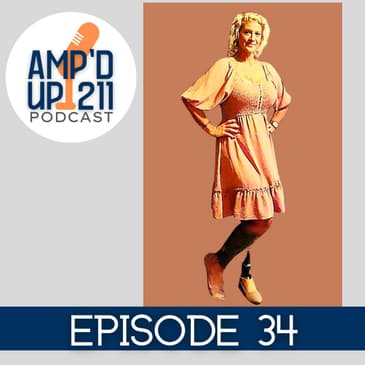
We are proud to present Jenny Rolf Pollreis. Jenny is a left leg below knee amputee who describes herself as a Fitness Fanatic. This fitness trainer continues to inspire the entire amputee community through her video blog and positive content on social media platforms. Jenny has participated in competitive national bodybuilding and brings a fascinating perspective to our entire audience. Jenny is a rising creator who continues to balance life, love, and her incredibly active lifestyle. The AMP'D UP211 Video Podcast is hosted by Rick Bontkowski, a right-below-knee amputee.
Subscribe to the podcast!
The AMPdUp211 Youtube Channel
Recorded at Audiohive Podcasting
Hosted on Transistor.fm
[00:00:00] Today on the AMPD UP211 Podcast, Jenny Rolf Pollreis, Jenny is a left below the knee MPT who describes herself as a fitness fanatic. This fitness trainer continues to inspire the entire MPT community through her video blog and positive content on social media platforms.
[00:00:21] Jenny has participated in competitive national bodybuilding and brings a fascinating perspective to our entire audience. We are proud to introduce to you, Jenny Rolf Pollreis. Jenny, how you doing? Good to have you on the show? Thanks for having me.
[00:00:50] I am glad you're here and I am glad that we were able to pivot and put you on the show via Zoom. It looks good. Technical difficulties. Yeah, you want to tell the audience why you're on Zoom and not on our normal platform?
[00:01:09] Because I don't carry around the laptop with me. So. Oh, I can your back pocket. You know what I mean? Right. Your pockets are big enough. So as you mentioned before, we went on today. You are post work out. This is this is the Jenny after the gym.
[00:01:32] That's right. There's Jenny on the block and then there's Jenny after Jim. And that's right. This is Jenny after Jim. So what was the workout like this evening?
[00:01:43] We did some back and by a set and about an hour of the stair meal after work after a night hour shift. Wow. That's impressive. You're making me feel very small right now. How dare you? No, it's okay.
[00:01:59] Welcome to this show. I'm so glad you were able to take the time. And of course, I have been following you and very much believe that you offer a really interesting and extraordinary perspective in the ampity community.
[00:02:16] I think the thing I would like to ask you to sort of kick things off is if you were going to think about what has surprised you most about being an ampity. What would you describe that? What would you say?
[00:02:36] I would say that what has surprised me the most about being an ampity is how much I have learned that I can accomplish by being an ampity. How strong I have become from the challenges of being an ampity and
[00:02:58] I honestly can say that going through what I have been through the last 21 years is learning that I can overcome and push myself to do anything as long as I believe too. Yeah, and I would agree with that sentiment myself and certainly
[00:03:21] I continue to let's say surprise myself on what I'm capable of and not that I wasn't an active person before amputation but certainly not as active as I am now. And I hear this often from active ampities and I don't know if you're
[00:03:47] in the same camp, but so often I hear I was not able to adapt to being an ampity successfully unless I really, really up to my game in terms of my fitness level. That I was using muscles I had never used before.
[00:04:09] I was essentially requiring more energy to be mobile, to be able to even do everyday things and I was reading a like a strange, what seemed like a strange statistic and it was talking about how ampities specifically, leg ampities it was like use like 35, 40%
[00:04:36] like more energy to walk than someone who has both limbs and I thought wow is that is that why I was sweating so much when all this started you know? Is that why my residual limb was collecting you know all that fluid at first?
[00:04:58] Because it's pretty shocking isn't it? Like when you when you first done you know a prosthesis and yeah you go on the summer heat or something and you're walking around you're thinking
[00:05:13] what an earth how could this much sweat come out of this little limb like how is that even possible? Exactly like half those muscles are functioning but yet you're literally creating a pool. I know I had when I first learned to teach myself to walk and
[00:05:36] I was a personal trainer for 15 years and a bodybuilder so when I worked out daily the pool the amount of sweat is just astronomical I would run on the treadmill when I got to that point
[00:05:52] and have to stop and dump out the sweat and then put my leg back on and continue I'll do the same thing. I'll be running down the street going for a run or chasing the
[00:06:06] grandkids and have to stop and dump my leg out and it's been 20 years. I still got to stop and dump so you get people that are stopping to see if you need help and you think at that point
[00:06:17] like do you call for a lay or do you call 911? Exactly. Yeah, talking about being able to run I'm about six years into this the one thing that I'm lacking in my notes on you is how did
[00:06:37] you become an MPT? This is a very long story I'll try to sum it up as much as I can but by your away and in 2001 I was in a motorcycle accident. I was passenger on motorcycle and
[00:06:55] a lady had pulled out in front of us and we couldn't sort of couldn't miss it in time so we took the hit and the driver had hit her many van and I had rolled with the bike.
[00:07:11] Well the bike landed on my back. However my leg hurt which was odd it was able to get up and help push the motorcycle off to the side of the road. It was 35 mile an hour at the time
[00:07:25] no big deal and I just collapsed so I went to the hospital and I was treated in a release for a springed ankle. So they're shortly after it wasn't getting any better like my foot started
[00:07:42] inverting so I was literally walking on the outside of my foot it had turned and so they were assuming that the tendons were overtightening and so they did X-rays and floor scope which is an
[00:08:01] X-ray under movement and couldn't figure out where the D formation is coming from well then the muscles just started contracting so bad that we had to do tendon transfers and surgeries to
[00:08:13] try to correct the D formation of what was happening with my leg. So I went through seven surgeries to try to correct what was going on with my leg and they still didn't have a diagnosis until
[00:08:30] I was sent to the University of Iowa about a year and a half later and they found that it was a spinal cord injury from the accident called a post-traumatic focal dystonia happens about one out
[00:08:44] of a million people so what had happened is it pinched the spinal cord just enough to affect the nerves on the left side of the leg. So all the tendon transfers and stuff that they were doing
[00:08:59] the muscles were contracting so hard that it was literally tearing those tendons away from the bone. And sitting through this I made children were very young at the time I learned to carry a baby
[00:09:10] carrier on crutches that crawled to do laundry single mom taking care of them going through all of this. So at the University of Iowa they found that there's one other case. It was a female she had 28
[00:09:26] surgeries before they elected to amputate and I said I wasn't willing to go through that. So I educated myself and then had to you know prove I wasn't crazy because here I am 22 years old
[00:09:39] electing amputation. So I the internet just came out then and it figured out that there was runners out there. There was all these people that could do amazing things being an amputate and I'm like
[00:09:57] that's it that's my ticket out little did I know that the hard road it would take to overcome and become that runner. So many people that go into amputation just to assume that okay I'm going to
[00:10:12] get a prosthetic and I'm going to run out of there and as those amputies will soon find out or no it's not that simple. So anyways we did one more last-titched effort to try to save the leg.
[00:10:29] It did not work. I had a shot of demoral during that surgery that I found out I was allergic to and I coded and I was without oxygen for so long that it left me with epilepsy. So I
[00:10:47] scar tissue on both frontal lobes and now I'm epileptic because of that surgery. So the next time they put me under for the amputation itself we had to take extra precautions so that I would wake up
[00:11:06] and be able to walk however that's how I became a 23 year old amputee. Yeah and you made some good points there that I just want to circle back on. I do believe that there is that public perception post-amputation of well yeah you come out of surgery and they
[00:11:31] hand you your cool brand new running blade and then you just kind of charge off into the sunset. Not really understanding that those very dramatic sexy inspiring photos that I also looked at you know on the internet and I'm about six and a half years post-stop.
[00:12:01] So I had a lot of internet to look at. The internet was in full force at that point. So there was all of those sort of misguided misperceptions, all those things where you think
[00:12:24] hate to use the word easy but hey this isn't going to be that bad. And I didn't you know coming to an amputation. I didn't know what you know prosthesis even looked like.
[00:12:39] I mean I do recall reading about you know pastorius, the runner and he had the cool running blades and I mean that was interesting but I didn't really like gravitate towards that. It just sort
[00:12:55] of passed me by. But now that I was facing you know what we both experienced, I was somewhat fascinated and well how is this going to look? Like what are these things look like? And then you're seeing different styles, different blades, different feet, different
[00:13:16] sockets, different this, different that and all that stuff. And I have to say it can be overwhelming as to what is the path to glory you know in that situation. And I think the thing that surprised
[00:13:33] me the most was the huge, huge sort of canyon between the medical community on one side and the practitioners and people in prosthetics on the other. And how very little those two entities communicate with each other because I can't tell you how often I go and see
[00:14:03] my normal medical doctors now, they look at my leg and they say they'll say right to my face. I have no idea. Like what that is on your leg right now, I don't know what it does.
[00:14:15] I don't know how you bear weight on it. I don't know what affected is having on your residual limb. I don't know anything and I've actually sat in my GP's office and helped him
[00:14:30] write a prescription for my prosthesis and that's just it's bizarre to me that we have to it is absolutely bizarre and it's mind-boggling because you know you would think that being a medical doctor they would know the biomechanics of of a prosthesis but they really don't have
[00:14:51] any clue. So as you said, you have to help them write a prescription you know I'm a K4, what does that mean? Why do I need that? This is what I want to be able to accomplish without
[00:15:02] that prescription you can't have it but yet they have no clue what it means. Yeah, exactly. Were you before your accident and then obviously your unfortunate subsequent surgeries? How active were you before that? Well I was a gymnast as a kid in a farm girl
[00:15:24] worked physical jobs so I've always been active but not as active as after becoming an amputee because like I said I was going through all those surgeries in a wheelchair on crutches
[00:15:44] for so long that I put on an astronomical amount of weight for myself. I mean some people would say you know to 120 pounds isn't a lot but you know when you're a small stature as I was that is
[00:15:58] a lot and having that weight on the prosthetic it makes it harder to move in function so it's really mind over matter. So I went to a physical therapy appointment and I was young my Jew
[00:16:14] and they wanted me to use a walker which having young kids taking advantage of me was not feasible and I would thought you know I'm too young to use a walker. I am not doing this so I took matters
[00:16:27] in my own hands and did it myself. Yeah, I started doing Pilates because I could lay on the ground and function and squeeze those muscles and literally worked myself from the ground up top myself to
[00:16:43] walk by using crutches by using just core muscles treadmill bike I would like bike for I mean hours at a time and the weight started coming off of course confidence builds those secondary
[00:17:01] muscles build and I figured if I can do it myself then I can teach others as well. So becoming an amputee basically laid out the path for me to become a personal trainer and teach others
[00:17:20] disabled overweight no matter what the ability to lose weight put on muscle do what they needed to do biomechanically and physically to become the best of them. And your clients are able body as well they're not they don't have disabilities do they? Absolutely I would say 90% of my
[00:17:47] clients were able bodied. I did have a few that I would train via I mean we would use messenger then because it was before zoom and all that stuff but um so kind of like when online training first
[00:18:04] came out that's what I would do but I trained in the gym like I said for 15 years all types of body types but mainly able bodied. Yeah and how do you tell your trainer who's missing a leg I can't do it?
[00:18:19] There you go. I've kind of had the market. Do you ever use that? Of course they ask you know like oh who's your personal trainer like Jen? Well I don't know that there's you know 1000
[00:18:36] Jenny's or Jenny's but oh the one leg is lady everybody knows the peg leg trainer so yeah yeah that's your handle so I was gonna say you know how often do you have to pull that card out you know like
[00:18:48] hey um you know I'm I'm operating with one leg here and I can do it I think you can do it you know because people I mean you know because this is your business people create excuses I mean
[00:19:02] that's just that's just how it is and it's it's it's always harder to get really really uncomfortable now absolutely that being said true progress comes from getting really uncomfortable and I was talking to actually on another episode of the podcast I was I was talking to a triathlete
[00:19:31] and I was saying okay like what's the x factor like what what is it when you're running those races when you're finishing you're trying to finish a marathon when you're trying to push yourself
[00:19:44] to that absolute limit and I said what is it what is the what's the secret sauce? and he said you know what it is you have to be able to get comfortable with pain that's what it is
[00:19:58] you have to be able to live in the pain cave if you can get through that that's when you find you know those achievements that's when the light happens it's just those moments
[00:20:12] when you and I'm not please don't send me email I'm not promoting hurting yourself I'm not promoting that however to do what you do which you know especially with bodybuilding it's a very it's a very repetitive very focused very regimented discipline activity and it's not it's
[00:20:39] it's not designed around comfort I mean when you when you look at the you know the calculus the equation that creates muscle mass okay literally it's kind of terrifying when you look at an on a scientific level because you're literally breaking something down so that it grows back
[00:21:01] bigger and stronger so exactly you're you're kind of like okay I got to break myself to come back stronger right that to me is an equation for pain it's pain absolutely and you know
[00:21:16] I always say like how do you cross that bridge into knowing okay it's happening for me right now right so when did you um when did bodybuilding because that you know of of of course that fascinates me especially as
[00:21:36] as an amputee when did that sort of get in your purview like when did that become a thing or a possibility in your mind well it was when I had been a trainer for I would say
[00:21:53] probably five or six years into it and like I said I trained all body types but and I taught myself to run and I taught myself to do gymnastics again so here I am doing back
[00:22:07] handsprings around offs and flips and and teaching pilates and training all different body types I've lost the weight I you know put on muscle mass I've done this with other people that was
[00:22:24] the one thing that someone came to me and said you know I want to train for a show well I didn't feel comfortable training them for bodybuilding unless I did it myself like if
[00:22:41] you're gonna talk to the talk you gotta walk the walk you know I'm not gonna tell you not to eat this but yet I'm gonna go ahead and do it myself so and I'm very firm believer in that you know
[00:22:54] so I that's when bodybuilding became in my scope as when I had people come to me and say hey I want to look like you you should do a show well then I better do a show when I started training
[00:23:10] I had with I go all natural so everything is light detector tested and you're an analysis so to ensure that everything is natural because bodybuilding is filled with steroids and everything else that yeah all of that's been pretty well documented right obviously so yeah that was a
[00:23:37] huge thing to me is that it's got to be all natural so learning that proper diet in order to put on that muscle mass somebody at my statute and then teaching others to do the same as well
[00:23:50] so learning that was just another scope of what more I could achieve you know and then getting those muscles like you said it's a it's a fine recipe so to speak you know you're missing
[00:24:09] half of a leg so how do I get those muscles to match because you're over compensating on on the hip in order to swing the prosthesis so the left side's gonna deteriorate so now I'm
[00:24:24] going to show when everything has to they judge you on your composition everything has to match right so it's a learning power to contract those muscles without having the weight when you don't have the physical body there literally right right have you seen the um that
[00:24:45] documentary on Arnold Schwarzenegger heavy watch that um which one there's a million well pardon me it's it's very recent and I believe it's on Netflix right now I think it's just called Arnold
[00:25:01] I have not watched it yet okay so I only knew him pretty pretty much as um like an action you know movie star kind of kind of person I didn't really understand so much his background in terms
[00:25:21] of how he kind of revolutionized bodybuilding how he sort of kind of set the set the bar for where things were gonna go in in terms of those competitions and um I think the thing that
[00:25:40] kind of resonated with me the most was his unbelievable level of focus his just his passion for his body and that nothing literally nothing was gonna get in his way of achieving the results
[00:26:04] that he wanted and he admits to you know using steroids and things and and um but there's still you know even putting that aside the amount of time and dedication and just laser beam focus that it takes to reach those levels was extraordinary to me I mean
[00:26:31] and I'm not generalizing here I you almost have to be like a little crazy like a little obsessed obsessed that's that's the correct term and you're absolutely right like people just assume that you can take steroids and bulk up and get thrown right well anybody who's had a
[00:26:51] cold before knows that no it doesn't work that way you have to work no matter what you know it is laser beam focus yeah it helps but so in order to do that as an amputee to be a bodybuilder
[00:27:06] as an amputee and natural you just have to work harder just as you do to be a normal person and then when I started competing they didn't have an amputee class a lot of professional
[00:27:24] shows do now they have a class just for disabled they have a wheelchair class they have an amputee class and I'm sure I'll be corrected because I haven't been around those but I
[00:27:39] felt that I worked just as hard if not harder than the able body people up there I was gonna compete able body so every show that I have done which is only to end too
[00:27:52] but every show that I've done is against able body and how did that how did that make you feel in that in that situation I mean was there was there an ounce of hesitancy and security I mean
[00:28:11] or or did you feel like this is this is just how I'm gonna do it this is how I'm gonna approach it that's that's exactly yeah I fought so hard because like I said I've been an amputee for 20 years
[00:28:26] so back when this happened you know there's tons of progression in the last 20 years from when I first became an amputee like I would literally break carbon fiber feet like one a year I've gone through 20 different feet just destroy them literally be running down the road and
[00:28:46] wow so I've broken sockets I have you know broken titanium joints in my prophesist you know would literally come meet me in a parking lot to come fix me so that's when you know you have a really
[00:29:00] good prophesist but I'm gonna have to crawl home if you don't come here yeah exactly or they know me I'll take a grinder to it myself and make it work because yeah it's funny we
[00:29:13] we become like little engineers you know with these prosthetics we're like oh I see how this works now yeah exactly and being a farm kid and a mechanics daughter like trust me I can fix it
[00:29:25] yeah I'll throw some back tape on there I'll see you in a week but then after it it fixed myself up and go I actually found a foot that worked for me and it's funny that you mentioned that
[00:29:37] that canyon between your uh your doctor and your prosthesis there's also that canyon of mechanics that every person needs to try because everything is different for every single person you have a liner you have you know which type of suction you want to use which foot which
[00:30:02] works for you which is best and then you have those that don't quite get the mindset don't want to be as active at least that's what I've come across and I've done many many years of
[00:30:21] amputee outreach and helped and over the years I've found that the more active and the more able-bodied I've become the more people don't relate anymore like oh you don't get it you're fine
[00:30:37] like no I went through it too you know yeah no I have this problem there's just more excuses now then there used to be when I was first name beauty and maybe that was because I had more compassion
[00:30:52] and you know hopefully I don't get any haters on this but I've gotten to the point now of that I'm like no you really can do what you want if you set your mind to it and that's
[00:31:06] same thing with bodybuilding you know it's it's like you said you gotta be a little bit crazy yeah I never would have thought I'd be running well I I always refer to it as you know the whole
[00:31:20] wanting it bad enough concept that if you if there's anything you want bad enough you can do it and you know I tend to I tend to feel somewhat the same way in that the more and that was a
[00:31:36] perfect way of putting it the more able-bodied I become and you know again I don't I don't like haters either because like sometimes I say things and I'll get these DMs like you know
[00:31:51] you know it's not as easy as you think and it's like well wait a minute I you know I went through it too you know I didn't just you know suddenly do things that come easy now it took some time
[00:32:03] and some dedication but sometimes I find and going to the prosthesis and going to their office and on a busy day right because there's let's say it does in amputees in the room
[00:32:18] and you know my my you know my prosthesis brings out you know my my prosthesis and says okay get you know you know you know the drill give it a test drive and let's see if we need to make
[00:32:32] adjustments and I'm walking around and I'm going over the stairs and I'm just you know I'm jumping up and down a little bit I'm just trying to get you know a feel and suddenly I notice this like
[00:32:45] kind of like disdain for for me like wow well must be nice right must be nice that it's so easy and or someone will say well you just want to run right up
[00:33:02] those stairs like like what's that all about wait a minute back up this is it this is not where you start this is great this is work you know I you know I go to the gym and I do the stairmaster
[00:33:19] I I do my you know when I started it was like 10 flights I'm done I'm just done I'm pooped you know and that has to become a hundred flights somehow you gotta get there somehow right because like you
[00:33:35] mentioned all those secondary muscles that you've never used before ever in your life suddenly all those have to get developed and all of those magical things need to happen through the process of adaptation which is now and relying on other parts of my body to do the
[00:33:55] things that I can't do anymore and the only way I'm going to overcome those obstacles is if I gradually push myself I gradually get there but I do see out in the community sometimes
[00:34:11] there's sort of this comparison thing that goes on or maybe they're getting a better leg than I am or things of that nature they are better insurance I see this amputee envy that goes on
[00:34:25] that I sort of want to squash because everyone has a struggle everyone is at a particular point in the timeline when I first became an amputee I could not wear a rigid socket I just couldn't
[00:34:39] I was in way too much pain I like yourself I was much heavier than I am now I had to use an adjustable because an adjustable allowed me to manage my fluid build-up
[00:34:56] reduction a lot better than plysox plysox just did not work for me so I needed an adjustable socket just to be able to sort of let the steam have that safety valve where I could give myself some breathing
[00:35:12] room when I was sitting because I was in like horrible pain when I would stop usually I was fine when I was walking around but the second I would stop it was like oh my gosh my leg is in a
[00:35:23] vice I'm dying I'm dying and having an adjustable allowed me to give myself some relief and say okay I can breathe again whereas now I wear a rigid socket and it's the most comfortable thing to me
[00:35:39] but getting to where I am now it was just such an incredibly laborious process of trial and error trying different things like you said different liners different types of suction you know if
[00:35:57] vacuum you know having an opportunity to try those things and to see what works for you and then you know for a high functioning ampute like yourself when you're engaging different activities I would only imagine and maybe you can help us understand your hardware situation
[00:36:18] is there a one leg fits all or is it a number of different types of technology that you have to use depending on your activity you know and that's that's a great point and I get asked that a lot
[00:36:31] there are and I have seen multiple people that you know have a leg for running that have a leg for swimming that have a leg to do multiple different things being a personal trainer
[00:36:45] being a manager for UPS for five years while I traveled all over the United States and taught people how to load trucks and then when sat in an office and then went and swam and then went and
[00:36:58] ran I did not have the time and still don't have the time or the patients for that matter just switch out legs or I can travel all over the U.S. with five different legs I mean I suppose I
[00:37:10] could but they allowed you a medical bag but for me personally that's not feasible you know I'm training one person to try to walk in the water and then I have the next client coming
[00:37:22] that in that I needed to train you know four body building and then I have the next client who is on a walker because they're you know 500 pounds overweight I can't change my leg for everything
[00:37:33] that I'm doing to help support them so I had to find what worked for me kind of a one leg fits and I went through 20 different feet as I mentioned most of them broke until I found the foot that
[00:37:48] works for me which is the rush foot and so I am avid and I have worked with and love that foot and have owned every type of rush foot since I have my one foot that allows me to go through the
[00:38:07] water that allows me to run that allows me to lift that allows me to climb up and down ladders and work 18 hours shifts and do everything that I need to do on one leg I literally wake up in the morning
[00:38:22] put my leg on do not take it off until I go to bed. No that's super helpful and nice to know that you've landed in that place because so so often I think well you know how much is my
[00:38:39] insurance going to cover how many different things how many different types of prosthesis and I'm going to be able to be able to get approved for medical necessity so that I can do all the
[00:38:53] things that I like to do and I feel like I'm in a pretty good place like yourself right now where I can pretty much do everything I would like to. I've definitely considered the
[00:39:06] you know I'm an avid cyclist you know my drummer and I lost my my my right leg so pretty important limb you know to lose as a drummer I would have much preferred it be my
[00:39:24] left but oh well I'm I'm looking to get into running in the you know in the baby phase like you know it'd be nice to go for a jog kind of deal and you know I wanted to bounce that off of you
[00:39:45] and see you know how does that process start you know what you know what would you say someone like myself who's never done that what's that going to be like what should I be looking for
[00:40:00] how do I graduate up to the point where okay I'm gonna you know go run a few miles and you know what what would be your recommendation I'm trying to get some free personal
[00:40:14] trainer advice. You and everybody else no I'm not a personal trainer anymore but I am I do work for free sometimes anyway um honestly it's just whatever you have now try it you have to try to overcome an adapt whether it's just starting to walk faster
[00:40:37] you you would mention you know walking up a flight upstairs or using the stairmaster when it's only 10 flights and you have to turn that into 100 you're gonna start by jogging 20 steps
[00:40:50] soon that 20 steps can turn into this can turn into that if you start getting source and issues on on your residual limb it's a possibility it's the fit it's the way that your shin's going to hit
[00:41:05] harder on the front then it would if you were just walking so the biomechanics of that foot may not work for what you're you're using it for I started running on a brick is they explained it
[00:41:20] I was in like the cheapest my insurance would cover because it was just um medicated at the time or medicare that's all I had and like you said that's another issue that every MPT has to deal with
[00:41:34] is what are they going to cover this time my liners ripped the only cover this much at a time I mean I've learned to use marine glue to keep liners together to plug holes because
[00:41:46] insurance will only allow you so much of durable medical equipment each year before you're paying out of pocket and this stuff is not cheap um you know and some of those insurance companies
[00:42:01] won't even cover a K for right some of them will cover a prosthetic at all it's not a necessity to to have a prosthetic you know we covered a wheelchair this year yeah so there's stuck in that wheelchair
[00:42:14] then you have to go out and try to find funding our volunteer work so anyways back on the topic of running I guess my suggestion would be to like I said just try it I have never been on a blade
[00:42:30] running blade I do I don't know how it feels um what I have works great and it works great for me my insurance will cover a running blade there are ways that you can get a mecan apply for grants
[00:42:46] and whatnot but um I myself feel that there are people out there that wouldn't benefit from it more than I would because I can function on what I have yeah so it's just an incremental you
[00:43:03] just start you know I mean what what's what's the what's that saying you know that just do it the uh stop talking like you like you slogan stop talking just do it yeah there's nothing more annoying there's nothing more annoying than someone that just
[00:43:22] just just talking talking talking like come on just do do the thing um the one thing I wanted to to mention and get into a little bit before we we lose you here um there was a uh social
[00:43:38] media post that you put out that sort of resonated with me and uh you got to look on your face like you know what I'm talking about um so it was kind of a glamorous photo of you and
[00:43:53] and you were you were exposing your residual limb in the photo and some of what you said like like really really resonated with me and really you know got me thinking about how that applied
[00:44:11] in in my own life and you know I you know of course I've taken photos with my prosthesis off but I'm always wearing a liner sock always and it's such a vulnerable sort of place when your
[00:44:33] residual limb is for lack of a better word is naked and it's um it's something that there are times I look at my residual limb admittedly and it's just bizarre I mean it's bizarre looking
[00:44:52] and you know you get we as humans we get so used to you know we have this picture in our mind of what our anatomy is and and the idea of taking a photo exposing my residual limb is it's
[00:45:09] a bit terrifying and I you know I could really relate to some of what you were saying and this is you know something that you put out there and we never know what the feedback
[00:45:30] is going to be right but it would seem to me that in that moment yes it was you know very revealing very vulnerable but the way I perceived it was like it really showed like incredible strength
[00:45:51] in what you were projecting in that moment and yeah I just you know I mentioned it only because I wanted to understand better what you were feeling in that moment too. Well and I know they exactly the post you're talking about and I I'm very active on social
[00:46:13] media for those that want to check it out but for me it was a boot wash shoot that was focusing on people that were disabled but finding the beauty in themselves and for me like being a body
[00:46:32] builder I would stand up on stage I mean just shy of you know band aids on and be judged and critiqued over anything else and feel comfortable doing that but having a picture with my leg off
[00:46:47] that is like you said literally naked yeah so that to me is the first time that I have I mean I have shown other amputees like wounds that I would get from prosthetic swords or stuff like that
[00:47:05] but to be like you said in that vulnerable position to where the beauty is focused on what I like to see the least of myself. So putting it out there that there can be beauty in what you've
[00:47:27] overcome it's just showing or taking off the mask that leg is the mask that we hide behind you know without that leg on I can't walk I'm crawling I can't you know function like a
[00:47:45] able-bodied person it's literally as vulnerable as you're gonna get is when you take that off I mean for lack of a better explanation I always said what's left looks like a giant penis so
[00:48:03] yeah there's those those funny pictures that go around in the amputee groups you know where some dude is like he's like dangling his residual limb like you know he's got like a pant leg on
[00:48:17] this side he's just dangling it in the middle and those usually get like removed so more like oh come on yeah yeah yeah yeah yeah yeah yeah yeah yeah yeah yeah yeah yeah yeah but no I appreciate what you're saying I really do it's it's that whole idea
[00:48:40] I think is is very very important that lesson is very important for us all and when you talk about when that leg is off the feelings that come with that now not to be you know super macho
[00:48:57] traditional sounding but as a man feeling that I can't protect the ones I love when my leg is off is very it's it's very difficult for me so feeling that that you know I can't keep everyone's
[00:49:19] safe once my leg is off because if something were to happen hold on a second you know Mister and Truder I've got to put my line around and get my leg out. You know you're exactly right and that's
[00:49:34] I'm a very independent person and I will be the one out there I mean my husband gives me grief all the time but I I'm I love to mo I love to take care of the yard I know
[00:49:47] more mechanics than he does I will literally go out there and mo and say no you're not doing it right so get out here in the way but when I go to bed at night I have to take my leg off you know when
[00:49:59] I can get up in the middle of the night I crawl just because I know I can't fall you're already on the ground yep so you can't fall but I'm raising my grandchildren right now and if they
[00:50:10] Nana come get me I have to you know put on my leg in order to walk into their room you know you have to um if there was a fire so hang on let me get my leg on you know so yeah
[00:50:25] like you said that that being able to protect the ones you love or even get up and run after on if they you know falling down stairs you know you know I agree and I you know I've got a
[00:50:40] granddaughter myself and you know she'll just she'll last to play with my leg and then she'll just walk off with it and I'm thinking hold on a second I'm gonna need that
[00:50:56] but how do you feel like when you look through the lens of your grandkids in terms of them you know seeing you as an amputee like what's that experience like well like my youngest granddaughter is grown up with it so she doesn't know any different so to her
[00:51:15] it's just second nature now these littles that I'm a littles is like all them that I'm raising now they they were with their um their biological parents for three years in Kansas so they didn't
[00:51:30] really know me super well until they were dropped off on my doorstep and you know it's Nana with the robot leg yeah so they had to get used to you know that's your robot leg that's your prosthetic when I wore pants they couldn't understand where it went
[00:51:47] yeah or let me see your leg let me see the mechanics of it and now they're okay with it my children when they were younger they would do the same thing they'd run off with my leg
[00:51:59] or they'd try to wear it themselves and I'd be like okay come they take my wheelchair and go up and down the street and race with it and I'm like okay that's great but so like my children
[00:52:13] had to grow up with it and my children are now 27 23 and 22 and they will still notice the stairs yeah that's all people look um that they're like mom they're looking at you I don't I don't notice it anymore
[00:52:34] um the my my grandkids now you know will stop to explain to little kids that say you know what's that well because that's normal nature and their parents will try to pull them back and you know
[00:52:48] no don't talk to them and they're like no that's absolutely normal if I see somebody with hop pink hair going down the street I'm gonna turn and look to it's the same thing with the prosthetic you just
[00:52:58] explain um rather than pull them away so I got a three year old in a four year old saying that's my nannas robot leg yeah and the other kids are just like okay it's parents or adult perception
[00:53:12] that are afraid to ask or to learn for that matter yeah I agree and and children have a great way of not only being a buffer but also being an appropriate messenger of a lot of those those
[00:53:29] particular pieces of information they can they can handle that dialogue a lot better than we can and my my granddadder refers to my prosthesis as my robot leg and she refers to my residual
[00:53:41] limb as my baby leg. She says that's your baby leg and I'm like okay if that's what you think it is that's fine you know whatever works out of the miles of babes but um no I continue to be so
[00:54:02] inspired by your story I so appreciate you taking the time and giving us a little more of a personal sort of you know perspective on you and you know what's happening with you what what would
[00:54:19] you consider to be your next big goal that's like I said I've been raising these little guys for about a year they were just kind of um shown up so uh everything that I would have thought
[00:54:36] of as a goal in the future is kind of been a day by day since we really know exactly what's going on I was scheduled to have a revision in March but raising little's had to put that off so we have
[00:54:53] had to have some residual skin that needs to go away so I am currently in my prosthesis care I'm using a pin lock and liner to hold my skin where it needs to be I continue to work out so
[00:55:13] goals for itself is like I said it's gonna have to be day by day eventually a life will come down and we'll figure out what's going on um I don't have anything in the future that I'm set out
[00:55:25] to do I don't plan on um doing any shows any soon anytime soon or if ever again I've been there I've done that but just learning to live a normal life outside of bodybuilding um so yeah goals
[00:55:43] in itself is to hopefully move up with my career continue to be as active as I am and be there 100% for my family well those are all very very worthwhile endeavors if someone
[00:55:59] if it's okay for someone to reach out to you how do how do you prefer they do that um they can reach out to me through um Instagrammer or uh through Facebook but is the preferred way of method
[00:56:17] I am uh semi-private on both so they will have to explain that they've seen this just because the little and grandkids and and all that fun stuff so but I'm more than willing to help answer
[00:56:35] questions um I can lead you in the right direction of some really good um amputated trainers I just don't have the time to give out free workouts or nutrition advice for that matter I always use to say
[00:56:50] like you can put down the fork start there so yeah I you know I'm a little I can be a little cut with people I get frustrated and I'm just like you know you do have a choice like to stop
[00:57:08] but I know for some people that's not as easy as it is for me and you know we have to we have to try to you know show some empathy in those situations and hopefully we can you know change our
[00:57:24] our you know our habitual issues and just create little behavioral modifications to the point where you know you're you're yeah you're doing it as a lifestyle and the way in which you know you live your lifestyle your fitness level and everything that you're doing and you're you're
[00:57:43] pursuing to live your best life as an amputee and I so appreciate you sharing all of that and of course I will you know continue to follow you Jenny thank you so much for being here I am Rick
[00:57:58] Bonkowski this is the end up to 11 podcast and I want to wish everyone health and happiness and we will see you next time