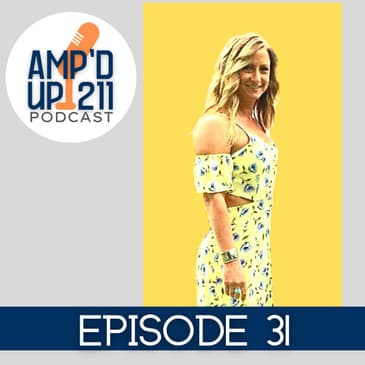
We are proud to present Jessica Noreika. Jessica became an Above-The-Knee amputee due to a tragic motorcycle accident in October 2021. Jessica recently went through the surgeries to receive the Osseointegration Implant. Jessica, once incredibly active is now facing the challenges of her new normals head-on. Jessica continues to inspire her entire community through her quiet strength and determination to live life to the fullest. The AMP'D UP211 Video Podcast is hosted by Rick Bontkowski, a right-below-knee amputee.
Subscribe to the podcast!
The AMPdUp211 Youtube Channel
Recorded at Audiohive Podcasting
Hosted on Transistor.fm
[00:00:00] Jessica Noreika became an above-the-neigh amputee from a tragic motorcycle accident in October of 2021. Jessica recently went through the surgeries necessary to receive the OCO integration implant, a new technology and prosthetics. Before her amputation, Jessica enjoyed a very active lifestyle,
[00:00:22] and as of February 2023, is now making the transition to walking with assistive devices. This new amputee is inspiring others with her perseverance and strength. It is our pleasure to welcome to the AMPD UP211 Podcast, Jessica Noreika. I, Jessica, so good to see you today.
[00:00:48] Thank you so much for being on the show. How are you? I'm great. Glad to be here. And where, where in the world are you, so our listeners know what part of the country you're in?
[00:00:59] Wisconsin. What part of Wisconsin? North of Milwaukee. Okay. Have you ever heard of a connoisseur? Oh, yeah. I used to live there. No kidding. I used to live there. My parents used to have a house right on a connoisseur. Okay. Yeah. I lived there for
[00:01:24] geez. I don't know how many years. My first daughter was actually we lived there when she was born 27 years ago. So kidding. Very familiar with a connoisseur. Small world, right? Yeah. That's a name that's butchered off and right? Oh, it sure is. I think I
[00:01:41] struggled well. My parents had a place there when I was a teenager. And I think I even struggled a little bit with a connoisseur. Yeah. Because you see it, you see it written out and you go,
[00:01:53] oh, right. How do I say this? It's all after every other letter is at all. Right. Yep. And then I had to get used to roads that were just a single letter because when you go out there, I'm I'm so used to street names and numbers and stuff.
[00:02:11] And the road we caught highway old exactly. And I thought, wow, this is bizarre. They're all over here too. Yeah. So that's yep. Have you ever been told that you have a Wisconsin accent?
[00:02:22] Yes, all the time. I was actually raised in lack of flambul on an Indian reservation and I got raised. You should the accent coming from an Indian reservation? I got so much crap when
[00:02:37] I moved to Milwaukee. It was unbelievable. So wow, it is adorable. It's not a bad thing. I think it's very endearing. So I want to get into, I mean, there's there's so much to cover with your
[00:02:55] particular story given that you have gone through a motorcycle accident and now you're what I would consider to be a newer amputee and becoming a candidate for OCO integration which is something that, you know, as someone who wears a traditional socket,
[00:03:24] I'm fascinated by OCO as many as many amputees are. Your particular scenario in terms of your injury and your amputation if I'm understanding it correctly, I think this was probably the only option or the best option for what you were facing. Correct? It was the only option
[00:03:52] due to the fact that I think they knew right away when they amputated my leg that I was going to be a candidate for this just because of the length how much femur bone I had left and
[00:04:07] because where I was found on the ground, the worst place possible. I went through a lot of infection, bone infection, things like that so they had to, I believe, shorten my femur bone
[00:04:26] twice to try and stop that infection. So there is just enough femur bone there for them to be able to do this seal integration and my residual limb is there's not enough there for a slip on.
[00:04:46] Yeah, so traditional socket is just not possible. Right, no, no. Yep, so that was my only option. Yeah and when you went through these revisions, I guess it's probably could be maybe not,
[00:05:04] you know hard to talk about when you've gone through a trauma like you did and then surviving, which we all come out of that, you know, thankful. I'm still here. But then trying to understand, well this isn't over. We have to make these modifications to your limb because
[00:05:29] we're nervous that some really bad things are happening. What was that process like for you in terms of getting that news after your accident? As far as my only option? Well, just what had happened in general. Well, I, you know, my surgery
[00:05:53] was not, it was elective in a sense. It was something that needed to happen. It was elective in a certain sense. I'm always very curious about trauma survivors because there's a sometimes a much bigger psychological component. So when a doctor says to you,
[00:06:17] this is your only option, that doesn't necessarily cleanse you of all the feelings that you have associated with. I can't believe I'm going under the knife again. Well, they, they actually, I believe shortened the limb. What's your dog's name? What's your dog's name?
[00:06:40] I got three of them. Oh, three. I got three of them. Yeah, three. Larry and curly. Yeah, right now. Yes. So I woke up from the surgery without the leg and they, I don't really remember, I don't remember them shortening it
[00:07:05] because I believe they had to do it right away. Yeah, so it was almost like consecutive, like, oh, right. We got to go further. We got to go further. Everybody today I want to talk about the Ross. The Ross is a liner cleaning system
[00:07:24] that I really feel compelled to talk about with our listeners. As most of you know that follow the podcast, I really don't do a whole lot of product endorsing, but I, I really
[00:07:34] feel that I want to get this out into the community. We all as amputees tend to struggle with cleaning liners, cleaning our gel liners. Whether you're below the knee or above the knee,
[00:07:48] we have these gel liners that have to stay clean. We don't want to develop skin infections, things of that nature and having a fresh clean liner seems to be one of the most important aspects of daily management of an amputee. I was introduced to the Ross system
[00:08:07] through the company and basically this device is something where you can put your liner into this sort of tube, let's call it, and within 10 minutes or if you want a deeper clean within 20 minutes, you get a fresh clean liner. And I am just ecstatic about this. It provides
[00:08:29] me the ability to have clean liners all the time. I never have to put a liner in the tub in the sink. I never really have to use soap and water again. And it's really been just a wonderful
[00:08:42] product and experience in terms of what is available to amputees. So I want everyone to check out the Ross. It's a great system. Check it out. Here it is. The ozone generated by Ross eliminates germs and odor causing bacteria that soap and water alone cannot leaving prosthetic
[00:09:08] liners smelling fresh, sanitized and ready to wear in as little as 10 minutes. Independent laboratory tested the device rapidly eliminates 99.9% of bacteria that causes skin and soft tissue infections. The Ross sanitation process is compatible with all liner types,
[00:09:33] makes and sizes as a clinical grade device for home use. Ross is convenient and easy to operate at the point of care in a clinic or at home while one sleeps eats or watches TV.
[00:09:50] Check out the Ross today. I just remember waking up and my left leg hurting so bad and I was very out of it obviously wasn't really didn't know what was going on. And I first
[00:10:08] somehow I didn't question where I was. I really didn't question what happened or anything. I don't remember the accident but for some reason I kind of knew where I was I guess. I knew I was
[00:10:23] in an hospital. I guess I knew what happened but my leg hurts so bad and I asked my husband apparently the first time I asked I don't remember it but my husband told me. I said why does my
[00:10:38] leg hurts so bad and I must have passed back out of you know all the drugs they had me on. They had me on fentanyl and I can't remember what else but look IV antibiotics. So
[00:10:53] and then I woke up again and the nurse was in the room with my husband and I asked again I said why does my leg hurts so bad? And I guess my husband grabbed the nurse and kind of pulled her down
[00:11:07] and he was crying she was crying and he said I can't tell her. And she said something like I need to take your leg or something and I remember her saying that and I turned my head to the left
[00:11:24] and I said oh what the f. That's what I said that's how I reacted to it. I never cried about it. I never like thought what did you know what happened, what did what did this person do to me.
[00:11:40] I just turned in my head and that's what I said and then after that I think I spent eight or nine days in the ICU and I remember I think the last day and a half.
[00:11:53] I remember going down to my the trauma unit and then I was kind of told what happened and from there it was just trying to handle the pain. Yeah and do you if you don't mind me asking
[00:12:13] do you know who this person was this person you were involved in the accident and where where are you at psychologically with with how this individuals change your life?
[00:12:26] I don't relate it to an individual. I focus on what I need to do, just be able to live and function is hard enough every day. Yeah. All the ways around things and stuff like that. I
[00:12:50] I believe I was told he wanted to meet me at one point and I told you know I said no I don't I just I don't want it to trigger anything first of all because honestly
[00:13:07] I'm fine. I don't you don't need him in your orbit to get closure? No, no not at all. Yeah. I need to just enjoy my life. Yeah. I don't want to relate this to a person.
[00:13:25] Yeah. I guess I don't I'm not I'm not mad you know I don't live depressed um you know life is hard enough I just want to try and stay positive and happy
[00:13:45] and take care of what I need to take care of and just be able to function during the day. It's it's I appreciate your honesty and it's certainly an extraordinary coping skill that that you've managed to engineer to survive that a lot. Yeah to survive this because
[00:14:05] so often someone might say well don't don't you want to say something don't you want to you know feel like there's something you need to sort of get off your chest and I always say wouldn't that give that particular component to this a lot of power over me?
[00:14:26] Like suddenly I'm almost like giving power to what happened rather than just fueling my recovery and my adjustment to this new life if I focus on that and dedicate all my energy to that because really when someone causes a
[00:14:47] situation like the one that's happened to you and they're looking for some kind of closure relief forgiveness it's not your job to provide that. No it's not you are not
[00:15:05] you know governed in a way that requires you to give that to someone you are the victim in this situation so you get to decide how you're going to move forward. Right I you know and the other thing
[00:15:25] he didn't go out that morning you know intending on almost killing somebody. Yeah so I think that helps me with you know I'm not I'm not mad at this person again I don't know
[00:15:43] I don't want to know him yeah it was an accident I you know fortunately it was me at the you know at the bad end of the accident so yeah I don't it just trying to I honestly I really don't
[00:16:02] think about the person yeah that did this to me hardly ever. It could it could be you know processing that as an unfortunate event that occurred in your lifetime. Yeah right and not letting it necessarily define you but also providing you a true test of your resiliency
[00:16:26] and how your plan is to now live this very very you know positive kind of life. I meet you know up until I became an amputee this was quite rare but now that I am one and have been for
[00:16:43] six years I I do meet many amputees that became you know suffered limb loss through a motorcycle accident and it's sort of a remarkable thing and something that I my curious mind goes to what would you want the public to know in terms of
[00:17:16] you know on the roads safety driving on a mobiles around people on motorcycles I you know admittedly before I became an amputee honestly Jessica I never really thought about it I really didn't and now that I am an amputee and I meet so many people
[00:17:40] that have gone through limb loss as a result of the type of accident you had. I see a motorcycle and I just get away. I do whatever I can to not only get away from them but also
[00:17:57] give them their space give them their space but also I even find myself trying to govern others from getting too close to them like you have to understand like they're in a vulnerable situation they're not surrounded by all this
[00:18:14] you know this steel and fiberglass the way we are. They're very exposed so I mean what would you want to put out into the public space to say hey you know maybe think about this the next time
[00:18:28] you see someone on a motorcycle. Well it was the you see the signs everywhere watch from motorcycles and that's how it happened and apparently it is what the person repeatedly said over and over
[00:18:45] after he hit me I just didn't see her I didn't see her I just didn't see her and I wasn't a pass and dry I was actually you know driving the motorcycle on my way to work it was 730 in the morning
[00:18:57] completely the other person's fault I was fully dressed how it always wore a helmet always it was October so it was going to be a nice day and I thought you know there's not many might
[00:19:14] nice days left to ride so I'm like I'm gonna work and come home both you know I looked at the weather and it was going to be nice both way so you know helmet leather jacket gloves luckily thank God
[00:19:29] I was fully dressed but I would just I would say is just watch for motorcycles just watch for them so be alert make eye contact you know that was where we were taught you know when when I was
[00:19:46] getting my license always make eye contact yeah and I was told that I don't remember seeing this to the share of that showed up but I apparently I said I looked right at him I looked right at him
[00:20:01] and I kind of passed out again yeah so yeah and how long had you been an average avid you know cyclists before you had the accident I had my license for 22 years
[00:20:18] that's a long it's a long run that is a long run and I know it's very much it's it's a culture you know it's it's a lifestyle and and so many people are motorcycle you know enthusiasts
[00:20:34] and it can be an incredibly beautiful leisure activity it's very liberating for a lot of people and it's it's a place that some go to to get in touch you know with with a part of their spirit
[00:20:51] and their soul that they can only feel when they are on a bike and I get it I do I do very true yeah and I hear people in those communities speak about it in a very very passionate way
[00:21:08] you know I have childhood friends that you know do surges they do all kinds of stuff and they talk about it in a very very romantic kind of way it's very important to them so you know your transparency is appreciated so often these things can be pretty
[00:21:32] difficult to talk about because it taps into something that you know can sort of bring to the surface a lot of a lot of difficult feelings that sometimes we just want to put away
[00:21:47] but I can tell you by by bringing that to the audience you're helping a lot of people you're helping a lot of us that are in those dark spaces that are struggling with
[00:22:01] whatever trauma they may have experienced and are now part of this club that I don't think anyone wants to be a part of no I've never had anyone asked me where do I sign up to become one of you
[00:22:22] it's it's definitely not you know something people desire and but here we are I want to get in more into the OCO part of your journey because again I I wear a traditional socket and OCO integration seems to be coming on fast and furious in terms of
[00:22:49] it's availability the amount of practitioners that are employing it now you know years ago yep in the United States anyway yeah so can can can can you walk us through your experience post-op and then some of those phases of getting evaluate and then obviously
[00:23:13] getting the implant right so there were two stages I was completely none of it happened while it was in the hospital I did however receive the TMI surgery I leave its targeted muscle reassignment
[00:23:34] surgery I believe that's what it means so I was able to get that right before I left the hospital to help with the fan and pain so like I said there's two stages stage one is the placement of the
[00:23:46] fixture so I was in the hospital for four weeks that was so I got out approximately November 16th 17th or something like that my first surgery was an April of 22 the accident was in 21
[00:24:07] so April of 22 I had the placement of the fixture and it's just like a hollow threaded piece of metal that they actually put inside my femur bone so they actually scraped out the
[00:24:23] inside of the femur bone and used some bone grafting and they they put it all back in the middle of this fixture so your skin or not your skin but everything like adheres to that
[00:24:41] metal that's inside the femur it becomes part of your femur bone so then I had to wait three months and July I believe it was July I did the stage two was the soft tissue work which
[00:24:58] was debolking of the you know my limb they had to take a lot of skin off so none of it would hang over the abutment when it apart the six out of your leg is called the abutment and that's
[00:25:15] what attaches to the leg so they they don't want too much skin or anything hanging over that they want it clear to help prevent infection yeah so um Dr. Nielsen fortunately at Fratert
[00:25:32] I was lucky enough to be at that hospital where Dr. Nielsen is an orphal oncology surgeon and assistant professor at the hospital I know he teaches in other countries so I was extremely fortunate to have him right there very lucky so stage two then was
[00:26:01] attaching the abutment and then they actually take part of your leg for me they took a back like a flap if you want to say and they pretty much scrape scrape everything like the
[00:26:22] the layers of skin down to I believe the last two layers I think and then they they cut a hole and then they lift that up and put it over that abutment so that's that's how your skin
[00:26:37] forms around the abutment and that was the two stage stages of surgery and not fun those stages yeah those stages what what is that course of time so April was the stage one and I believe July was stage two okay so this is this could be
[00:27:07] over the course of four to six months that your sort of getting all those components pieces put together and this is well before we're even donning a prosthesis oh yeah I can't I can't even remember how long two to three months post surgery after this phase two
[00:27:32] is when I went in for my training leg they they call it a duck foot very much yeah and it's it's just a knee level so I first had to start bearing weight on that femur bone leaning at a scale so 20 pounds of pressure for
[00:27:58] two weeks go up to 40 pounds of pressure for a couple weeks 60 pounds of pressure so it's very long you you've got to build up that femur bone again because it hasn't been used in over
[00:28:12] years so it took quite a while and then until you actually are I was able to lean all my weight on that scale on that training leg and then I started crawling they had me crawling to get used to the
[00:28:30] motion of you know something attached to your femur bone that's not the rest of your leg moving you know crawling with it forwards and backwards I had to do that for months and then
[00:28:47] with that training leg on using you know the rubber bands you get in physical therapy strengthening my hip and getting that that femur bone used to weight and resistance in each direction so I would lift up to the side I would have to lift back
[00:29:09] I would lift go in so it was a lot to practice it's a huge process and and given that process that struggle everything that you've gone through and please don't take this as just you know like
[00:29:31] a like a flippant you know comment what do you say when someone just says why Jessica just stay in a wheelchair well no one said that to me so well don't don't be surprised
[00:29:50] yeah if someone does yeah I like why go through Jessica why go through all of this this seems so hard when I just stay in a chair well the thing about that is everybody that I know that knows me
[00:30:09] very active very active worked out bicycling running I was a runner I worked out at planet fitness 34 five days a week walking my dogs every day two three miles extremely active so that was also my husband talked with the surgeons and the head of the PT department at
[00:30:42] freighter from the beginning and kind of I guess warned them that this might be very very hard for me because of how active I was and it just seemed to light a fire under them
[00:31:02] it's really hard to explain we had nurses telling my husband and I you know Dr. Del Toro doesn't normally come up and visit patients you know before they even know
[00:31:15] what's going on in their hospital room still in the ICU so when you hear people say all of them you know the hospital nurses at the doctors were so great I can't even tell you the above and beyond
[00:31:33] that I received it was I I miss them yeah I mean I miss them I love going back to see them yeah those those teams of people are critical in in us surviving these tragedies and I'm in a similar
[00:31:51] situation where you know I I credit them directly for my own successes and and I do believe that the sort of synergy and energy that gets created between you and your team is really a beautiful
[00:32:12] it's sort of a beautiful exchange because the more that I do and the more that I achieve right they they see that as their victory oh absolutely 100% yeah so so 100% when I see
[00:32:30] you know my orthopedic doc or I see anyone that was on my original team in terms of my infectious disease doctor when when I see yeah when I see these people now yeah I see their eyes light up because to them I'm like they're trophy
[00:32:53] like wow we did that like you know we kept this person alive they're living their life and they're happy and and I think for for some of the talented medical people out there
[00:33:09] there's a big thank you there that you know hey um thank you for your service thank you for you know all the time that you dedicate to people that go through these struggles and come
[00:33:24] out on the other side you know trying to live their best lives live out their best lives and I have been asked that question you know why you know why go through all that and why you know why
[00:33:40] not just get accustomed to a wheelchair and things are you know things are accessible now and and you know people there's this perception like people and wheelchairs they get a lot of
[00:33:53] you know kind of like benefits you know they they they get a lot of a lot of little perks and things of that nature and my response is always the same which is that that does not
[00:34:07] represent my best life you know my my best life is is still yet to come and this will not preclude me from doing all the things that I want to do and live up my dreams and when I
[00:34:22] visualize myself because we all have that that self image that we project right when I think of myself in my mind's eye I'm not in a wheelchair um I'm I'm I'm moving I'm walking I'm I'm I'm doing the
[00:34:39] things that I love and everything for me is a pursuit of that and I don't see it any other way so I admire someone like yourself that has gone through what you have
[00:34:53] and going through the level of amputation that you have and thank goodness we have the technology to put you in a position and a trajectory that is gonna is gonna create
[00:35:09] a new life it's it's I always say it's different but it's the same yeah it's just different right yeah I mean the the things I used to be able to do the the the stair the stair step or was my favorite
[00:35:27] um the you know like I said running the roll machine be running outside you know be not a regular two to wheel bike I and I don't get depressed and sad about that stuff that I can't
[00:35:47] do anymore either I focus on wow I can do the elliptical again I have a elliptical mode on my my uh Autobot um I'm on my phone you know I can do I can do the elliptical I did it 30 minutes
[00:36:05] the other day I'm a gradulation yes I can do I have a trike I have a three real wheel bike that I can ride outside is that awesome but the feeling of wind through your hair oh wind in my air
[00:36:21] I got on that bike and that was before I got my prosthetic that was just with one leg now I don't know if anyone has ever tried this but you know so before I got my even my prosthetic
[00:36:35] I was back to the working out yeah I was as well yeah yeah so you know you get you got to get your foot in that you know in that pedal and planet fitness so that the strap covers so
[00:36:50] you're in their secure and you got a lift and push lift and push I think I made it two minutes the first time yeah but I gradually you know got myself up and uh for a long time the roll machine was
[00:37:05] my best friend which is okay because it's a full body you know we're out and I just with one leg I was rolling and I get the looks you know you apart the seas like I think we talked about once before
[00:37:18] people just get out of your way um and when I got my leg when I was practicing walking on it I did so many passes up and down all that equipment with my crutches on my prosthetic on didn't care you know
[00:37:37] I don't care who looks at me I don't care it doesn't matter it doesn't matter to me yeah you know it it looks different I can't blame people for looking and I don't I never get up
[00:37:49] sat there mad at people and kids definitely say the darkest things they certainly do so especially my granddaughter yeah well my grandkids are very very young so that's all they're going to know grandma so they're going to know grandma with the prosthetic leg and yeah my granddaughter
[00:38:12] is my granddaughter as well because she's four and and I've been an amputee for six years I'm very often she will she will slowly approach me and she'll get really close and say grandpa
[00:38:27] can I play with your robot leg and then she she sort of walks off with it and it because yeah it becomes yeah I'm going to need that f**k it off the couch right yeah right yep or or what's even more fascinating is when I see her
[00:38:47] trying to put it on oh my I'm like honey that's not going to fit you because you know in their mind it's it's cool and it's different and yeah there are full of all kinds of interesting curiosities you know I can tell
[00:39:09] and I do appreciate you send me photos of you and you know and your husband and your your family I can tell that you have such a strong support system and that's such a a critical part
[00:39:25] of this process and you know I guess where I'd want to explore a little bit without getting too personal is relationship one one or the other in a marriage goes through something like this and that presents you know a lot of challenges in
[00:39:50] trying to navigate that together and I'm not even necessarily talking about all the physical parts of relationship but there's so many emotional components to you know how do we how do we approach this in the every day how do we get through that and the only reason I
[00:40:12] think I I want to talk about that with you is because you seem to be doing it very very gracefully and I know there's a lot of amputees that that are married and then they're not married anymore
[00:40:30] I happen to be one of those and there are challenges there some some partners can't do it I mean I'm just gonna I'm just going to say it they can't it's too much and that's unfortunate but at the same time it's a reality and very often
[00:40:57] new amputees will call me and say you know how how do me and my my spouse you know navigate this and I have to say well I'm not really one to talk I I was married before my
[00:41:12] my amputation and I am now no longer married so I mean what do you see as the secret sauce you know what what what do you how do you feel and in those in those spaces of your life
[00:41:31] honestly my husband Jay it was before I left the hospital the house was ready for me he was so busy putting up like handles all over and getting the bathtub ready getting
[00:41:54] me a shower seat with a handle that I can you know something to grip when I get I mean everything was set he his employer he was at my bedside every day for I think there was only four days out of the
[00:42:15] four weeks I was there he was not there um the hard part is when he had to go back to work and do everything he had no problem taking care he did the best job and I had helped
[00:42:34] you know with my my daughters his daughters we had schedules you know one girl was with me for his daughter Madeline was with me the first week I came home they had to do the antibiotic IVs into my
[00:42:50] can't remember what it's called now but you know directly into my body the following week was someone all sitting with me and then the week after was someone else and then I have a 22 year old daughter
[00:43:04] that is still at home she's helped me a lot and there's still things that I can't do that my husband has to still take over and do he just does it because
[00:43:22] it just has to be done I don't know how else to explain it he just he gets it yeah and for us for us to be able to live as close to what we used to be able to live he knows he's going to
[00:43:42] always probably have to do more and he's totally fine with that yeah would you would you even say that in some ways this is brought you closer oh yeah for sure yeah because it sounds that way
[00:44:01] yeah he knows that I I need him and he knows how much I appreciate everything else he has to do I we have three dogs they're little but you know I can't walk them by myself I used to walk
[00:44:21] them every day now that's something he has to come home after working a 14 16 hour day and do now a lot more things around the house he has to do I was you know we used to do
[00:44:35] everything together I mean we planned to trees together out in our yard you know stuff like I was a very hands on with everything we had to do around the house and there's a lot of things that I
[00:44:48] can't help him with now yeah and oh it frustrates me but you know but I think that yeah I think sometimes these situations can truly bring out the best in relationships where this this unbreakable bond gets created because you went through that struggle together it was certainly not
[00:45:15] painful in the same way that you that you were in pain but for him it was just as painful in other ways but yes and that's what I'm referring to to see someone you love going through a trauma
[00:45:36] can be one of the most painful things you can ever experience when I when I I'm a kidney transplant recipient so when I went into end stage renal failure and doctors were saying
[00:45:48] yeah this is it man you you got everything in order you know this this might be the end it really wasn't I really wasn't reflecting so much on my mortality as I was so busy and consumed
[00:46:06] with the terror and the pain that I was witnessing with my family and friends and seeing the people that you care about so incredibly worried about you it's not for me it was very difficult to digest
[00:46:25] and how and how they act when they see you after this right I had so many friends that just didn't didn't want to come over because they didn't know you know I have a very very positive joking all the time I swear like a sailor
[00:46:51] salty are you're you're you're you know I keep I'm keeping it very under control for this but you know I just I'm very free you know and and people were a lot of my friends were afraid
[00:47:06] and one of them you know said that to me when she came over she's like I was afraid to come over I'm like why? When she first came over and we started talking and I was joking about oh
[00:47:19] I make jokes about my leg missing and you know oh it's terrible you know it's and people some people even are like oh my god you know like I can't believe you said that but yeah I've done a few
[00:47:32] showstoppers myself and you know very often people will I do recall a couple of occasions when I first had my amputations still in a wheelchair and just kind of you know managing my limb waiting
[00:47:47] for to to you know shrink down in size because you know it's this enormous thing when you're when you're first yeah when you're when you're post up and you know a friend of mine saying
[00:48:02] you know how you doing and he looked at my leg and he said there's no chance of that grown back right yeah yeah that's the kind of you know right that's the kind of stuff that goes on
[00:48:17] you know my husband and I will be somewhere and you know he'll start walking and he's like come on catch up and that's you know or you know why don't you run and run and go get this for me
[00:48:29] and just it's I'm very light about the whole thing it'd have to be well yeah and you know my friend was like I was afraid once I started joking I who knows what comment I made about my leg
[00:48:43] or what I was saying but she started laughing and she's like that's when she told me I was so afraid to even come over here but she's like I'm glad to see that it's still you absolutely
[00:48:57] it's still you absolutely and and now we just have more to talk about and joke about yeah well my my girlfriend Sarah I had sent her you know a funny comic of funny amputee you know a little
[00:49:12] meme comic right and she said she said wow she said do you see these often and I said honey I said I have literally hundreds of these in my phone I passed them around amongst other amputees they send me where you find them
[00:49:32] they send them to me I send them I send them to them and you can find these all over the community there's even a Facebook group that's called amputee humor or something oh okay but
[00:49:47] she she said would you mind sending some of these to me so so just about every day I send her at least three or four very very funny inappropriate yeah absolutely totally oh it's it's it's a rom
[00:50:04] and I really enjoy it and and I find it to be one of those ways to lighten the load of sometimes what feels very heavy and it sort of pushes you down and you say you know what
[00:50:22] this is this is my situation and I'm not gonna lose my sense of humor over it and it allows me to approach life in a very very happy way and keeps me in the right mindset
[00:50:37] you know I I know we got to wrap up soon where where do you see yourself let's say if someone said to you five years from now Jessica what version of you is that gonna be in five years
[00:50:53] well I know I'll be done working I told myself like 55 I'm gonna be done working so I will be done working yes hopefully I'm still right now with my prosthetic I'm at the point where I'm using a cane
[00:51:16] but around the house I can actually how well with nothing because it's it's flat from a million ground yep so I'm I want to be able to walk my dogs again I'm gonna continue doing
[00:51:30] any kind of fitness thing I can and just I mean it's just it's just gonna get better I just wanted to get better I just want to live I know I'm not gonna be able to do everything
[00:51:47] I was able to do before but I want to be able to do what I'm able to do really good yes and just have fun and enjoy my dogs enjoy my family enjoy my husband be able to go and do stuff travel a
[00:52:02] little more yep I just want to stay happy and positive and sharing your story and coming from this very grounded place which I appreciate you know how you're approaching things it's it's really this no nonsense hey it is what it is yeah right I'm gonna pursue the best
[00:52:28] version of myself in the now and so many people in this community need very much need desperately to hear those words because for so many out there they they they think it's over and I tell them
[00:52:50] it's only beginning this is the beginning this is just a new chapter it's a challenging one but you will find that if you engage the rewards are extraordinary because it's a whole yeah to whole new lease on life nothing feels better than an absolute stranger coming up to
[00:53:11] to you and saying you you just inspire me yeah you just inspire me you know I just your soul your so inspiring I respect you I have so much respect for you
[00:53:28] things like that or you know and then people say well I would never been able to be you know how you are with what's going on and I just you know you gotta say you don't I don't know I mean
[00:53:42] if you're putting a situation and you have to just survive you know you you don't know what you're capable of yeah we don't we don't we don't know until we're challenged and right true right
[00:53:55] true forward movement I always say that personal power forward movement in life comes from struggle when things are going great unfortunately yes when things are going great and everything's going my way yeah I'm usually not evolving much but man when something really difficult shows up
[00:54:18] and I'm challenged and I have to stare down you know Mount Everest so to speak that's when the the true improvement movement right all of those great things start to happen for me and I appreciate you
[00:54:36] sharing your story you're going to inspire so many people by them tapping into what you're doing and being able to relate to your experiences Jessica again thank you so much such a pleasure to have
[00:54:52] my name is Rick Bancowski this is the Amped up to 11 podcast I want to wish everyone health and happiness and we will see you next time